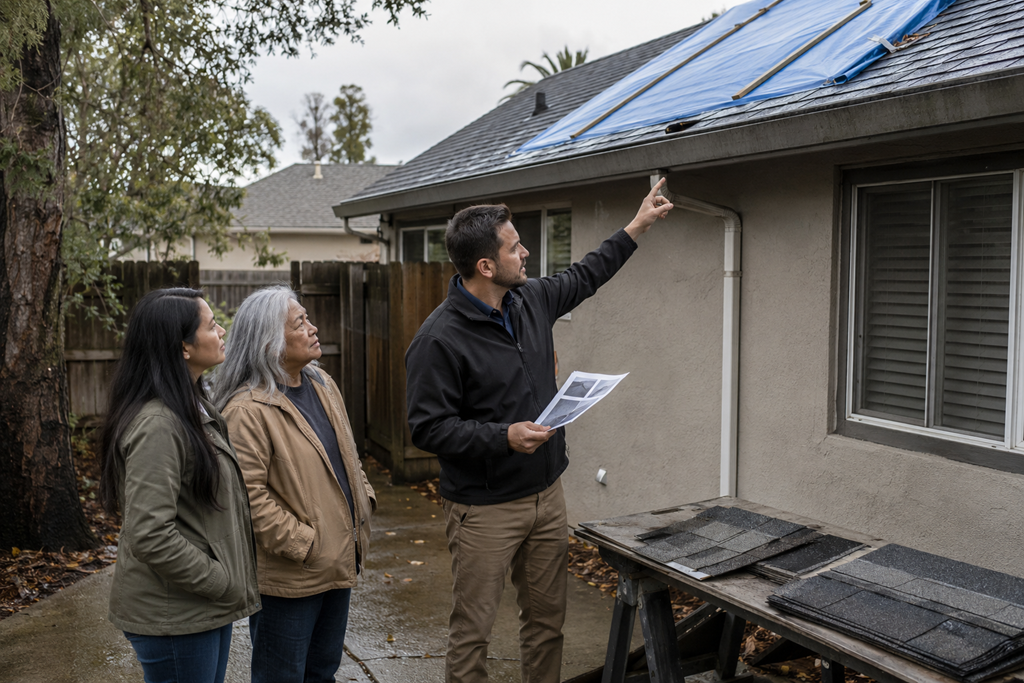
When property damage affects a Sacramento-area home, the first response should not be viewed as one large repair job. It is usually a sequence: understand what happened, address immediate safety concerns, limit additional damage, document visible conditions, and then define the restoration work. Knowing that sequence helps homeowners avoid confusing a fast first visit with a complete long-term plan.
Damage from a plumbing failure, appliance leak, roof opening, fire, smoke, or fallen branch can make the entire situation feel like one urgent problem. In reality, several separate questions may need answers. Is the property safe to enter? Has the source been addressed? Could the damage continue spreading? Which materials were affected? What temporary work is needed, and what permanent repairs should come later?
Understanding those distinctions can make conversations with local damage restoration providers easier to follow.
The First Visit May Not Produce the Final Repair Plan
A damage restoration company may initially focus on immediate conditions rather than the finished appearance of the home. That can include evaluating affected areas, documenting visible damage, protecting exposed portions of the property, or determining whether specialized drying, cleaning, removal, or testing should be discussed.
Those early services are not necessarily the same as permanent reconstruction.
For example, stopping water from affecting additional flooring is different from choosing replacement flooring. Protecting a damaged roof opening is different from completing the roof repair. Removing materials that cannot remain in place is different from rebuilding the wall, cabinet, or ceiling afterward.
This distinction matters because homeowners sometimes assume that the company responding first will automatically handle every later phase. Some providers offer both mitigation and reconstruction. Others specialize in only part of the process or coordinate with separate trades.
Before agreeing to work, ask which phase the provider is addressing and what will remain unresolved when that phase is finished.
Visible Damage May Be Only One Part of the Scope
Property damage is easy to judge by appearance. A homeowner may see a ceiling stain, a damp section of carpet, smoke discoloration near one wall, or several lifted shingles and assume that the visible area defines the entire problem.
Sometimes it does. Sometimes the affected area extends beyond what can be seen from the room.
Water can move beneath flooring or into adjoining materials. Smoke residue may affect surfaces away from the most obvious source. An exterior opening may allow moisture to enter a different part of the structure than expected. Conversely, damage that looks extensive may be limited to surface materials after closer evaluation.
The useful question is not whether the damage looks small or large. It is how the provider will determine the boundaries of the affected area.
A qualified professional should be able to explain what was directly observed, what still needs evaluation, and which conclusions remain uncertain. Clear providers separate confirmed conditions from assumptions instead of presenting every possibility as a certainty.
Stabilization and Restoration Serve Different Purposes
The purpose of an initial response is often to keep conditions from becoming more complicated while the situation is evaluated. The purpose of restoration is to return damaged portions of the property to an appropriate condition.
Treating those goals as separate phases can help Sacramento homeowners make better decisions.
Temporary protection may be reasonable even when the final repair has not been selected. At the same time, a temporary measure should not be mistaken for a complete solution simply because the immediate problem is less visible.
Homeowners should understand:
- What condition is being stabilized
- Whether the original source has been addressed
- How long the temporary measure is expected to remain appropriate
- What additional evaluation or repair will still be needed
- Who is responsible for the next phase
These questions do not require homeowners to diagnose the building themselves. They simply make the provider’s role and the remaining decisions easier to understand.
A Fast Response Should Still Include Clear Communication
Some types of property damage can become more difficult to manage when they are ignored. That does not mean a homeowner should be expected to approve unclear work, accept a vague scope, or make every repair decision during the first conversation.
A professional response can be timely without being confusing.
The provider should be able to explain what needs attention first, what can wait until more information is available, and why a particular service is being recommended. When access, safety, or hidden conditions prevent a complete answer, that limitation should be stated plainly.
Watch for the difference between appropriate concern and unnecessary pressure.
Appropriate concern sounds like a clear explanation of what may continue happening if a condition is left unaddressed. Pressure sounds like being told to authorize broad or poorly defined work without enough information to understand what is included.
Homeowners may not have time to compare every possible company before temporary protection begins. They can still ask for a written description of the immediate work and find out whether approving that work commits them to later restoration services.
Documentation Helps Separate What Happened From What Happens Next
Photographs, written observations, measurements, invoices, and service descriptions can help create a record of the property’s condition and the work performed.
Documentation is useful for more than insurance-related conversations. It can help homeowners compare explanations from different providers, track which materials were evaluated, and identify where one company’s work ends and another company’s responsibility begins.
Before materials are removed or covered, ask how existing conditions will be documented. After temporary or mitigation work is completed, ask for a record of what was done and what remains.
A vague statement such as “damage cleanup” may not tell a homeowner much. A clearer description identifies the affected area, the immediate service performed, and the next unresolved decision.
Homeowners should also keep their own records when it is safe to do so. The goal is not to become a damage expert. It is to preserve enough information to make later conversations less dependent on memory.
The Lowest Initial Price May Not Represent the Same Scope
Property damage estimates can be difficult to compare because providers may not be quoting the same phase of work.
One company may quote only temporary protection. Another may include removal and cleanup. A third may include reconstruction, finish materials, or coordination with additional trades. A lower total may reflect a narrower scope rather than a better overall value.
Before comparing numbers, compare what each number represents.
Ask whether the estimate includes:
- Evaluation and documentation
- Temporary protection or containment
- Removal of affected materials
- Drying, cleaning, or odor-related services when relevant
- Disposal and site protection
- Reconstruction or finish work
- Follow-up visits or additional evaluation
- Services that may require another provider
The purpose is not to demand that every estimate include every possible service. It is to make sure two proposals are not treated as equivalent when they solve different parts of the problem.
Questions That Can Clarify the Response Plan
A short conversation can reveal whether the provider has separated immediate needs from later decisions.
Consider asking:
- What condition are you addressing first?
- Has the source of the damage been identified, or is that still being evaluated?
- What work is temporary, and what work is permanent?
- Which affected areas have been confirmed?
- What could change the scope after work begins?
- Will reconstruction be included, offered separately, or handled by another company?
- What documentation will I receive?
- Does approving this phase commit me to any additional services?
Clear answers do not guarantee that a project will be simple. They do help homeowners understand what they are authorizing and what decisions are still ahead.
Uncertainty Does Not Always Mean a Provider Is Being Evasive
Property damage can involve conditions that are not fully visible during the first inspection. A provider may need access to an enclosed area, additional evaluation, or information from another trade before defining the complete scope.
That uncertainty can be legitimate.
The important difference is how the uncertainty is communicated. A trustworthy explanation identifies what is known, what is not yet known, and how the missing information will be obtained. It does not hide uncertainty behind a firm promise or use every unknown as a reason to expand the project immediately.
Homeowners should be cautious when a provider guarantees the full scope before examining the affected areas, but they should also be cautious when a provider cannot explain how the scope will be determined.
A Clear Response Creates a Better Starting Point for Restoration
The first goal after property damage is not to make every repair decision at once. It is to understand the immediate condition, protect the property where appropriate, and create a reliable foundation for the work that follows.
For Sacramento-area homeowners, the most useful shift is to stop viewing damage response as one single service. Evaluation, stabilization, mitigation, specialized trade work, and reconstruction may overlap, but they do not always come from the same provider or happen under the same agreement.
Before hiring a local damage restoration professional, make sure you understand which part of the problem is being addressed, what the proposed work includes, and what decisions will remain afterward. That perspective can make an unfamiliar situation easier to evaluate without rushing into a scope that has not been clearly explained.