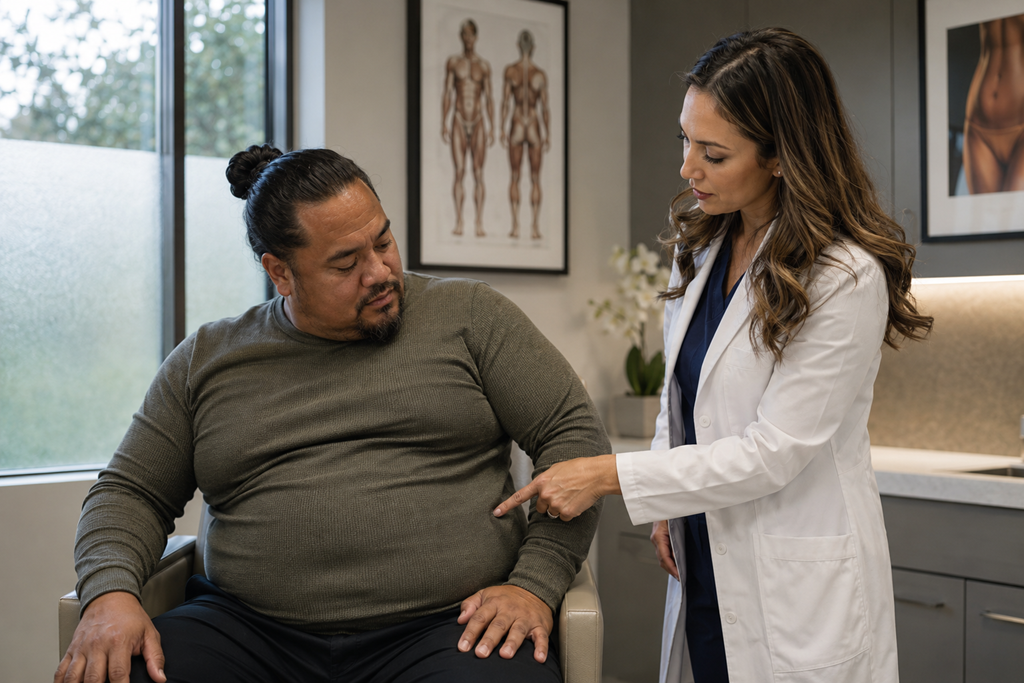
Before considering liposuction, Sacramento patients should understand that it is a surgical body-contouring procedure, not a general weight-loss treatment or a guaranteed way to create a particular shape. The most useful first step is deciding what specific area concerns you, what change you hope to see, and whether a qualified plastic surgeon believes your health, skin quality, anatomy, and expectations make the procedure appropriate to discuss.
That distinction matters because people often begin researching liposuction with a broad feeling rather than a clearly defined concern. They may dislike how clothes fit, notice fullness in one area, or feel that a certain part of their body looks out of proportion. Liposuction may address some localized contour concerns, but it cannot correct every source of dissatisfaction with body shape.
Liposuction Changes Contour Rather Than Creating General Weight Loss
Liposuction removes fat from selected areas and reshapes the surrounding contour. Common treatment areas can include the abdomen, hips, thighs, arms, back, and neck, depending on the patient and the surgeon’s evaluation.
It is not intended to treat obesity or replace nutrition, physical activity, or other approaches to managing body weight. It also does not automatically tighten loose skin, remove stretch marks, eliminate cellulite, or create the same shape for every patient. Skin that does not contract well may remain loose or uneven after underlying fat is removed.
This is one of the most important points to understand before contacting Sacramento-area providers. A patient who wants a smaller pocket of fat reduced is asking a different question from someone who primarily wants loose skin tightened, significant weight loss, muscle definition, or a complete change in body proportions.
The Same Procedure Name Can Produce Different Results
Two people can have liposuction in the same general area and experience noticeably different contour changes.
Results may be influenced by:
- Where the fat is located
- How much fat can be removed appropriately
- Skin thickness and elasticity
- Existing muscle and bone structure
- Prior weight changes or procedures
- Natural asymmetry
- Healing and swelling
- The relationship between the treated area and nearby body contours
This is why a photograph of another patient should not be treated as a promise. Before-and-after images may help demonstrate a surgeon’s work, but they do not predict exactly how a different body will respond.
A useful consultation should focus on what may be reasonably achievable for your anatomy rather than on reproducing someone else’s waistline, abdomen, arms, or profile. The final contour can also take time to become visible because swelling may continue to change for several months.
Candidacy Is a Medical Question as Well as an Appearance Decision
Wanting liposuction does not automatically mean the procedure is appropriate.
A surgeon may consider your general health, medical conditions, medications, smoking or vaping history, previous surgeries, weight stability, skin condition, healing history, and the area you want treated. These factors can influence both safety and the likelihood that the procedure will address your concern.
Patients should be prepared to provide complete and accurate health information. That includes prescription medications, over-the-counter products, vitamins, supplements, nicotine use, previous procedures, and any problems with anesthesia or healing.
The goal is not to pass or fail a consultation. The goal is to determine whether the procedure, the proposed timing, and the expected change make sense for the individual patient.
Recovery Should Be Part of the Decision From the Beginning
It is easy to concentrate on the hoped-for contour and give less attention to the recovery period. However, recovery affects work, transportation, sleep, household responsibilities, exercise, clothing, and the amount of help a patient may need at home.
Swelling, bruising, soreness, temporary numbness, and activity restrictions can occur after liposuction. Some patients may be asked to wear compression garments, limit strenuous activity, arrange transportation, or obtain help with daily responsibilities. The exact plan depends on the treatment area, the scope of surgery, the technique used, the patient’s health, and the surgeon’s instructions.
A patient with a desk job may face different practical concerns from someone whose work involves lifting, driving, bending, standing for long periods, or wearing restrictive clothing. Parents and caregivers may also need to consider responsibilities that cannot easily be paused.
A realistic conversation about recovery should happen before scheduling, not after the procedure has already been booked.
Risks and Possible Imperfections Deserve Plain Language
Liposuction is surgery, so the decision involves more than comparing expected appearance changes.
Potential complications can include infection, bleeding, blood clots, fluid-related problems, numbness, skin or tissue injury, uneven fat removal, contour irregularities, dents, asymmetry, and complications associated with anesthesia. Additional procedures may sometimes be discussed when healing or results do not develop as expected.
A qualified surgeon should explain which risks are most relevant to your health, the proposed technique, the amount of treatment, and the surgical setting. The explanation should be understandable and specific enough for you to make an informed decision.
Statements such as “there is nothing to worry about” or “everyone heals the same way” should not replace a real discussion of benefits, limitations, and complications.
A Helpful Consultation Should Narrow the Question
A productive consultation is not simply a presentation about what the clinic offers. It should help determine whether the procedure matches the patient’s actual concern.
Useful questions may include:
- What specific change could liposuction reasonably make in this area?
- Which part of my concern would liposuction not correct?
- How do my skin quality and anatomy affect the likely result?
- What technique and type of anesthesia are being recommended?
- Where would the procedure be performed?
- What recovery restrictions should I plan around?
- What risks are most relevant to my situation?
- How does the practice respond if healing or contour results are uneven?
- What credentials and experience does the surgeon have with this procedure?
The answers should connect directly to your body, goals, health, and daily responsibilities. General statements about being a “great candidate” are less useful when they are not supported by an individualized explanation.
Vague Promises or Pressure Are Reasons to Pause
A consultation should leave room for questions and reflection. Be cautious when the conversation depends heavily on promotional language, dramatic transformations, limited-time pressure, or promises of a particular clothing size or body shape.
Other reasons to slow down include:
- Risks being dismissed or minimized
- Qualifications being difficult to verify
- The surgical setting remaining unclear
- Recovery being described only as “easy”
- Important questions being redirected to sales staff
- Pricing being discussed before the treatment plan is explained
- Consent documents being presented without enough time for review
- The provider avoiding discussion of alternatives or limitations
Pausing does not mean rejecting the procedure. It means giving yourself enough space to understand what is being proposed before making a surgical decision.
A Good Decision May Be Yes, No, or Not Yet
Understanding liposuction begins with separating a specific contour concern from a general desire to look different. From there, the decision depends on candidacy, realistic expectations, recovery responsibilities, potential risks, and the quality of the provider’s communication.
For Sacramento patients, comparing providers should involve more than photographs, promotions, or procedure names. The better question is whether a qualified surgeon can clearly explain what the procedure may change for your body, what it cannot change, and what the full experience would require.
That conversation may lead to scheduling liposuction, considering another approach, waiting for a more suitable time, or deciding that surgery does not match your goals. Any of those outcomes can represent a thoughtful decision when it is based on complete information rather than pressure or assumptions.