Protecting exterior wood over time is less about applying one perfect product and more about keeping water from repeatedly entering the same vulnerable places. For Sacramento-area homeowners, that usually means watching roof edges, gutters, trim joints, door and window openings, deck connections, and other areas where seasonal rain, irrigation, and strong sun can wear down the materials meant to keep wood dry.
Exterior wood often looks durable until a small change appears. Paint may begin peeling at one corner. A deck board may feel softer than the boards around it. A door jamb may separate near the threshold. These signs can seem cosmetic, especially when most of the surrounding surface still looks solid.
The more useful question is not simply, “How should this spot be covered?” It is, “Why is this particular spot having trouble?”
Exterior Wood Usually Deteriorates Through a Repeating Pattern
Wood damage commonly develops where moisture reaches the same area repeatedly and does not dry as expected. The moisture may come from rainfall, gutter overflow, a leaking joint, irrigation spray, drainage near the house, or water that collects around a connection point.
Sun exposure can add another layer of wear. Strong sunlight and temperature changes can gradually weaken paint, sealants, and other protective finishes. Once those materials begin separating, water may have an easier path into joints, end grain, cracks, and fastener openings.
This is why long-term protection depends on understanding the entire exposure pattern rather than treating each blemish as an isolated event.
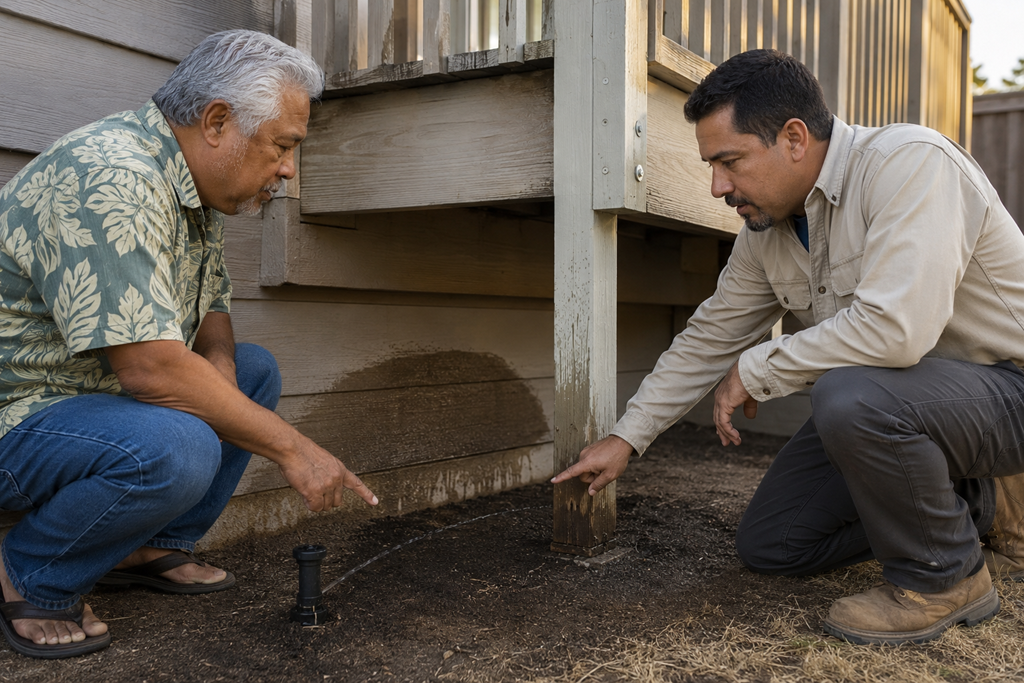
A damaged fascia corner, for example, may be connected to debris in the gutter above it. Soft wood near a patio door may be related to an upper trim joint, the threshold, or nearby drainage. Deterioration at the base of a deck post may reflect repeated splashback or water collecting around the connection.
The most visible damage is not always where the problem began.
Paint Is Part of the Protection, Not the Whole Solution
A maintained coating can help shield exterior wood from sunlight and moisture. However, paint performs best when the wood beneath it is sound and the source of recurring moisture has been addressed.
When paint repeatedly bubbles, cracks, or peels in the same location, repainting may temporarily improve the appearance without changing the underlying condition. Moisture can continue moving behind the coating, causing the new finish to separate again.
This does not mean every paint flaw indicates significant decay. Paint can fail for several reasons. The important pattern is recurrence, especially when the same area also shows softness, swelling, discoloration, open seams, or separating wood fibers.
Before assuming that another coat will solve the problem, it may be worth asking whether water is reaching the wood from above, behind, below, or through a nearby joint.
Small Water Routes Can Affect a Larger Area
Water does not always travel in a straight line. It can follow trim joints, move behind siding or stucco edges, collect beneath horizontal surfaces, or reach the exposed end of a board.
That can make exterior wood problems confusing. The damaged area may be several inches or even several feet away from the opening that allowed moisture to enter.
For Sacramento homeowners, common areas worth discussing during an exterior evaluation can include:
- Roof and fascia connections
- Gutter seams and outlets
- Window and door trim
- Deck boards, stairs, rails, and posts
- Patio covers and pergolas
- Garage door trim
- Wood siding and decorative exterior details
- Areas exposed to sprinklers or recurring runoff
The goal is not to assume that every nearby component is defective. It is to understand how the pieces work together before deciding what should be repaired, sealed, redirected, or monitored.
Seasonal Changes Can Reveal Different Weak Points
Exterior wood may behave differently during Sacramento’s dry and rainy periods.
Extended sun and dry conditions can make coatings brittle, widen existing gaps, and expose unfinished edges. Rain can then enter those weakened areas. After the weather becomes dry again, the surface may appear improved even though moisture has already affected the wood beneath it.
Irrigation can also create localized exposure during otherwise dry weather. A sprinkler that repeatedly reaches a fence, deck post, door frame, or siding corner can keep one small area wetter than the rest of the structure.
Because the source may only be active under certain conditions, a problem can seem inconsistent. A stain may appear after rain and fade later. A door may swell during wetter periods but work normally when conditions dry out. Paint may separate slowly rather than failing all at once.
Photographs taken when the condition is most visible can help a professional understand the pattern, even if the area looks different by the time an estimate is scheduled.
Recurring Signs Deserve More Attention Than Isolated Imperfections
Exterior wood naturally develops minor surface changes as it ages. A small paint chip or hairline seam is not automatically evidence of extensive damage.
Patterns become more useful when deciding whether to request an evaluation. These can include:
- Paint that repeatedly fails in the same place
- Wood that feels softer than the surrounding material
- A joint that continues reopening after being sealed
- Darkening that returns after rain or irrigation
- Swelling, warping, or separation near an opening
- Wood fibers that appear cracked, flaky, or crumbly
- Damage that seems larger beneath or behind the visible surface
A homeowner does not need to determine the exact cause before calling a local professional. Recognizing that a condition is recurring—and being able to describe when it appears—can make the first conversation more productive.
Long-Term Protection Often Involves More Than One Trade
Exterior wood damage may involve the wood itself, but the moisture source can be connected to another part of the property.
A dry rot repair professional may identify deteriorated wood and explain the likely extent of repair. A gutter professional may be needed when overflow or a leaking seam is contributing to the exposure. A roofer may need to evaluate a roof-edge condition. Drainage, irrigation, painting, window, or door work may also be relevant in some situations.
This does not mean a homeowner should hire several companies before understanding the problem. It means an estimate should make clear which condition the provider is addressing and whether another contributing issue falls outside that provider’s scope.
A repair can be well performed and still face the same moisture exposure if the upstream cause remains unchanged.
A Useful Estimate Should Explain the Cause and the Sequence
When comparing local dry rot repair providers, homeowners can look beyond the final price and pay attention to how clearly each provider explains the work.
Helpful questions include:
- What appears to be allowing moisture to reach this area?
- How will you determine how much wood is affected?
- Which materials would be repaired or replaced?
- Does the moisture source fall within your scope of work?
- Should another condition be corrected before or after the wood repair?
- How will repaired wood be prepared for finishing and future exposure?
- Are there nearby areas that should be observed even if they do not need work now?
The provider may not be able to confirm every hidden condition before damaged material is opened. A clear estimate should distinguish between what is visible, what is suspected, and what could change once the area is accessible.
Be cautious when an explanation focuses only on covering the visible spot without discussing why it deteriorated. The same applies when a provider makes broad claims about hidden damage without explaining the visible evidence behind that conclusion.
Protection Works Best as an Ongoing Property Habit
Exterior wood care does not have to begin with a major project. It can be part of periodically noticing how water moves around the property.
Homeowners can observe whether gutters overflow, whether sprinklers strike wood surfaces, whether water collects beside posts or thresholds, and whether coatings continue failing in the same places. These observations can help distinguish a one-time cosmetic flaw from a recurring exposure pattern.
Professional evaluations are especially useful when wood feels soft, the affected area appears to be expanding, structural connections may be involved, or the source of moisture is unclear. These conditions can be difficult to assess from the surface alone.
The goal is not to keep every exterior board looking new. It is to preserve sound wood, reduce repeated moisture exposure, and address developing problems before the repair scope becomes harder to understand.
The Most Durable Fix Addresses More Than the Visible Damage
Protecting exterior wood over time usually requires three ideas working together: keep water from repeatedly reaching vulnerable areas, maintain the materials that shield the wood, and investigate signs that continue returning.
For Sacramento-area homeowners, this perspective can make dry rot repair estimates easier to evaluate. Instead of asking only how the damaged wood will be replaced, ask how the proposed work addresses the conditions that allowed the damage to develop. A clear answer can help you compare providers and choose a repair plan that makes sense beyond the freshly finished surface.