Replacing a lawn with low-maintenance landscaping can reduce some of the routine work that comes with grass, but the best choice is not simply the option that needs the least attention. Before making the change, look at how the space is actually used, how much sun and heat it receives, how water moves through the yard, what level of upkeep you are still comfortable with, and how the new landscape will fit the property over time.
It is easy to reach the point where regular mowing, watering, edging, or keeping a lawn looking the way you want starts to feel like more work than the space is worth. For Sacramento-area homeowners, replacing some or all of the grass may seem like a straightforward way to simplify the yard.
The important part is deciding what should replace it.
Low-maintenance landscaping can take many forms, and each option changes how the yard looks, feels, drains, heats up, and functions. Thinking through those differences before requesting estimates can make conversations with landscaping providers much more useful.
Low Maintenance Still Means Some Maintenance
One of the easiest misunderstandings is treating “low maintenance” as if it means “no maintenance.”
Removing grass may eliminate certain recurring tasks, but the replacement landscape can introduce different ones. Planted areas may still need seasonal attention. Mulch or other loose materials may need occasional refreshing or redistribution. Hard surfaces can collect debris. Ground-cover areas may change as plants mature.
The useful question is not simply, “Which option requires the least work?”
A better question is, “What kind of upkeep am I comfortable doing or paying someone else to handle?”
That distinction can change which landscape choices make sense.
A homeowner who dislikes mowing may be perfectly comfortable with occasional pruning or cleanup. Someone else may prefer more hardscape and fewer planted areas. Neither approach is automatically better. The goal is to match the landscape to the kind of maintenance you actually want to live with.
Start With What The Yard Needs To Do
Before deciding what should replace the grass, consider what the grassy area currently provides.
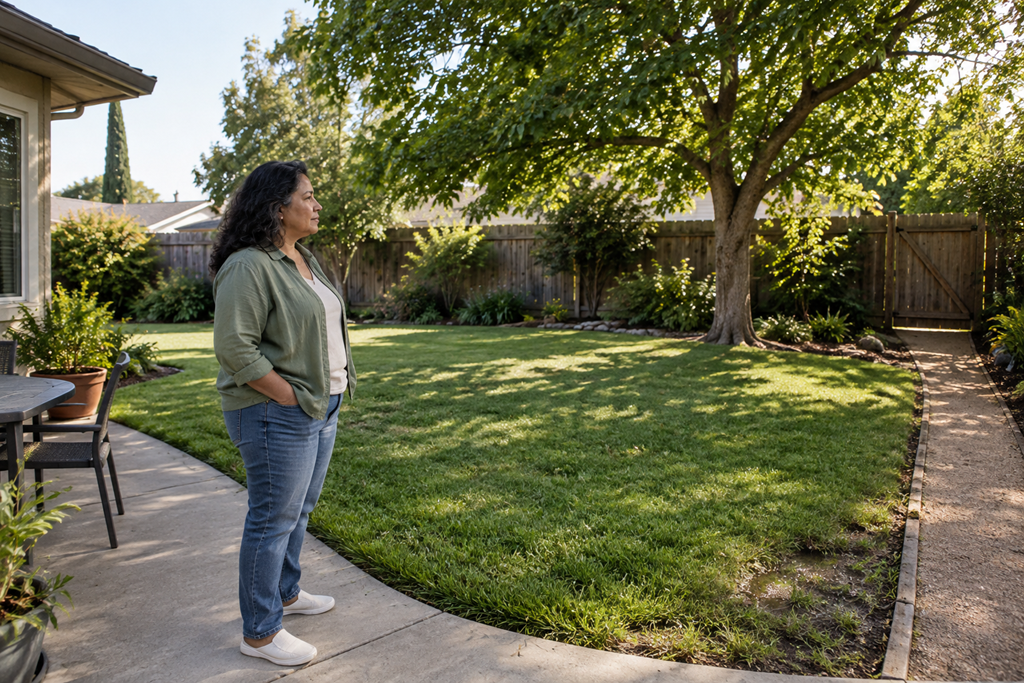
A lawn may be used for children playing, pets moving around, outdoor gatherings, walking between parts of the property, or simply creating open visual space around a patio or home.
Those uses do not disappear when the grass does.
A replacement that looks appealing in a sample photo may feel less successful if it makes a frequently used path awkward, reduces usable play space, or changes an open area that the household enjoys.
It can help to think about the yard during an ordinary week rather than imagining only how it might look immediately after a landscaping project.
Where do people walk?
Where do pets spend time?
Which areas are rarely used?
Which parts of the lawn mainly exist because grass was already there?
Those observations can help separate areas that might be good candidates for change from areas where preserving some open, usable space may still matter.
Sun, Shade, And Heat Can Change The Decision
Different sections of the same yard can experience very different conditions.
One area may receive strong afternoon sun while another remains shaded by the house, fence, or mature trees. A material or plant choice that fits one part of the property may not make equal sense everywhere.
Sacramento-area heat and sun exposure can also make the feel of the finished landscape worth discussing with a provider. Replacing a large grassy area with hard surfaces, rock, planted beds, ground covers, or a combination of materials can change how the space feels underfoot and how comfortable it is to use during warmer periods.
That does not mean one material should automatically be avoided. It means the whole yard does not necessarily need one replacement solution.
A mixed landscape may make more sense than treating every square foot the same way.
Pay Attention To How Water Moves Through The Yard
Grass removal can change more than the appearance of a property.
Existing slopes, low areas, downspout locations, irrigation, soil conditions, and the relationship between the yard and nearby hard surfaces can all influence how water moves through the space.
You do not need to diagnose drainage conditions yourself. What matters is noticing anything that may deserve discussion before a new landscape is designed.
For example, if a section of the yard tends to stay wetter after seasonal rain, or water routinely moves across a particular route, that information can be useful when a landscaping professional evaluates the project.
Covering over an existing concern with a new surface does not necessarily resolve the underlying condition.
This is one reason an estimate based only on square footage may not tell the whole story.
Decide What You Mean By “Low Maintenance”
Two homeowners can ask for low-maintenance landscaping and mean completely different things.
One may want less watering and mowing. Another may want fewer plants to manage. Someone else may want a cleaner space around a patio, easier access through a side yard, or less time spent keeping the front yard looking consistent.
Getting specific about the problem you are trying to solve makes provider conversations easier.
Instead of asking only for “a low-maintenance yard,” you can explain which chores, conditions, or parts of the existing landscape you most want to change.
That gives a landscaper a better starting point for discussing appropriate materials and layout choices.
It also makes it easier to compare proposals. Two companies may both describe their plans as low maintenance while recommending very different combinations of plants, surfaces, borders, irrigation changes, and ongoing care.
Look Beyond The First-Day Appearance
A newly completed landscape is only one stage of the project.
Plants can grow and spread. Organic materials change over time. Leaves and debris still arrive. Edges can require attention. Outdoor surfaces experience regular use and weather exposure.
Before committing to a design, try to understand what the space is expected to look like after it has been lived with for a while.
This is especially useful when comparing landscape styles that appear similarly simple in photographs but involve different amounts or types of ongoing attention.
Ask providers to explain what normal upkeep typically looks like for the materials and plantings they are proposing. That can reveal more than simply asking whether a design is “low maintenance.”
Removing Grass Does Not Require Replacing It With One Thing
Homeowners sometimes approach lawn replacement as an either-or decision: grass stays, or the entire area becomes one alternative surface.
There are more possibilities than that.
Depending on the property and how the yard is used, the final plan might preserve some open space while changing areas that are difficult to maintain. It might combine planted sections with walking surfaces, gathering areas, or other landscape features.
The important idea is not to choose the greatest number of materials. It is to let different parts of the yard serve different purposes when that makes sense.
This can also make conversations about cost and project scope clearer. Instead of pricing one large transformation, you can better understand which portions of the property are actually being changed and why.
A Few Questions Can Make Landscaping Estimates More Useful
Before comparing local landscaping providers, it can help to ask questions tied to how the finished yard will function rather than focusing only on appearance.
Consider asking:
- What maintenance should I realistically expect from this design?
- How does the plan account for sunny, shaded, or heavily used areas?
- Will changing the lawn affect existing drainage or irrigation?
- How are walking, pet, play, or gathering areas being handled?
- Are different sections of the yard better suited to different materials?
- What parts of the proposal are primarily aesthetic, and what parts address how the yard functions?
The answers do not have to be identical from one provider to another. What matters is whether the reasoning is understandable and connected to your property.
The Better Decision Starts Before The Grass Comes Out
Replacing grass can be a useful opportunity to rethink how a yard works, not simply how much maintenance it requires.
Before choosing materials or comparing estimates, understand what you want the space to do, which maintenance tasks you want to reduce, what conditions vary across the property, and what ongoing care the proposed replacement will still require.
That gives Sacramento-area homeowners a clearer basis for discussing options with landscaping professionals and deciding whether a proposed design fits the way they actually want to use and maintain their yard.