When a fence starts pulling away from a post or sagging along one section, the most useful first step is to notice where the movement begins and what else has changed around it. A leaning panel, widening gap, loose-looking connection, shifting post, or gate that no longer lines up can help show whether the problem appears isolated or part of a larger change in the fence.
For Sacramento-area homeowners, fence movement can sometimes seem straightforward at first: one section looks lower, a board or panel appears separated, or a gate suddenly feels different. But the visible sag is not always the whole story. Looking at the fence as a connected system can give you better information before you discuss repair options with a local fence professional.
Start With Where the Movement Appears to Begin
A fence can look uneven for several different reasons, so it helps to identify the area where the change is most noticeable.
For example, one panel may be pulling slightly away from a post while the post itself still appears upright. In another situation, the panel may remain attached while the post seems to be leaning. A longer stretch of fencing may also begin to lose its straight top line rather than showing one obvious trouble spot.
Those differences matter because they can change the scope of the conversation you have with a fence repair provider.
You do not need to diagnose the cause yourself. The useful goal is simply to be able to describe what you are seeing clearly.
Look at the Fence Beyond the Most Obvious Sag
The lowest or most crooked-looking section naturally gets attention first, but nearby sections can provide helpful context.
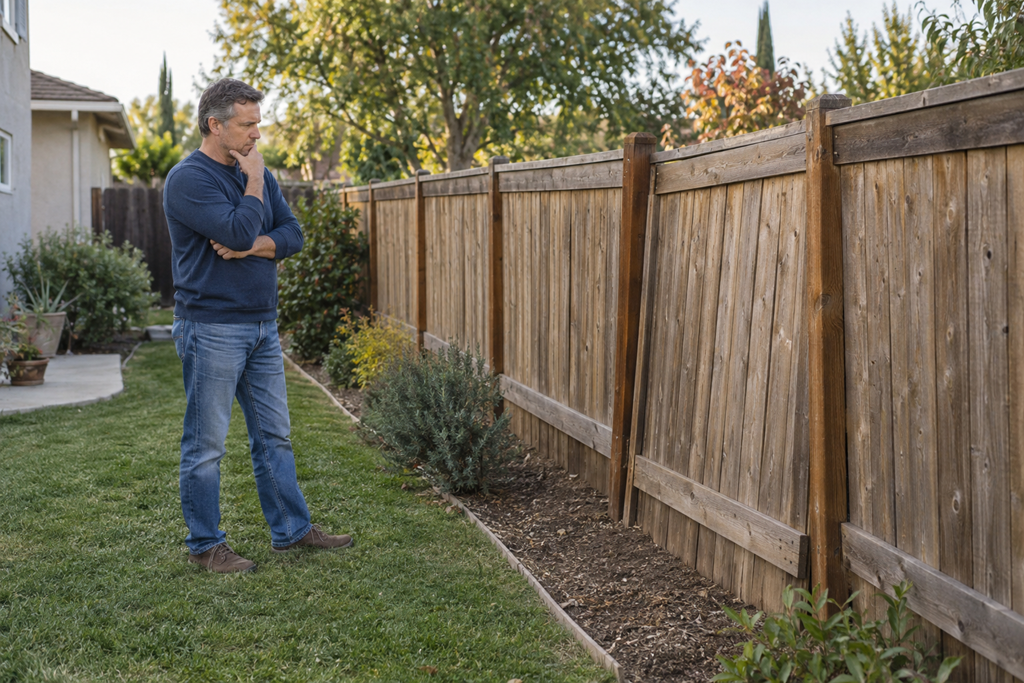
Stand back far enough to see several posts and panels together. From that perspective, you may notice that the neighboring sections remain straight, or you may realize that the change continues farther along the fence than you originally thought.
That distinction can help you understand whether you are discussing one localized area or a broader portion of the fence.
A problem that looks small from directly in front of it may look different when viewed as part of the entire fence line.
Notice Whether the Posts Still Look Consistent
Fence panels and rails depend on their supporting posts, so the position of the posts is worth observing.
You might notice that one post no longer lines up visually with the others, that the top of a post appears to lean, or that a gap has developed where a panel or rail meets the post.
You do not need to push, pull, shake, or test the fence to investigate it. Simple observation from a safe position can give a professional useful information without creating additional movement.
If a section appears significantly unstable or looks as though it could fall, keeping people and pets away from that area while arranging professional evaluation is a sensible precaution.
A Gate Can Reveal Changes Elsewhere in the Fence
Sometimes the first noticeable symptom is not a visibly sagging panel at all. It is a gate that has become harder to open, close, or align.
A gate may begin rubbing, sitting unevenly, or meeting the latch differently than it once did. That does not automatically tell you what caused the change, but it can be another clue that something around the opening has shifted.
Pay attention to whether the gate itself looks different or whether the post and fence section surrounding it also appear out of alignment.
When speaking with a fence professional, mentioning that the gate changed at roughly the same time as the visible sag can provide useful context.
Separation at Connections Can Be Different From a Leaning Fence Line
A fence that is pulling away and a fence that is leaning can look similar from a distance, but they are not necessarily the same visible pattern.
You may see a widening space where a rail or panel meets a post even though the overall fence line remains reasonably upright. Alternatively, the connections may still appear intact while several sections seem to lean together.
This is one reason photographs taken from both nearby and farther away can be useful when requesting an estimate or describing the issue.
The goal is not to determine exactly what repair is required. It is to show the provider what changed and where.
Pay Attention to What Has Changed Around the Same Time
Fence movement sometimes becomes noticeable after wind, seasonal rain, prolonged dry conditions, or simply continued exposure and use. Sacramento-area properties can experience all of those conditions over time.
Rather than assuming one of them caused the problem, think of timing as useful background information.
Did the sag appear suddenly, or has it slowly become more noticeable? Did a gate begin rubbing around the same time? Does the movement appear limited to one section, or have neighboring sections also changed?
Those observations can make your description more useful when you contact a professional.
One Sagging Section Does Not Automatically Mean the Whole Fence Needs Replacement
Seeing a fence begin to pull apart can make it easy to assume that a major project is coming.
That conclusion may be premature.
The appropriate scope can depend on what is moving, how much of the fence is affected, the condition of the surrounding materials, the stability of the supporting sections, and whether the same type of deterioration appears elsewhere.
A qualified fence professional can evaluate those factors and explain whether the discussion is primarily about a localized repair, several affected sections, or a larger replacement decision.
Before approving work, it is reasonable to understand which parts of the fence the provider believes are involved and why.
A Few Useful Questions Can Make an Estimate Easier to Understand
When a fence professional evaluates the problem, you can keep the conversation focused on the visible issue.
Useful questions include:
- Which part of the fence appears to be creating the movement?
- Does the problem look limited to this section or extend farther along the fence?
- Are the posts, panels, rails, gate, or connections involved?
- What would the proposed repair address?
- Are any nearby sections worth watching even if they do not need work now?
- If repair and replacement are both possibilities, what is different about the scope of each option?
Clear answers can make it easier to compare recommendations from different local fence providers without relying only on the total price.
Be Cautious About Assumptions Based on Appearance Alone
A crooked fence can invite quick conclusions.
It is easy to assume that one loose-looking board explains everything, that a difficult gate means the gate itself is the only problem, or that one sagging section means an entire fence has reached the end of its useful life.
The visible symptom is better treated as a starting point.
What matters most before hiring is understanding how much of the fence is actually affected, what the provider believes is contributing to the movement, and what the proposed work is intended to correct.
The Most Helpful Check Is the Overall Pattern
When a fence starts pulling away or sagging, you do not need to figure out the repair yourself.
Notice where the change begins, whether posts and connections appear different, whether a gate has changed, and whether nearby sections remain straight or show similar movement. Those observations give you a clearer picture of the problem before you request an evaluation or compare repair recommendations.
That makes it easier to have a focused conversation with a Sacramento-area fence professional and understand whether the issue appears localized or deserves a broader look.