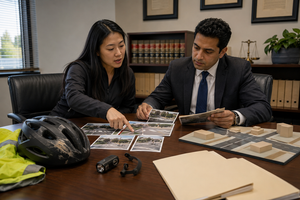
If a traffic ticket could affect your driving record, a practical way to approach the situation is to organize what you received and clarify the questions that matter before making assumptions about the consequences. A qualified traffic ticket defense attorney can review the citation, your driving history, and the surrounding circumstances and explain what may matter in your specific situation.
For many drivers, the uncertainty is what makes the situation difficult. You may have a citation in front of you but still not know what it could mean for your record, what information matters, or whether speaking with an attorney would be worthwhile.
The goal does not have to be figuring everything out on your own. It can simply be getting organized enough to have a more useful conversation with a qualified professional.
Start With The Ticket, Not With Assumptions About The Outcome
It is easy to receive a traffic ticket and immediately jump ahead to questions about what will happen next.
That can lead to confusion because general information from friends, online discussions, or someone else's experience may not match your circumstances.
A more useful starting point is the citation itself.
Keep the original ticket or notice available and avoid relying only on your memory of what happened. If you received additional documents connected with the citation, keep those together as well.
This gives an attorney something specific to review instead of beginning the conversation with assumptions about what the ticket might mean.
Your Driving History May Be Part Of The Conversation
A traffic ticket does not exist in isolation from the person who received it.
When discussing concerns about your driving record, an attorney may need information about your driving history along with the current citation. That does not mean you need to decide for yourself which past details are legally important.
Instead, be prepared to provide accurate information when asked.
If you already have records or notices that may help explain your history, organizing them before the consultation can make it easier to answer questions accurately. If you are unsure what should be gathered, ask the attorney's office what information would be useful to have available.
For Sacramento-area drivers, this preparation can make the consultation less about reconstructing basic facts and more about understanding the situation you actually need help evaluating.
Separate What You Know From What You Are Trying To Find Out
One of the most useful things you can do before speaking with an attorney is distinguish between facts and questions.
You may know when you received the citation, what documents you were given, and what occurred from your perspective.
What you may not know is how the citation could affect your driving record, what options may apply, whether representation makes sense, or what involvement you may have with the court.
Those are appropriate subjects to clarify with a qualified attorney rather than trying to answer them through guesswork.
This distinction can also help you describe the situation more clearly. You do not need to arrive at the consultation with your own legal conclusion. You need enough accurate information for the attorney to understand what you are asking about.
Ask What The Attorney Needs To Evaluate The Situation
A consultation can be more productive when you understand what information the attorney needs from you.
That may begin with the citation and any related notices, but the attorney may ask about additional details based on the circumstances.
Useful questions can include:
- What documents would you like me to provide?
- Is there information about my driving history that would help you evaluate the citation?
- What additional facts do you need from me?
- Are there dates or response requirements on my paperwork that I should discuss with you?
- What parts of the situation cannot be evaluated until you review the documents?
These questions keep the conversation focused on obtaining professional clarification rather than trying to develop a legal strategy yourself.
Clarify What Representation Would Actually Include
If you are considering hiring an attorney, understanding the scope of representation is just as important as understanding the initial consultation.
Do not assume that every traffic ticket defense service includes the same level of involvement.
Ask what the attorney would handle, what you would remain responsible for, how court involvement would be addressed, and how you would be kept informed.
You can also ask who will be your primary contact if you have questions after hiring the firm.
A conversation about representation should leave you with a clearer picture of the service being offered, not simply a general statement that the firm handles traffic matters.
Understand The Fee Arrangement Before Making A Decision
Fees are another area where it is better to ask than assume.
Before agreeing to representation, ask how the attorney charges for the matter and what the quoted fee includes. If something is unclear, ask for an explanation before committing.
You might also clarify whether there are circumstances that could change the scope of the work or lead to additional charges.
The purpose is not to compare attorneys on price alone. It is to understand what you would be paying for and whether the proposed service matches what you need.
Clear communication about fees can make it easier to compare your options without filling in missing details yourself.
Do Not Treat Someone Else's Traffic Ticket As A Preview Of Yours
Traffic-ticket conversations often attract comparisons.
A friend may tell you what happened with a citation. An online discussion may describe a seemingly similar situation. Someone may insist that a particular result is automatic.
Those stories may sound reassuring or concerning, but they do not tell you how your own citation should be evaluated.
The details of your ticket, your driving history, the documents involved, and other circumstances may differ.
General information can help you identify questions. It should not substitute for advice from a qualified attorney who can review your specific situation.
A Useful Consultation Should Reduce The Number Of Unknowns
You do not need to leave an initial conversation knowing exactly how everything will unfold.
A more realistic goal is to understand the situation better than you did before the consultation.
You should have a clearer sense of what information matters, what additional documents may be needed, what representation would involve, how communication would work, how fees are structured, and what questions still require further evaluation.
That gives you a better basis for deciding whether to hire an attorney and whether the attorney's approach and communication style fit what you need.
Focus On Getting The Specific Situation Evaluated
When a traffic ticket raises concerns about your driving record, trying to predict the result before the relevant information has been reviewed can create more uncertainty.
Organize the citation and related notices, be prepared to discuss your driving history, and bring the questions that matter most to you. Then use the consultation to understand what the attorney needs to evaluate and what representation would involve.
A qualified traffic ticket defense attorney can provide advice about your specific circumstances. Your role before that conversation is not to solve the legal question yourself—it is to arrive prepared enough to have the right discussion.