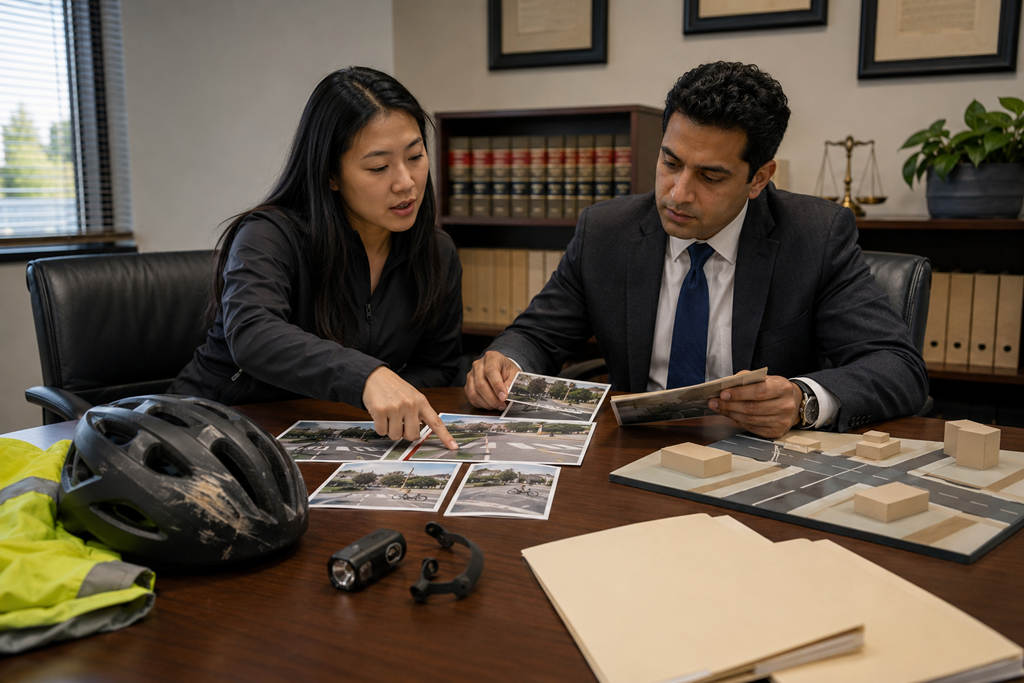
You may want to contact a personal injury lawyer when an accident has created questions you cannot answer comfortably on your own—such as who may be responsible, how an insurer is evaluating the claim, whether your injuries will affect work or daily life, or whether you are being asked to sign or accept something before the full impact is clear. Contacting a lawyer does not mean you have decided to file a lawsuit. It can simply be a way to understand your options before making a decision that may be difficult to undo.
This decision often arises during an uncertain period. You may be attending appointments, arranging transportation, missing work, responding to phone calls, collecting receipts, and trying to determine whether the situation will resolve quickly. At the same time, another party may be requesting information or encouraging you to settle the matter. It is understandable to wonder whether speaking with a lawyer would be helpful or unnecessarily complicated.
The Severity of the Injury Is Only One Part of the Decision
People sometimes assume that personal injury lawyers are only contacted after catastrophic accidents. In reality, the usefulness of a consultation may depend as much on uncertainty and complexity as it does on the visible severity of an injury.
An injury that initially appears manageable can still create questions about medical expenses, missed income, transportation, household responsibilities, future treatment, or responsibility for the accident. Symptoms and limitations may also become clearer only after you return to normal activities.
The more important question is not simply, “Is my injury serious enough?” It is whether you have enough reliable information to make decisions about the situation without professional guidance.
Unclear Responsibility Can Make the Situation Harder to Evaluate
A consultation may be worth considering when the people involved disagree about what happened.
This can occur after vehicle collisions, falls, incidents involving unsafe property conditions, injuries connected to a product, or accidents involving several people or businesses. Even when you have a clear memory of the event, another person, company, or insurer may interpret it differently.
Photographs, incident reports, witness information, medical records, repair estimates, and other documentation may all affect how the situation is understood. A personal injury lawyer can explain which facts may matter and what information may be useful to preserve.
That conversation is educational. It does not guarantee that a claim exists or that any particular result will follow.
Pay Attention When You Are Being Asked to Make a Final Decision
It may be helpful to seek legal guidance before signing a release, accepting a settlement, giving a detailed recorded statement, or agreeing that a matter is fully resolved.
The concern is not that every request is improper. The concern is that you may not yet understand the purpose or consequences of what you are being asked to do.
A proposed payment may appear reasonable when compared only with the bills already received. It may look different when missed work, follow-up care, ongoing limitations, transportation costs, or other effects are considered.
Speaking with a lawyer before making a final decision can help you understand what the document or offer means in your particular circumstances. The lawyer can also explain whether additional information should be gathered before you respond.
An Injury’s Effect on Daily Life May Matter More Than Its Appearance
Some injuries are not visually dramatic but still interfere with ordinary responsibilities.
You may have difficulty driving, lifting, sleeping, caring for children, completing household tasks, concentrating at work, or participating in activities you previously handled without difficulty. You may be able to continue working while needing more breaks, modified duties, or help from coworkers.
These details can be easy to minimize, especially when you are comparing your experience with more severe accidents. However, the practical effect on your life may be relevant when deciding whether professional guidance would be useful.
You do not need to diagnose your condition or predict your recovery. Medical questions should be discussed with qualified healthcare providers. A lawyer’s role is different: to help you understand the legal considerations surrounding the accident and its documented effects.
Multiple Parties Can Create More Questions
The situation may become more complicated when more than one driver, property owner, employer, contractor, business, manufacturer, or insurance company is involved.
For example, you may receive calls or correspondence from organizations with different roles. It may not be obvious who is responsible for reviewing expenses, investigating the incident, or communicating about a possible resolution.
You may also be uncertain about which documents should be shared, who should receive them, or whether one agreement could affect another part of the matter.
A personal injury lawyer can help identify the parties involved and explain how their roles may differ. That can be useful even when everyone is communicating politely and no formal dispute has developed.
Some Situations May Remain Straightforward
Not every accident requires legal representation.
You may feel comfortable handling the initial communications when the facts are clear, the injury resolves quickly, your expenses are limited and well documented, no work is missed, and no one is pressuring you to make a decision you do not understand.
Even in a seemingly straightforward situation, it helps to keep copies of relevant correspondence, receipts, photographs, reports, and medical documentation. You can also pause before signing anything you have not fully reviewed.
The decision can be reconsidered if the situation changes. New symptoms, disputed responsibility, additional expenses, confusing communication, or an unexpected settlement request may make a consultation more useful later.
Contacting a Lawyer Is Not the Same as Filing a Lawsuit
One of the most common misunderstandings is that calling a personal injury lawyer automatically begins a legal case.
An initial consultation is usually an opportunity to describe what happened, present the information you currently have, and ask questions. The lawyer may explain possible options, important uncertainties, potential obstacles, and whether the matter appears to require further evaluation.
You remain free to decide what to do next. Depending on the circumstances, the next step may be gathering more records, continuing medical follow-up, responding to an insurer, seeking another opinion, hiring the lawyer, or deciding that representation is not necessary.
Before the consultation, ask whether there is a fee for the meeting and whether providing information creates any obligation to hire the firm.
Useful Questions for an Initial Consultation
A short conversation can be more productive when you ask direct questions such as:
- What information would you need to evaluate this situation?
- What parts of the matter appear clear, and what remains uncertain?
- What would the firm do if I decided to hire it?
- Who would communicate with me and handle the day-to-day work?
- How are legal fees and case-related costs handled?
- What decisions should I avoid making before I have more information?
- What realistic challenges do you see in this situation?
A trustworthy lawyer should be able to discuss the matter without promising a specific result. Personal injury cases depend on their individual facts, available evidence, applicable law, insurance issues, medical documentation, and other circumstances.
Avoid Choosing a Lawyer Based Only on a Promised Outcome
Strong guarantees can be appealing when you are dealing with expenses and uncertainty, but no lawyer can responsibly promise a particular settlement or court result.
Be cautious when a firm pressures you to sign immediately, avoids explaining fees, gives vague answers about who will handle the matter, or focuses almost entirely on a possible payout. You should be able to ask questions and receive understandable answers.
When comparing Sacramento-area personal injury lawyers, consider how clearly each lawyer explains the process, how carefully the lawyer listens, whether the firm has relevant experience, and whether expectations are presented realistically.
The consultation should help you understand the decision—not make you feel pushed into one.
Waiting for Complete Certainty Can Also Create Problems
Some people postpone contacting a lawyer because they are waiting to know exactly how the injury will affect them. Others assume they should first finish every medical appointment, receive every bill, or resolve every insurance conversation.
You do not need to have every answer before requesting information. In fact, uncertainty may be the main reason to schedule a consultation.
Waiting can also make practical information harder to organize. Photographs may be misplaced, witnesses may become difficult to reach, correspondence may accumulate, and details may be forgotten. This does not mean every situation requires immediate legal action. It means that asking questions earlier can sometimes help you make more deliberate decisions.
The Decision Comes Down to What You Do Not Yet Understand
You may not need a personal injury lawyer merely because an accident occurred. A consultation becomes more worth considering when responsibility is disputed, the injury is affecting everyday life, several parties are involved, communication has become confusing, or you are being asked to make a final decision before the full situation is clear.
Contacting a qualified lawyer can help you understand the choices in front of you without committing you to a lawsuit or guaranteeing an outcome. For Sacramento residents, the goal is to find a professional who explains the situation plainly, discusses limitations honestly, and gives you enough information to decide what makes sense for your circumstances.
This article is educational and is not legal advice. Questions about a specific accident, claim, document, or legal right should be discussed with a qualified attorney.