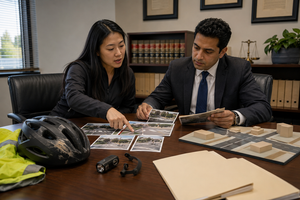
When you contact a traffic ticket lawyer, the first conversation is usually about understanding what happened, reviewing the basic information on your citation, and deciding whether the lawyer may be a fit for your situation. You can also expect questions about timing, prior notices, your goals, and what documents or details may be useful before you decide whether to move forward.
For Sacramento-area drivers, that first contact does not necessarily mean you are hiring the lawyer or committing to a particular course of action. It is often an opportunity for both sides to gather enough information to determine whether a more detailed discussion makes sense.
Knowing what that initial conversation may involve can make it easier to contact a lawyer without feeling as though you need to understand every legal issue beforehand.
The First Contact Is Usually About Getting Oriented
A common misconception is that contacting a traffic ticket lawyer immediately leads to an in-depth legal strategy discussion.
The first interaction may be much simpler.
Depending on the law office, you might initially speak with the lawyer, an intake coordinator, or another staff member. The purpose may be to collect basic information about the citation and understand why you are reaching out.
You may be asked about things such as:
- what type of citation or notice you received
- when you received it
- any dates shown on the paperwork
- whether you have received additional correspondence
- whether there are circumstances you believe the lawyer should know about
- what you are hoping to understand or accomplish
You generally do not need to arrive at that conversation knowing which legal arguments apply. Explaining what happened as accurately as you can and having the available paperwork nearby may be more useful than trying to diagnose the legal situation yourself.
You May Be Asked To Share The Citation Or Related Documents
The information printed on a traffic citation or related notice can give a lawyer important context.
A law office may therefore ask you to provide a copy of the citation or other relevant paperwork before or after the initial conversation. If you have received more than one document connected to the matter, the office may want to know about those as well.
This does not mean every document will necessarily be important. It simply allows the lawyer to work from the actual information available rather than from memory alone.
If something on the paperwork is unclear to you, you do not need to guess what it means. That uncertainty itself can be something to mention when speaking with the lawyer.
Expect Questions About What Actually Happened
The citation provides only part of the picture.
A traffic ticket lawyer may also ask you to describe the circumstances surrounding the stop or citation in your own words. The questions may seem very specific because the lawyer is trying to understand the situation rather than assuming that every traffic ticket presents the same issues.
It can help to separate what you clearly remember from what you are uncertain about.
For example, if you remember where you were driving and what occurred immediately before the stop but do not remember an exact detail from the conversation with the officer, saying so is generally more useful than trying to fill in the gap.
The goal of the first contact is not to tell the perfect story. It is to give the legal professional an accurate starting point.
The Conversation May Also Be About Whether The Lawyer Is A Fit
The lawyer is evaluating the situation, but you are also evaluating the lawyer.
That part of the conversation is easy to overlook when someone is mainly focused on the ticket itself.
You may want to understand whether the lawyer regularly handles the type of traffic matter you are calling about, how communication generally works, who would handle your matter, and what services would actually be included if you decided to hire the firm.
A clear first conversation should help you better understand the relationship being offered rather than leave you feeling pressured to make an immediate decision.
If the explanation of the service is vague, it is reasonable to ask for clarification before agreeing to anything.
Fees And Scope May Be Discussed Before You Decide
At some point during the initial contact, the office may explain how its fees work and what representation would include.
The important question is not simply, “What does it cost?”
It is also, “What am I paying for?”
Two lawyers or firms may structure their services differently. Understanding the scope can therefore be as important as hearing the fee itself.
You might ask whether the quoted amount covers the entire service being discussed, what communication you can expect, and whether there are circumstances that could result in additional charges.
You do not need to treat a fee discussion as an awkward interruption. It is part of understanding the professional relationship before hiring someone.
You May Not Receive An Immediate Answer About The Outcome
People often contact a traffic ticket lawyer because they want to know what is going to happen.
That is understandable, but an initial conversation may not produce a definite answer.
A lawyer may need to review the citation, hear more about the circumstances, or examine other information before discussing what options may be available. Even after reviewing the situation, a qualified attorney should not need to guarantee a particular result for the conversation to be useful.
A more productive goal for the first contact is to leave with a clearer understanding of the situation, the lawyer's role, the possible next steps the lawyer is willing to discuss, and what additional information may be needed.
Legal advice about your particular circumstances should come from a qualified attorney who has reviewed the relevant facts.
A Few Questions Can Help You Evaluate The Conversation
You do not need a long interview checklist, but a few practical questions can help you decide whether you understand what is being offered.
Consider asking:
- Do you handle traffic matters like this regularly?
- What information would you need from me before evaluating the situation further?
- Who would be my main point of contact?
- What does your quoted fee include?
- How would I receive updates?
- What would the next step be if I decided to hire you?
The answers can tell you something about both the service and the firm's communication style.
Pay attention not only to what you are told, but whether the explanation makes sense to you.
Clear Communication Matters More Than Knowing The Right Legal Terms
Some drivers hesitate to contact a lawyer because they do not know how to describe the issue in legal language.
You generally do not need to.
Your job during the first conversation is to explain what happened, provide the information you have, identify what you are unsure about, and ask questions about anything you do not understand.
The lawyer's job is to determine what legal information is relevant and explain how the firm may be able to help.
That distinction can make the initial contact feel much more manageable.
You are not expected to arrive as an expert on traffic law before speaking with someone whose profession is understanding it.
The First Conversation Should Help You Understand Your Next Decision
Contacting a traffic ticket lawyer is usually less about receiving an instant answer and more about determining whether professional legal help is appropriate for your particular situation and whether the lawyer you contacted is someone you are comfortable working with.
For Sacramento-area drivers, a useful first conversation should leave you better informed about what information matters, what the lawyer may be able to do, how the service would work, and what you would need to decide next.
You can then evaluate the information without treating the first phone call or inquiry as a commitment to hire.
For advice about your specific citation, rights, options, or legal obligations, speak directly with a qualified attorney who can review your individual circumstances.