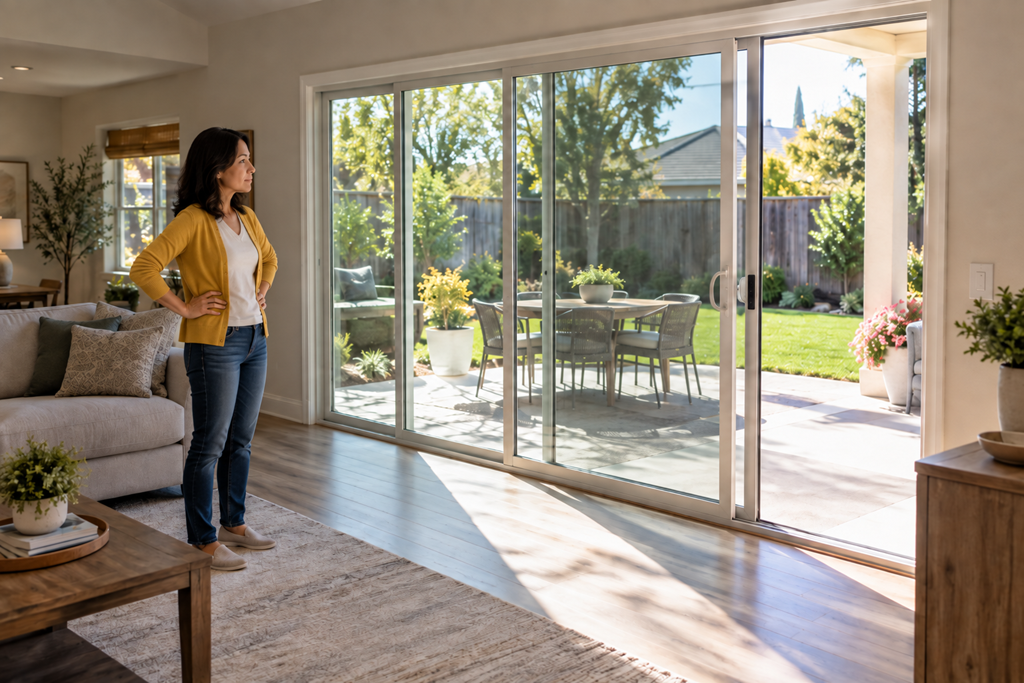
Covering a large window or sliding glass door is not simply the same decision as covering a smaller window with more material. The size of the opening can change how a treatment hangs, moves, stacks, controls light, and fits around everyday door use, so it helps to think about function before choosing a style.
That distinction is easy to miss. A fabric, shade, blind, or other treatment may look appealing in a sample or photograph, but a wide opening can change how the finished treatment feels and operates in the room. Sliding doors add another consideration because the opening is also a pathway that people may use throughout the day.
For Sacramento-area homeowners and renters, thinking through those practical details before comparing window treatment options can make conversations with installers more useful.
A Larger Opening Changes More Than the Amount of Material
With a standard-size window, choosing a treatment may feel mostly like a question of appearance, privacy, and light control.
A very wide or tall opening adds another layer: scale.
The treatment may need to span a much larger distance, cover more glass, and move more material whenever it opens or closes. Those differences can affect how substantial the finished treatment looks and how convenient it feels to operate.
This is why it can be helpful to evaluate a large opening as its own project rather than assuming that something that works well on a smaller window will behave exactly the same way when scaled up.
A Sacramento-area window treatment professional can also explain which options are appropriate for the dimensions and configuration of the actual opening rather than relying only on what looks attractive in a sample.
A Sliding Door Still Has to Work as a Door
Sliding glass doors create a particularly practical decision because they serve two purposes.
They bring light into the room, but they also provide access.
Think about how the door is actually used. One panel may be opened repeatedly while another rarely moves. Family members may pass through it to reach a patio or backyard. Furniture may sit near one side of the opening. The door handle and frame also occupy physical space.
A treatment that looks good while fully closed can feel very different when someone needs to move it aside several times a day.
That does not automatically make one treatment style better than another. It simply means that normal door use belongs in the decision from the beginning rather than being treated as an afterthought.
Where the Treatment Goes When Open Matters Too
One of the easiest details to overlook is what happens to the treatment when you want the glass exposed.
Material has to go somewhere.
Depending on the type of treatment, it may gather toward one or both sides, collect above the opening, or remain partially visible across the glass.
On a particularly wide opening, that occupied space can become more noticeable.
For a sliding door, it may also affect how much of the doorway feels open and accessible. For a large picture window, it can influence how much of the view remains unobstructed when the treatment is pulled back.
Before choosing based mainly on how a treatment looks when closed, consider what you want the opening to look and feel like when the treatment is open as well.
Light Control Can Feel Different Across a Large Area of Glass
Large windows can make natural light one of the strongest features in a room. They can also expose a larger area to direct sun, glare, or changing light conditions during the day.
In Sacramento-area homes where a particular window receives substantial sun exposure, that may make light control an especially useful topic to discuss before selecting a treatment.
The important question is not simply whether the treatment can block light.
Consider how you expect to use it.
You may want substantial coverage at certain times while keeping the room bright at others. Another household may care more about reducing glare near a television or workspace. A street-facing opening may make privacy more important than it would be on a secluded backyard-facing window.
The size of the glass can amplify whichever concern matters most in that particular room.
One Large Opening May Involve More Than One Decision
Some openings look simple from across the room but become more complicated when you examine how they are arranged.
A broad wall might include several window sections. A sliding door might sit beside another fixed glass panel. Multiple doors or windows may appear visually connected even though they operate differently.
That can raise questions about whether the treatments should operate together or independently.
There is also a visual decision. Treating every section identically may create a unified appearance, while dividing an opening into separate treatment sections may provide different operating possibilities.
Neither approach is automatically correct.
The useful point is to recognize the choice before the installation rather than discovering afterward that the way the opening was divided affects how the room functions.
Appearance and Everyday Operation Should Be Considered Together
Large treatments become noticeable elements in a room simply because they occupy so much visual space.
That makes appearance important, but appearance should not be separated from operation.
Imagine the treatment closed across the entire opening. Then imagine it open. Consider what happens when only part of the window needs coverage or when someone needs to use the sliding door.
This often gives a more realistic picture than evaluating a small material sample by itself.
It can also help you explain your priorities to a local installer. Instead of only saying that you like a particular look, you can describe how you expect the opening to function during an ordinary day.
Questions Worth Asking Before Choosing a Treatment
When discussing a large window or sliding door with a window treatment professional, a few focused questions can help clarify the decision:
- How will this option operate across an opening this large?
- Where will the treatment sit when it is fully open?
- Will the normal path through the sliding door remain convenient?
- Can different sections of the opening be controlled independently if needed?
- Are there handles, trim, nearby furniture, or other features that affect the recommended configuration?
- What should I expect the treatment to look like both open and closed?
These questions keep the conversation centered on the actual room rather than only on colors, materials, or product samples.
The Estimate Should Reflect the Actual Opening
For large windows and doors, an estimate is more useful when the provider has considered the real dimensions and surroundings of the opening.
That includes more than width and height.
How the door moves, how the room is arranged, the available space around the opening, and the way the household expects to use the treatment can all be relevant to the discussion.
If two proposed solutions differ, ask what accounts for the difference. One provider may be proposing a different operating configuration, number of treatment sections, mounting approach, material, or hardware setup.
Understanding those distinctions can make quotes easier to compare because you are comparing what each proposal is intended to accomplish rather than looking only at the total price.
Think About the Whole Opening Before Committing
Large windows and sliding doors often deserve a little more planning because size changes how a window treatment interacts with the room.
The goal is not to find the most elaborate option. It is to choose something that makes sense for the scale of the glass, the way the opening is used, the amount of light or privacy you want, and the space available when the treatment is open.
Looking at those factors before comparing options can help Sacramento-area residents have a more productive conversation with local window treatment professionals and make a decision based on how the finished installation will actually function in everyday life.