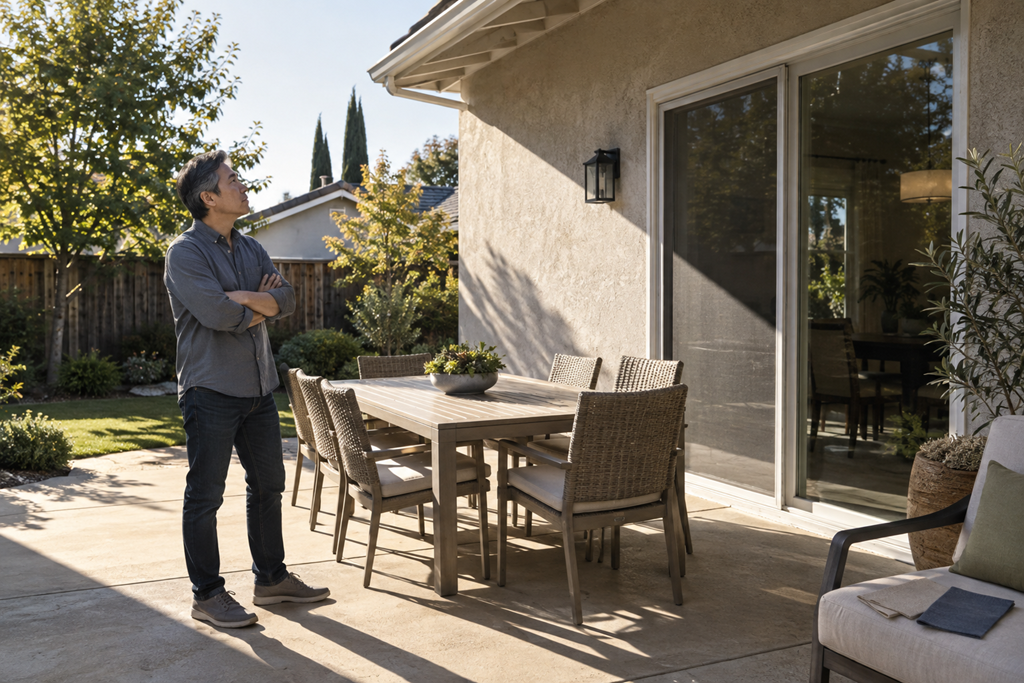
A retractable awning can make a patio or window area more comfortable, but the decision is not just about choosing a fabric color or how far the shade extends. Before installation, it helps to understand how the awning will fit the space, where the sun actually reaches, what may affect mounting and clearance, and how you expect to use it during changing weather.
That can be easy to overlook when the first thing you notice is an uncomfortable sunny patio. It may seem straightforward: identify the area that gets hot, choose an awning large enough to cover it, and schedule installation. In practice, the usefulness of the finished awning depends on how several parts of the property and your daily routine work together.
For Sacramento-area homeowners dealing with strong sun exposure during warmer parts of the year, thinking through those details beforehand can make conversations with local awning installers much more productive.
Start With the Shade You Actually Want
The size of an awning and the amount of useful shade it creates are related, but they are not exactly the same thing.
Sunlight reaches a patio from different angles depending on the time of day and the orientation of the home. An awning that shades a seating area well during one part of the day may leave that same area exposed later when the sun is lower or coming from a different direction.
That is why it helps to think about the specific problem you are trying to solve.
You may primarily want shade over an outdoor dining table during the afternoon. Someone else may be trying to reduce direct sunlight near a sliding glass door. Another homeowner may want a more usable sitting area during the hottest part of the day.
Those are different goals, even if they all lead to the same general idea of installing a retractable awning.
A local installer should be able to discuss how the proposed location, projection, orientation, and typical sun exposure relate to the area you actually want shaded.
The Wall Above the Patio Matters Too
Homeowners naturally focus on the patio below an awning, but the part of the house above it can be just as important.
Doors, windows, rooflines, gutters, exterior lights, trim, vents, architectural details, and other features can influence where an awning may reasonably fit.
The condition and construction of the intended mounting area also matter. This is one of the reasons an installation should not be evaluated solely by looking at an awning model online or estimating dimensions from the patio itself.
A qualified professional can evaluate the proposed location and explain whether anything about the property affects the installation approach.
This does not necessarily mean there is a problem. It simply means the house itself is part of the decision.
Make Sure the Awning Works With the Space Below It
An awning should also make sense with the way the patio is already used.
Look at where people normally sit, walk, open doors, move between the house and yard, or gather around outdoor furniture. Think about grills, planters, steps, railings, pathways, and other permanent or frequently used features.
The goal is not merely to determine whether an awning physically fits.
It is to understand whether the shaded area will line up with the part of the patio you actually use.
For example, a large awning may sound appealing, but additional projection is not automatically more useful if the furniture arrangement, property layout, or intended shade area suggests something different.
Likewise, choosing a smaller awning simply because it costs less may not accomplish the original reason for installing one.
The better question is whether the proposed size and placement fit the real space.
Retractable Does Not Mean You Will Use It the Same Way Every Day
One of the main differences between a retractable awning and a permanent shade structure is that the homeowner can change its position.
That flexibility makes your expected routine worth discussing.
Some people may expect to extend the awning primarily during sunny afternoons and retract it afterward. Others may want convenient shade several times throughout the day. The ease of operating the awning can therefore become part of the overall fit.
Depending on the product, retractable awnings may use manual or powered controls. Those choices can affect convenience, installation considerations, and project cost.
Rather than assuming one option is automatically better, think about how often you expect to operate the awning and who will normally be using it.
If a powered model is being considered, ask the installer what additional installation or electrical considerations apply to the proposed location.
Weather Expectations Should Be Discussed Before Installation
It is also important to understand what the awning is designed to handle and when the manufacturer or installer expects it to be retracted.
Retractable awnings are movable shade products, and different systems may have different operating limitations.
Before choosing one, ask how wind, rain, and other changing conditions relate to normal operation. If the system includes automatic controls or sensors, ask what those features do and what they do not do.
This conversation helps separate two different questions: whether an awning provides useful shade and how the particular awning should be used under different conditions.
Knowing those expectations beforehand can prevent assumptions about what a retractable awning is intended to do.
Fabric and Appearance Are Only Part of the Choice
Color and fabric are naturally noticeable because they affect how the finished awning looks against the home.
They still deserve consideration, but appearance should come after the basic fit of the project is understood.
Two awnings that look similar in a sample or photograph may differ in dimensions, operating method, hardware, coverage, or other characteristics that affect how they function at a particular property.
This is why comparing proposals based only on appearance or headline price can leave important questions unanswered.
A useful estimate should make it reasonably clear what is being proposed for your specific location.
A Few Questions Can Make an Estimate More Useful
When meeting with an awning installer, you do not need to become an expert in awning construction. You mainly need enough information to understand what the provider is recommending and why.
Useful questions can include:
- What area should this proposed awning shade at the times I care about most?
- What property features affect the recommended placement or size?
- Is anything about the proposed mounting area worth evaluating before installation?
- How much clearance will the awning need when extended?
- What are the normal expectations for retracting it during changing weather?
- What is included in the quoted installation?
- If the awning is powered, what additional considerations are involved?
- What maintenance or routine care should I expect after installation?
The answers should help you connect the proposed product to your home rather than simply giving you more product specifications to compare.
Be Careful With Decisions Based Only on Maximum Size
A common assumption is that the largest awning that will fit is automatically the best choice.
Another is that the smallest acceptable option is the safest way to keep the project simple.
Neither approach necessarily starts with the real question.
The more useful starting point is the area you want shaded and the conditions around that area.
Size then becomes one part of solving that specific problem rather than the decision by itself.
The same principle applies when comparing manual and powered models, fabric options, accessories, and other upgrades. Features are most useful when they solve something you actually care about.
A Site-Specific Conversation Is More Useful Than Guessing
Online photos and product descriptions can help you understand what retractable awnings look like, but they cannot show exactly how one will interact with your house.
Your sun exposure, wall configuration, doors, windows, patio layout, furniture, and intended use create a specific set of considerations.
That is why an on-site evaluation or sufficiently detailed project discussion can be valuable before committing to a particular configuration.
You are not simply asking, “Can an awning go here?”
You are trying to understand, “Will the proposed awning create the shade and everyday usability I am expecting in this particular space?”
That distinction can make it much easier to compare recommendations from local providers.
Know What You Want the Awning to Accomplish
A retractable awning can be a practical way to create adjustable shade, but a successful decision starts before the product is installed.
Pay attention to where the sun reaches, how the patio is used, what surrounds the proposed mounting area, how you expect to operate the awning, and what the provider says about normal weather use.
With those details in mind, you can have a more useful conversation with Sacramento-area awning installers and compare proposals based on how well they fit your property and your expectations—not simply on appearance, maximum size, or price alone.