Before replacing old windows, the most important thing to know is that age alone does not determine whether replacement makes sense. What matters is how the windows operate, seal, manage heat and moisture, fit the surrounding openings, and affect everyday comfort. A useful evaluation separates cosmetic aging from performance problems and helps you understand whether repair, partial replacement, or a broader project is worth discussing.
Older windows often create an uncertain decision because visible wear does not always reveal how well they are performing. Faded finishes, dated hardware, or an older design may be noticeable without causing a serious functional problem. At the same time, a window that looks acceptable may have a failed seal, an uneven sash, recurring drafts, or deterioration around the opening.
The goal before requesting estimates is not to diagnose every technical detail yourself. It is to understand what problems you want addressed and whether a professional’s recommendation clearly connects those problems to the proposed work.
Old Does Not Automatically Mean Worn Out
A window’s age can provide useful context, but it should not be the only reason offered for replacing it.
Some older windows continue to open, close, lock, and protect the surrounding area reasonably well. Others may develop repeated problems that affect comfort, operation, moisture control, maintenance, or the way a room is used.
Signs that deserve closer evaluation may include:
- Sashes that repeatedly stick, shift, or refuse to lock properly
- Noticeable air movement around a closed window
- Condensation or a cloudy appearance between panes
- Soft, swollen, cracked, or discolored material around the frame
- Water staining that returns after seasonal rain
- Rooms that feel noticeably hotter or colder near certain windows
- Recurring repairs that no longer provide a lasting improvement
One worn component does not necessarily mean every window in the property needs to be replaced. A qualified window professional should be able to explain which conditions are isolated, which are repeated, and why a particular scope is being recommended.
Look for Patterns Across the Home
Window problems often become easier to understand when you compare rooms rather than looking at one opening by itself.
One window may receive stronger afternoon sun. Another may be exposed to wind-driven rain. A shaded window may remain in better condition even though it was installed at the same time as the others. Differences in operation or comfort can therefore appear among windows of the same age.
Sacramento-area homeowners may notice that rooms with greater sun exposure feel different from shaded areas of the home. That does not automatically prove the windows are responsible, but it gives a professional a more useful starting point for evaluating the concern.
Pay attention to whether the problem:
- Appears at one window or throughout the property
- Happens only during certain weather conditions
- Is connected to one side of the home
- Has become progressively worse
- Returns after adjustments or repairs
- Affects how furniture or living areas are arranged
These patterns can help separate an isolated hardware problem from a broader performance concern.
Be Clear About What You Want Replacement to Improve
Window replacement can be discussed for several different reasons, and those reasons should not be treated as interchangeable.
A homeowner may want windows that operate more easily, require less maintenance, reduce noticeable drafts, improve the appearance of the home, or make certain rooms more comfortable. Another homeowner may be responding to failed glass seals, damaged frames, or water-related deterioration.
Identifying the primary concern helps keep the consultation focused. It also makes it easier to evaluate whether the proposed window and installation method are connected to the result you care about.
Replacement may improve several aspects of a window at once, but it should not be presented as a guaranteed solution to every comfort or energy problem in the home. Insulation, air leakage elsewhere, shading, HVAC performance, room orientation, and other building conditions can also influence indoor comfort.
A dependable provider should be willing to explain what the window project is reasonably expected to change and what may remain outside its scope.
The Surrounding Opening Matters Too
A replacement window does not exist separately from the frame, sill, trim, wall, and exterior materials around it.
Before work begins, it is important to understand whether the proposal involves placing a new window within part of the existing frame or removing more of the original assembly. The appropriate approach can depend on the condition of the existing materials and the goals of the project.
This distinction can affect:
- How much of the existing frame remains
- Whether interior or exterior trim is disturbed
- What happens if damaged material is discovered
- How the finished opening will look
- How much disruption the work may create
- Which repairs and finishing work are included
Homeowners do not need to choose an installation method based only on unfamiliar terminology. The provider should explain why the proposed method fits the condition of the opening and what will remain in place when the work is complete.
Similar-Looking Estimates May Cover Different Work
Two estimates may both say “window replacement” while describing substantially different projects.
One proposal may include removal, disposal, trim work, finishing, protection of nearby surfaces, and repairs to limited areas around the opening. Another may cover only the window unit and basic installation. Product features, glass configurations, frame materials, warranties, and responsibility for unexpected damage may also differ.
This is why comparing only the total price can be misleading. A lower estimate may simply contain fewer included tasks or leave more decisions unresolved.
Before comparing quotes, look for a clear explanation of:
- Which windows are included
- The proposed replacement approach
- The window and glass specifications
- Interior and exterior finishing responsibilities
- Cleanup and disposal
- How concealed damage will be handled
- Product and installation warranty coverage
- Who will complete and supervise the work
The most useful estimate is not necessarily the longest. It is the one that makes the scope understandable enough to compare with another proposal.
Ask Why Each Window Is Being Recommended
When several old windows are present, it is reasonable to ask whether they all need the same solution.
A provider may recommend replacing every window for consistency or project efficiency. That may suit some homeowners, but the reasoning should still be explained. In other situations, it may be possible to prioritize windows with the clearest performance or condition problems.
Useful questions include:
- What specific condition supports replacement rather than repair?
- Are all the windows showing the same problem?
- Which windows would you consider the highest priority?
- What parts of the existing opening will remain?
- What work is included around the interior and exterior trim?
- What happens if damaged material is found after removal?
- What changes should I realistically expect after installation?
- Are any related repairs or finishing tasks excluded?
Clear answers help you understand whether the recommendation is based on observed conditions, your goals, or a standard package being offered without much property-specific evaluation.
Be Cautious When the Explanation Stays Vague
Replacing old windows is a significant home project, so the reasoning should be more specific than “they are old” or “new windows are more efficient.”
A conversation may deserve closer scrutiny when:
- Every window is recommended without an explanation of its condition
- Broad savings claims are made without discussing the home
- The installation method is not identified
- Questions about trim, frames, or surrounding damage are avoided
- Product features receive more attention than the actual problems
- Important exclusions are left for the homeowner to discover later
- Pressure is used to discourage additional estimates or questions
A professional recommendation does not need to include dramatic warnings or complicated technical language. It should connect visible conditions, homeowner concerns, and proposed work in a way that makes sense.
Prepare for the Consultation by Documenting Everyday Problems
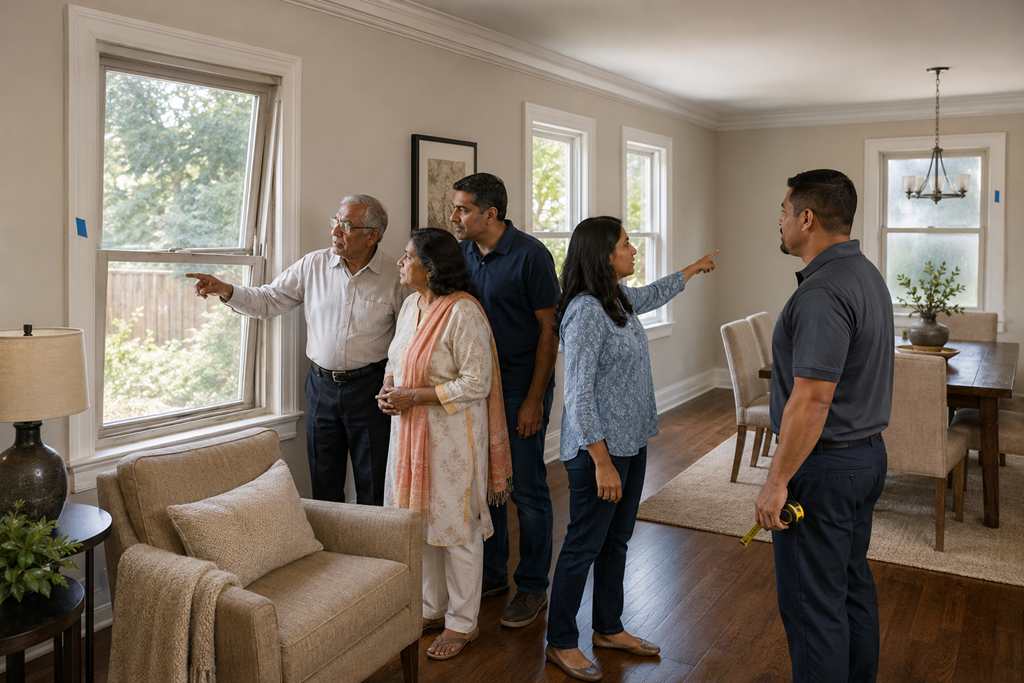
You do not need special tools or technical knowledge to prepare for a window evaluation.
It can help to make a simple record of which windows are difficult to operate, where drafts seem noticeable, which rooms experience the most discomfort, and whether staining or condensation appears under particular conditions. Photographs of recurring moisture, crooked sashes, failed locks, or fogged glass can be useful when a problem is not always visible during the appointment.
Also consider which outcomes matter most to you. A household focused on easier operation may evaluate options differently from one concerned about maintenance, appearance, outside noise, or recurring moisture.
Providing this context gives the professional more than the approximate age of the windows. It allows the discussion to begin with the way the home is actually being affected.
Make the Decision Based on Evidence and Scope
Old windows should be evaluated by their condition, operation, effect on the home, and relationship to the surrounding openings—not by age alone.
Before committing to replacement, make sure the provider can explain what is failing, why the recommended approach fits the property, what the project includes, and what results are realistic. That understanding makes it easier to compare Sacramento-area window professionals without relying solely on product claims or total price.
A well-explained proposal should leave you with a clearer picture of which windows need attention, what will happen during installation, and why the proposed work matches the problems you are trying to solve.