Trying to clean pool tile yourself can make sense when the buildup is light, the tile material is known, and the method is gentle. The risk begins when a pale waterline band is treated like ordinary dirt, because mineral scale, damaged grout, etched glass, and surface discoloration can look similar while responding very differently to cleaning.
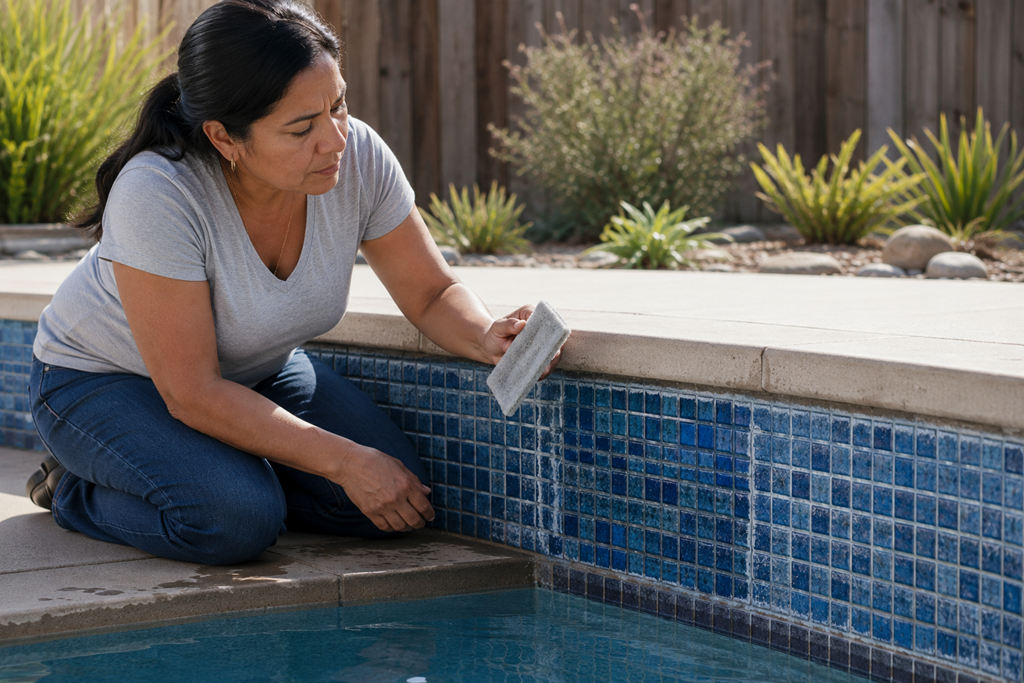
For many homeowners, the situation begins with a mark that seems simple. The pool water looks clear, but a white, gray, or uneven band remains along the tile. It may look less noticeable when wet and return as soon as the surface dries. That can make repeated scrubbing feel like the obvious next step, even when the residue is not ordinary surface dirt.
Before applying a cleaner or abrasive tool, it helps to understand what you may actually be dealing with.
The Waterline Mark May Not Be Ordinary Dirt
Pool tile collects residue at the boundary where water repeatedly splashes, evaporates, and dries. Oils, sunscreen, dust, organic material, and minerals can all contribute to what appears along that line.
Some residue remains soft enough to respond to mild cleaning. Other deposits become hard, layered, or chemically bonded to the surface. A tile may also look cloudy because the finish itself has been dulled or etched rather than because something is sitting on top of it.
This distinction matters because stronger scrubbing does not necessarily produce a better result. When the underlying problem is surface damage, worn glazing, weakened grout, or a hardened mineral deposit, greater pressure may change the tile without fully removing the mark.
Wet Tile Can Hide the Condition Temporarily
One reason pool tile buildup is easy to misread is that water can temporarily darken the tile and make the surface appear cleaner. Once the area dries, the pale band returns.
This does not always mean the previous cleaning attempt failed completely. It may mean moisture was masking a remaining deposit, or that the surface underneath has changed in a way that becomes more visible when dry.
A useful evaluation should therefore include looking at the area after it has dried. Judging the result only while the tile is wet can create the impression that a product or technique worked better than it actually did.
The Tile Material Changes What Is Safe
Not every pool finish can tolerate the same cleaning method.
Glazed ceramic tile, glass mosaic, natural stone, decorative tile, grout, and surrounding coping can react differently to abrasives and cleaning products. A method that appears harmless on one surface may leave scratches, haze, discoloration, or altered texture on another.
Even within the same pool, the waterline may include several materials. A cleaning product placed on the tile can spread onto grout, stone, metal fittings, plaster, or the pool water itself.
Before attempting any cleaning, Sacramento-area homeowners should know what material they have rather than choosing a method based only on the color or hardness of the deposit.
Aggressive Methods Can Create a Second Problem
The frustration of seeing the same line return often leads homeowners to use greater pressure, stronger products, or rougher tools. That escalation is where a small appearance issue can become more difficult to correct.
Potential concerns include:
- Scratching or dulling a visible tile finish
- Removing or weakening grout
- Etching glass or natural stone
- Changing the appearance of one isolated section
- Allowing cleaning residue to enter the pool water
- Making existing surface damage more noticeable
- Creating an uneven result between treated and untreated areas
This does not mean every do-it-yourself attempt is unsafe. It means the least aggressive reasonable approach is usually a better starting point than assuming the hardest deposit requires the strongest available method.
Chemical products should never be mixed casually. Manufacturer instructions, surface compatibility, ventilation, protective equipment, and the effect on surrounding pool materials all deserve consideration.
A Small Test Area Can Reveal More Than a Large Cleaning Attempt
When the material and buildup are reasonably understood, a limited test area can show how the surface responds before a large visible section is changed.
The goal is not merely to see whether the pale material comes off. It is also to notice what the tile looks like after it has fully dried.
A test section may reveal that:
- The buildup softens with a gentle approach
- The deposit remains hard and layered
- The tile underneath looks duller than expected
- Grout begins to loosen or discolor
- The treated section looks noticeably different from the surrounding tile
- The mark is partly surface damage rather than removable residue
Testing does not eliminate every risk, but it can prevent an uncertain method from being applied across the entire waterline.
The Size and Pattern of the Buildup Matter
A small patch of recent film presents a different decision from a continuous rough band extending around the pool.
Widespread buildup may indicate that the deposit has accumulated over a long period or that the conditions producing it are still present. Cleaning one section may improve its appearance without addressing why the line developed or why it may return.
The pattern can also help with evaluation. A uniform band at the waterline may suggest repeated wetting and drying. Heavier deposits near a spillway, return, raised feature, or frequently splashed area may point to concentrated water movement.
Understanding the pattern can help a homeowner describe the problem more accurately when speaking with a pool tile cleaning professional.
Cleaning May Reveal Permanent Changes Underneath
Removing a deposit does not guarantee that the original shine or color will return.
Scale and residue can hide preexisting wear, faded grout, surface etching, scratches, or changes caused by prolonged exposure. Once the buildup is removed, these differences may become easier to see.
That possibility is especially important when one small section is cleaned aggressively. The treated area may become cleaner but still look noticeably different from the rest of the waterline.
A realistic expectation is that professional cleaning may remove or reduce removable material. It cannot always reverse changes to the tile surface itself.
When a Professional Evaluation May Be Worth Discussing
A professional opinion may be useful when the buildup is thick, rough, widespread, recurring, or difficult to identify. It may also be appropriate when the pool includes glass mosaic, natural stone, decorative finishes, aging grout, cracked tile, or previously damaged surfaces.
Professional pool tile cleaning methods are not all identical. The appropriate approach can depend on the tile, deposit, grout condition, access, surrounding materials, and the result the homeowner expects.
An evaluation can help distinguish among removable buildup, possible surface damage, and conditions that may cause the residue to return. It can also help the homeowner understand whether cleaning should be limited, tested, postponed, or coordinated with another pool maintenance concern.
Useful Questions Before Hiring a Pool Tile Cleaning Professional
Before comparing local providers, consider asking:
- How will you identify the tile material and type of buildup?
- Will you test a small area before treating the full waterline?
- What result should I realistically expect after the tile dries?
- Could the process affect the grout, coping, plaster, or nearby finishes?
- How will the pool water and surrounding area be protected?
- Are any cracks, loose tiles, or damaged grout visible before cleaning begins?
- What may cause the buildup to return after cleaning?
Clear answers should explain both the proposed method and its limitations. Be cautious when a provider promises that every tile surface will look new without first examining its condition.
Make the Decision Based on the Surface, Not Just the Stain
The most important step before cleaning pool tile yourself is recognizing that similar-looking marks can have different causes. Light residue on durable glazed tile may allow for a cautious, gentle approach. Hard scale, delicate materials, weakened grout, or an uncertain surface condition call for more restraint.
Pause when the tile begins to change faster than the deposit. Scratching, haze, grout loss, discoloration, or an increasingly uneven finish are reasons to stop rather than apply more pressure.
For Sacramento-area homeowners, understanding the tile and the buildup before choosing a method can prevent a cosmetic concern from becoming permanent surface damage. Whether you proceed carefully on your own or request a professional evaluation, the goal should be an informed decision based on the material’s actual condition.