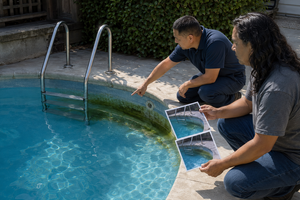
If you are looking at a chalky white line or crusty buildup on pool tile, it can be tempting to grab a scrubber or household cleaner and start working on it yourself. The important thing to know first is that not every deposit behaves the same way, and an aggressive DIY attempt can leave you with damaged tile, grout, or a bigger cleanup problem than the buildup itself.
For Sacramento-area pool owners, the most useful first step is usually not deciding how hard to scrub. It is understanding what you are looking at, how firmly it is attached, what surface is underneath it, and whether the removal approach you are considering could affect that surface.
That White Line May Be More Than a Cosmetic Annoyance
Mineral buildup often becomes noticeable around the waterline, where repeated contact with pool water and evaporation can leave deposits behind. What starts as a faint haze may eventually look rough, chalky, crusty, or uneven.
That appearance can make the problem seem straightforward: there is something on the tile, so it needs to be scraped or scrubbed off.
The complication is that the visible deposit and the surface beneath it are two different things.
Pool tile, grout, stone, decorative finishes, and surrounding materials do not necessarily respond the same way to abrasives, chemicals, scraping, or repeated scrubbing. A method that seems harmless on one surface may leave scratches, discoloration, worn grout, or other visible changes on another.
That is why identifying the material you are trying to protect matters as much as identifying the buildup you want to remove.
The Harder the Deposit, the More Caution Makes Sense
A light film that wipes away easily is a very different situation from a hardened deposit that appears bonded to the surface.
When homeowners encounter stubborn buildup, the natural reaction is often to escalate: use something stronger, scrub harder, switch to a rougher tool, or leave a cleaning product on longer.
That escalation is where a cosmetic problem can become a surface problem.
If the buildup is not responding easily, that resistance is useful information. It does not automatically mean more force is the answer. It may mean the deposit, surface, or removal method deserves a closer look before continuing.
Stopping after an ineffective first attempt can sometimes be a better decision than repeatedly increasing the intensity of the cleaning.
Household Cleaning Products Are Not Automatically Pool-Surface Products
Another common misunderstanding is assuming that a familiar household cleaner is suitable simply because it removes mineral deposits elsewhere.
Pool environments involve different surfaces, grout joints, finishes, water chemistry, and surrounding materials. Products designed for sinks, showers, appliances, or general household cleaning are not automatically appropriate for pool tile or nearby finishes.
The same caution applies to improvised scraping and abrasive tools.
Before using something simply because it is already in the garage or cleaning cabinet, consider whether you actually know how that product or tool will interact with the specific material around your pool.
If that answer is unclear, experimenting on a highly visible pool surface may not be worth the risk.
Removing the Deposit Does Not Explain Why It Appeared
There is another reason to think beyond the immediate cleaning job: removing visible buildup and understanding why it keeps appearing are separate issues.
Mineral deposits can be influenced by conditions in the pool water and by what happens repeatedly around the waterline. Cleaning the surface may improve its appearance without addressing whatever is contributing to recurring buildup.
That distinction matters when deciding whether continued DIY cleaning is worthwhile.
If you find yourself repeatedly removing the same white deposits, focusing only on the visible surface may keep you in a cycle of cleaning without understanding the larger pattern.
A pool service or tile-cleaning professional may be able to help you distinguish between a one-time surface-cleaning issue and something worth evaluating more broadly.
A Small Buildup Area Can Help You Judge the Scope
Not every calcium-buildup concern requires the same response.
A small, isolated area is different from a heavy waterline deposit extending around much of the pool. Likewise, buildup limited to durable tile presents a different decision than deposits involving decorative materials, grout, natural stone, or surfaces whose condition you are unsure about.
Before deciding whether to handle the issue yourself, step back and look at the overall scope.
Consider how much of the pool is affected, whether the deposit appears light or heavily hardened, whether multiple materials are involved, and whether any previous cleaning attempt has changed the underlying surface.
The goal is not to diagnose the deposit yourself. It is to recognize when the situation is becoming more complicated than a simple cleaning task.
Be Careful About Turning a Test Into a Bigger Project
A homeowner may reasonably try to see whether a small amount of light buildup comes away easily. The trouble begins when a quick test turns into repeated scraping, stronger products, or increasingly aggressive techniques because the first attempt did not work.
That progression can happen gradually.
You may start with the assumption that the job will take a few minutes, then find yourself trying several different approaches because the deposit remains.
At that point, the question changes from “Can I clean this?” to “Do I understand enough about this surface and buildup to keep experimenting?”
That is a useful point to stop and reconsider.
When Professional Evaluation May Be Worth Discussing
Professional pool tile cleaning may be worth considering when the deposits are extensive, especially hard, repeatedly returning, located on materials you do not want to risk damaging, or simply not responding to a cautious cleaning attempt.
That does not mean every visible mineral deposit requires professional service.
It means the cost of getting an informed opinion may be easier to justify when the alternative is experimenting with increasingly aggressive methods on a finished pool surface.
If you contact a Sacramento-area pool tile cleaning provider, useful questions can include:
- What type of buildup does this appear to be?
- Does the tile or surrounding material affect the cleaning method?
- What method would you use on this particular surface?
- Is there any risk of changing the appearance of the tile or grout?
- Is there anything about the recurring buildup that I should have evaluated separately?
- What preparation, access, or pool conditions are needed before the service?
Clear answers can help you compare providers based on how they approach your particular pool rather than simply asking who can remove the white line.
The Goal Is to Protect the Surface, Not Just Remove the Buildup
Calcium buildup can look like a straightforward cleaning problem, but the harder it is to remove, the more important it becomes to think about what is underneath it.
Before escalating from light cleaning to stronger products, rougher tools, or repeated scraping, consider the surface material, the amount of buildup, what happened during any previous attempts, and whether recurring deposits suggest a larger issue worth asking about.
For Sacramento-area homeowners, that little bit of restraint can make the decision easier: the goal is not simply to make the white buildup disappear. It is to improve the appearance of the pool without creating a new problem in the process.