A cheap screen can seem like an easy way to save money at the beginning, but the frustration often shows up later in everyday use. A screen that feels flimsy, fits poorly, rattles, sticks, wears quickly, or uses hardware that never feels quite right can turn a simple entry feature into something you notice for all the wrong reasons. For Sacramento-area homeowners, the better question is not simply which screen costs the least, but whether the screen is likely to feel solid, operate smoothly, and fit the way the household actually uses the door.
The important distinction is that a lower price does not automatically mean a bad screen. Problems are more likely when price becomes the main consideration and other practical differences are barely considered.
A screen door is something you may open, close, latch, unlock, and walk through repeatedly. Small compromises that seemed unimportant during the purchase can become much more noticeable once they are part of daily life.
The Frustration Usually Shows Up in Small Moments
People do not necessarily regret a screen choice because of one dramatic failure.
More often, irritation builds through ordinary moments.
The door may not close as smoothly as expected. The handle may feel less substantial than anticipated. The frame may feel different from what the homeowner pictured. A latch may require more attention than it seemed to during an initial demonstration. A finish may start looking tired sooner than expected, or the entire door may simply feel less satisfying to use than the homeowner hoped.
Any one of those issues may seem minor.
But an entry door is used often enough that minor annoyances can become recurring annoyances.
That is why evaluating a screen only by what it costs today can miss an important part of the decision: what it will be like to live with.
“Affordable” and “Cheap” Are Not Necessarily the Same Thing
There is nothing wrong with having a limited project budget.
An affordable screen that fits the opening properly, meets the homeowner's actual priorities, and performs as expected can be a perfectly reasonable choice.
The bigger concern is choosing the least-expensive option without understanding what is different about it.
Two screen doors that appear similar from several feet away may differ in their frame construction, mesh or screen material, hardware, locking components, finish, fit, operating feel, customization options, or intended level of use.
Those differences may not all matter equally to every homeowner.
The goal is not to buy the most expensive screen available. It is to understand what is being traded away when moving toward a lower-cost option.
That makes the decision about value rather than price alone.
Everyday Use Can Reveal Differences a Showroom Glance Does Not
A screen may look completely acceptable when it is standing still.
Living with it can be different.
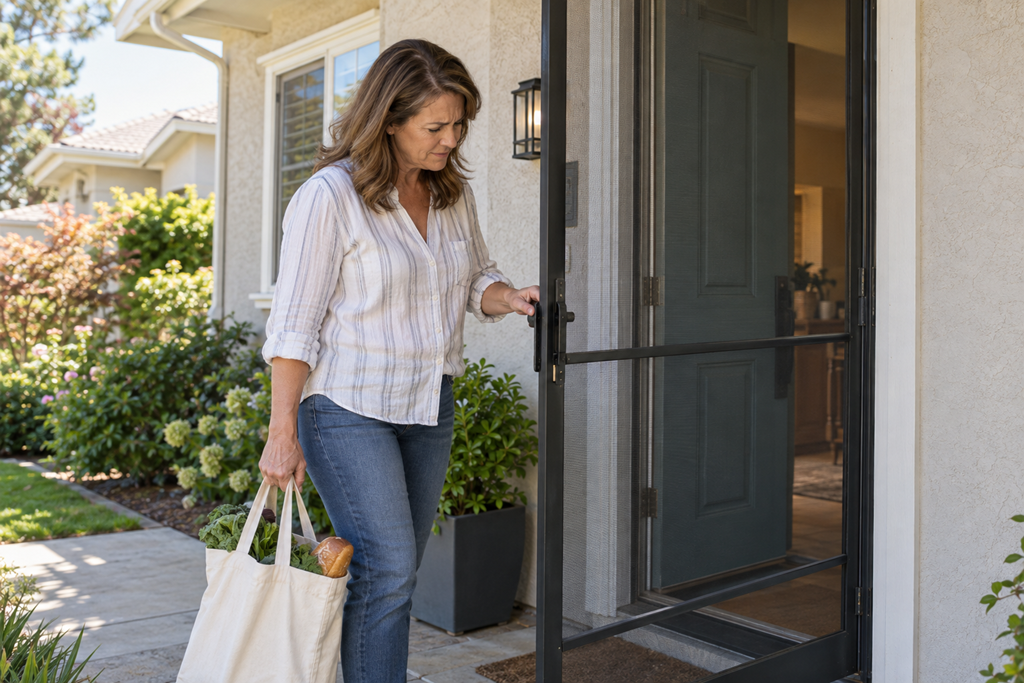
Think about how the entrance is actually used. Someone may regularly carry groceries through it. Children may use the doorway throughout the day. Pets may gather near the entrance. Household members may want to leave the primary door open while keeping the screen closed. Visitors may use the same handle and latch repeatedly.
A screen that feels slightly inconvenient during an occasional demonstration can feel much more inconvenient after hundreds of normal uses.
This is one reason it helps to pay attention to operating feel rather than appearance alone.
Open and close the type of screen being considered when possible. Notice how the handle feels, how the door moves, how the latch engages, and whether the overall construction feels appropriate for the way the entrance will be used.
A local provider should also be able to explain what differences exist between lower-priced and higher-priced options without simply telling you that one is “better.”
Fit Can Matter as Much as the Screen Itself
Even a screen with reasonable materials can become frustrating when the completed installation does not feel well matched to the opening.
Entryways are not all identical.
Existing doors, frames, thresholds, trim, handles, surrounding materials, and other physical conditions can affect how a screen door fits and operates.
That makes it useful to separate two questions:
Is this a suitable screen?
And is it suitable for this particular doorway?
A Sacramento-area homeowner comparing options may want to understand whether a screen is a standard configuration or whether the opening requires different sizing, hardware, positioning, or other considerations.
You do not need to diagnose those conditions yourself. The point is to make sure fit is part of the conversation before the decision is reduced to price.
A Low Price Can Be Less Appealing if You Already Want to Replace It
Another useful way to think about price is to consider how satisfied you expect to be with the choice after the initial purchase is forgotten.
A screen that saves money upfront but quickly becomes something you dislike using may not feel inexpensive for very long.
That does not mean every lower-cost screen will need early replacement, nor does paying more guarantee that you will love the result.
It simply means the purchase price is only one part of the experience.
If you already suspect that a basic option may not meet your expectations for appearance, operating feel, hardware, durability, or security-related features, it may be worth comparing another option before committing rather than assuming those differences will stop mattering later.
Security Expectations Deserve Their Own Conversation
The word “screen” can describe products designed for different purposes.
Some homeowners mainly want ventilation and insect protection. Others are specifically exploring security screen doors and expect the door to add a meaningful physical barrier at the entrance.
Those are different expectations.
If security is part of the reason for the project, do not assume that every metal screen door provides the same level of protection simply because it looks substantial.
Ask the provider to explain the construction, locking system, screen or mesh material, frame, attachment approach, product specifications, and any relevant manufacturer information for the specific option being quoted.
That keeps the conversation focused on what the product is actually designed to do instead of what its appearance seems to suggest.
Appearance Can Become Part of the Frustration Too
A screen door becomes part of the front of the home.
That means homeowners may care about more than function.
Frame proportions, metalwork, color, finish, visibility through the screen, handle style, and how the screen relates to the existing front door can all influence whether the finished entrance feels cohesive.
A bargain option can feel less satisfying if the homeowner realizes afterward that they compromised on something they see every time they arrive home.
This does not mean cosmetic upgrades are necessary.
It means appearance should be treated as a real preference rather than dismissed during the purchase and rediscovered after installation.
The Cheapest Quote May Not Be Quoting the Same Thing
Price comparisons can also become confusing when two providers are discussing different products or different scopes.
One quote may involve a basic screen configuration. Another may include different hardware, materials, sizing, finish choices, installation details, or other features.
Looking only at the total price can make unlike options appear directly comparable.
Before treating one screen as the inexpensive choice, understand what you would actually be receiving.
A few useful questions can keep that comparison focused:
- What are the main differences between this screen and the next option up?
- Which differences are most likely to affect everyday use?
- Is this screen appropriate for my specific doorway and how we use it?
- What hardware, materials, finish, and product features are included?
- If security is important to me, what is this particular product designed to provide?
Clear answers are more useful than simply hearing that one option is “basic” and another is “premium.”
Paying More Is Not Automatically the Answer
It is easy to turn this issue into the opposite mistake and assume the most expensive screen must be the smartest choice.
That is not necessarily true either.
A homeowner who wants a straightforward screen for a lightly used doorway may not need the same features as someone upgrading a heavily used front entrance.
The better approach is to identify what would actually bother you later.
If you care strongly about solid operating feel, a particular appearance, certain hardware, or specific security-related characteristics, those priorities deserve attention before you choose.
If some upgrades make little difference to you, there may be no reason to pay for them.
A good choice is one where the price and the expectations match.
A Better Screen Decision Starts With What You Will Notice Every Day
The frustrating part of a cheap screen choice is rarely the fact that it was inexpensive.
The frustration comes when saving money requires accepting compromises that were never clearly understood.
Before choosing a screen for a Sacramento-area home, compare more than the initial price. Pay attention to fit, everyday operating feel, construction, hardware, appearance, intended purpose, and the differences between the options being discussed.
You do not need the most elaborate screen available.
You simply want to avoid discovering after installation that the things you thought would not matter are the things you notice every day.