Drainage matters before installing pavers because a finished patio, walkway, or driveway still has to handle water after the surface looks complete. If water has nowhere sensible to go, it can collect where you walk, move toward nearby structures, or contribute to movement beneath the pavers. Thinking about drainage before installation helps the project function as well as it looks.
For homeowners, drainage can be easy to overlook because the visible part of a paver project gets most of the attention. Color, pattern, borders, size, and layout are easy to picture. Water movement is less obvious, especially when the project is being planned during dry weather.
The important question is not simply whether the pavers will look level and finished. It is what will happen when water reaches them.
A Good-Looking Surface Can Still Have a Water Problem
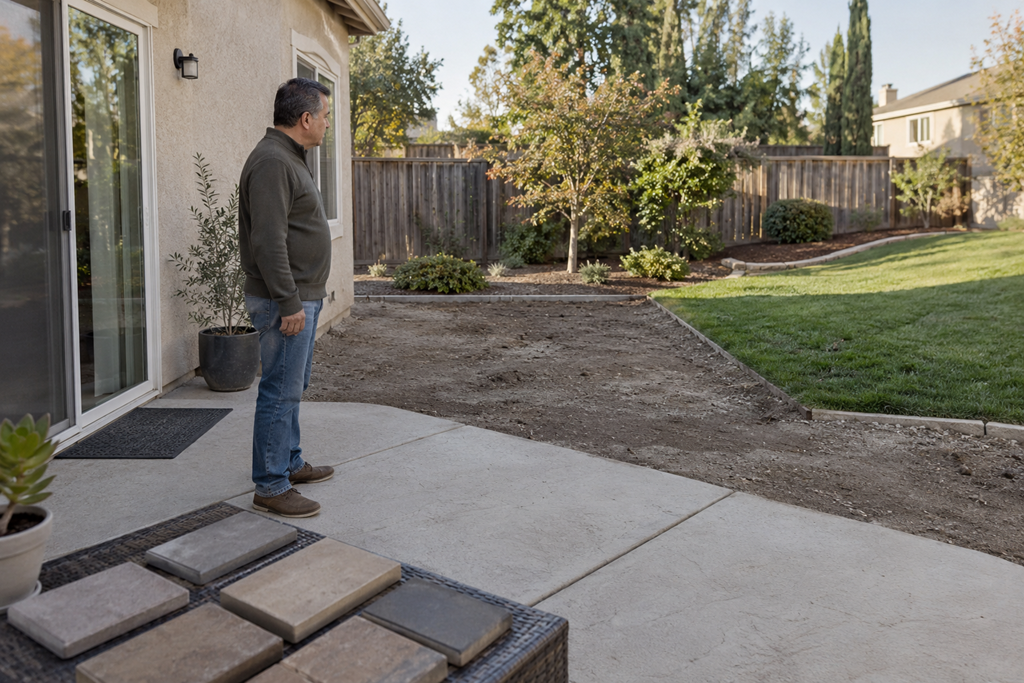
Pavers change a surface. A yard area that once absorbed some water may behave differently after a patio or walkway is installed. A new driveway or expanded hardscape can also change where runoff travels.
That does not automatically mean a paver project will create a drainage problem. It does mean drainage deserves consideration as part of the project rather than after installation.
The surrounding property matters too. Existing walkways, lawns, doors, garage openings, planting areas, roof drainage, fences, and neighboring hardscape can all affect where water naturally moves.
A finished paver area may look excellent on a dry day while still having an awkward low spot or directing water somewhere the homeowner did not expect.
The Key Question Is Where the Water Will Go
When discussing a paver project with a local professional, one of the simplest useful questions is:
Where will water go when it reaches this area?
The answer should make sense in the context of the property.
For one project, the surface may be intended to direct water toward an appropriate landscaped area. Another project may need to account for an existing drainage feature. In other situations, nearby downspouts, hard surfaces, or changes in elevation may deserve additional consideration.
The goal is not for the homeowner to design the drainage system. It is to understand whether water movement has actually been considered.
If the conversation focuses entirely on paver colors, patterns, borders, and square footage without addressing what happens during rain, asking about drainage can reveal an important part of the project scope.
Existing Conditions Can Change the Decision
Drainage rarely depends on the pavers alone.
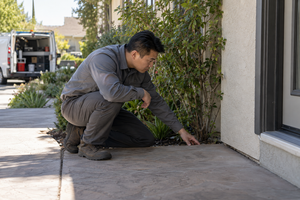
A provider may need to look at how the proposed area relates to the rest of the property. A new patio near a back door presents different considerations from a walkway along a side yard or a paver driveway meeting a garage.
An area that appears flat may also have subtle elevation changes that are difficult to judge by eye.
Existing water patterns can provide useful context. If water already tends to collect in part of the yard, replacing that area with pavers does not necessarily make the underlying question disappear. The planned project may need to account for it.
Likewise, an area that currently handles rain well should not automatically be assumed to behave exactly the same way after its surface, elevation, or boundaries change.
Drainage Should Be Discussed Before the Project Is Finalized
Drainage conversations are most useful while the project is still being planned.
Once homeowners have chosen a paver style and started imagining the finished space, it can be tempting to treat everything beneath or around the surface as an installation detail.
But drainage can affect the overall project approach.
A discussion before installation gives the homeowner an opportunity to understand whether the provider has considered existing slopes, adjoining surfaces, thresholds, runoff sources, low areas, and any drainage features that may interact with the new pavers.
It also helps clarify what is and is not included in the proposed scope.
If one estimate includes additional work related to drainage and another does not, the difference may be worth understanding before comparing the bottom-line prices.
Not Every Paver System Handles Water the Same Way
Homeowners may also hear different explanations about how water will interact with the proposed surface.
Some paver installations are designed primarily to move surface water away from the area. Certain systems may be designed to allow more water to pass through the paved surface under appropriate conditions.
Those are not interchangeable ideas.
Rather than assuming the word “pavers” tells you how drainage will work, ask the provider to explain how the proposed installation is expected to manage water on your specific project.
A clear explanation should help you understand the basic plan without requiring you to become an installation expert.
Watch for Drainage Becoming an Afterthought
One pattern worth noticing is when drainage only enters the conversation after the homeowner raises concerns.
That does not automatically mean the provider has overlooked it. Some planning details may simply not have been discussed yet.
Still, the answer should become clearer once the question is asked.
Vague responses such as saying water will “just run off” may leave important questions unresolved if it is not clear where that runoff is expected to go.
Similarly, a promise that the finished surface will be “perfectly flat” may sound reassuring even though the more useful discussion is how the completed area will relate to surrounding surfaces and water movement.
The homeowner does not need a technical lecture. The explanation should simply be understandable enough to show that drainage has been considered intentionally.
Questions Worth Asking Before Approving the Project
A few direct questions can make this part of the estimate easier to understand:
- How is water expected to move across or away from the finished paver area?
- Are there existing low spots or runoff patterns that affect the project?
- How will the new surface relate to nearby doors, walkways, landscaping, or other hardscape?
- Do nearby downspouts or drainage features affect the proposed layout?
- Is any drainage-related work included in the estimate, and what would be considered additional work?
- Is the proposed paver system intended to shed water or allow water through the surface?
You do not need highly technical answers. You are looking for a clear explanation of what the provider sees, what the plan accounts for, and whether anything still needs to be evaluated.
Sacramento's Dry Periods Can Make Drainage Easy to Forget
For Sacramento-area homeowners, a paver project may be planned while the property is dry and water movement is not especially noticeable.
Seasonal rain can make conditions look very different.
That is one reason it can be useful to think beyond how the project area appears on the day of the estimate. If you have previously noticed puddling, runoff from a roof area, water traveling across a walkway, or another recurring pattern during rain, mention it when discussing the project.
Those observations can give a local paver professional additional context about how the property behaves when water is actually present.
The Best Time to Understand Drainage Is Before the Pavers Go Down
Drainage does not need to dominate every paver conversation, but it should not be invisible either.
A patio, walkway, or driveway is easier to evaluate when you understand both what the finished surface will look like and how it is expected to function when water reaches it.
Before approving a paver installation, make sure you can get a straightforward explanation of where the water is expected to go and whether existing property conditions affect that plan.
That one conversation can help you compare proposals more meaningfully and understand the project you are actually hiring a local professional to complete.