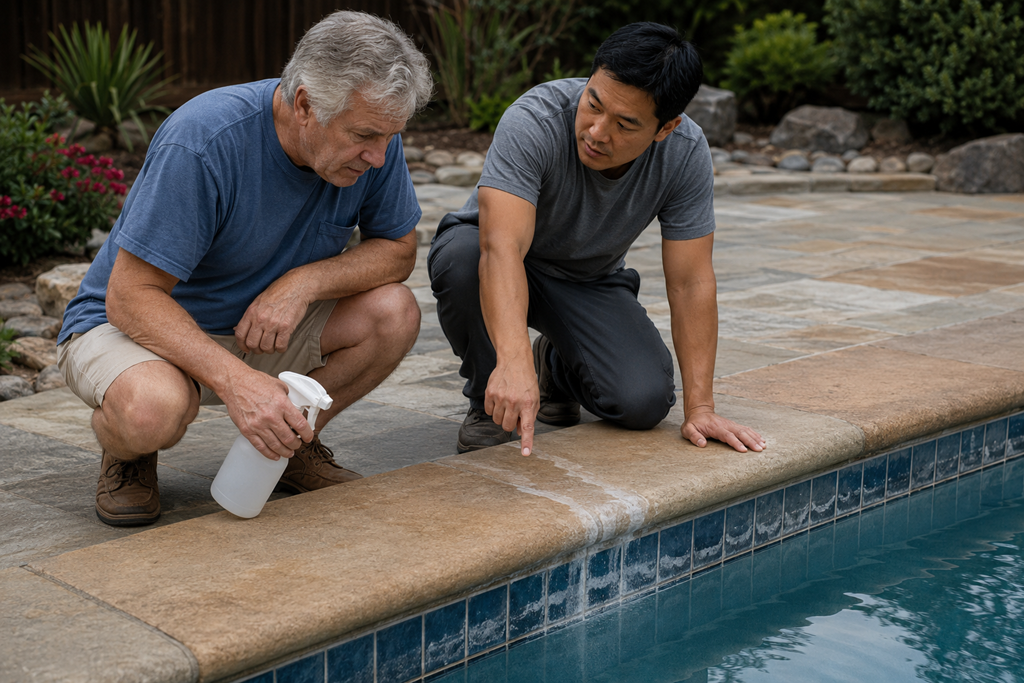
Harsh cleaning methods can make a pool surface look better for a moment while quietly creating a second problem. Abrasive tools, overly strong chemicals, or excessive pressure may remove visible buildup, but they can also scratch tile, dull finishes, weaken grout, etch stone, or expose damage that was previously hidden beneath the residue.
This is what makes pool tile cleaning easy to misunderstand. A method may appear successful because the white band, rough deposit, or discoloration is reduced. The surface underneath, however, may no longer have the same shine, texture, color, or resistance to future buildup.
For Sacramento-area homeowners, the important question is not simply whether a method can remove the deposit. It is whether the method can do so without causing avoidable damage to the tile and surrounding materials.
A Cleaner-Looking Patch Can Still Be a Damaged Patch
Visible buildup often draws attention away from the surface beneath it. When the deposit is finally removed, homeowners naturally expect the original finish to return.
Sometimes it does. In other cases, the cleaned section looks hazy, scratched, faded, uneven, or slightly rougher than the surrounding tile. Grout lines may also appear thinner, lighter, or more recessed.
This does not always mean the cleaning caused every visible problem. Mineral deposits can conceal older wear, previous scratches, fading, weakened grout, and surface deterioration. A harsh method can also add new damage while revealing what was already there.
That distinction matters when evaluating the result. A person may believe the remaining dullness means the surface needs another aggressive cleaning, when additional force could make the condition worse.
The Deposit and the Surface Require Separate Attention
Pool tile buildup and pool surface damage are related, but they are not the same issue.
The buildup may be a removable layer resting on top of the tile. The tile, grout, stone, or finish beneath it has its own condition, age, texture, and level of wear. Removing the deposit does not automatically restore the underlying material.
Different pool surfaces also respond differently to cleaning. A method that is appropriate for one type of ceramic tile may be too abrasive for glass mosaic tile, decorative finishes, natural stone, or aging grout. Even tiles that look similar from a few feet away may have different coatings or surface characteristics.
This is why a one-method-fits-all approach can create problems. The strongest available method is not necessarily the safest or most effective choice for the material being cleaned.
Damage May Become More Noticeable After the Surface Dries
Wet pool tile often looks darker, smoother, and more reflective. Water can temporarily hide light scratches, dull areas, haze, and uneven color.
A freshly cleaned section may therefore look impressive while it is still wet. The difference can become more obvious after the tile dries and is viewed beside an untouched section.
Possible signs of surface damage or overaggressive cleaning include:
- Fine scratches that catch the light
- A dull patch where surrounding tile remains glossy
- Uneven color or cloudy-looking glass tile
- Roughened or recessed grout lines
- Pale marks or altered texture on natural stone
- A cleaned strip that attracts attention for the wrong reason
These changes may be subtle at first. They can become easier to notice in bright outdoor light or when sunlight reflects across the waterline.
Why Stronger Cleaning Can Feel Like the Logical Next Step
When a deposit does not respond quickly, it is easy to assume that the solution is more pressure, a rougher tool, a stronger chemical, or repeated scrubbing.
The problem is that stubborn buildup may not be removable through ordinary surface cleaning alone. It may be thick, layered, bonded tightly to the tile, or mixed with staining and existing surface deterioration.
Increasing the force without first understanding the material can turn a cleaning problem into a repair or appearance problem.
Homeowners may also repeat an aggressive method because the tile looks better while wet. When the haze or residue reappears after drying, they may conclude that the cleaning was not strong enough. In reality, moisture may have temporarily hidden the remaining deposit or the altered surface.
The useful reframe is that slow progress does not always mean insufficient effort. It may mean the condition needs a different method, a smaller test area, or a professional assessment of what can realistically be improved.
A Test Area Can Reveal More Than a Dramatic Cleaning Pass
Before treating a long stretch of pool tile, a qualified pool tile cleaning professional may recommend evaluating a small, less noticeable section.
The purpose of a test area is not only to see whether the buildup comes off. It can also show:
- How the tile looks after it dries
- Whether the original shine returns
- Whether the grout remains intact
- Whether scratches, fading, or older wear become visible
- How much improvement is realistic
- Whether a gentler or different method should be considered
A useful test should be judged after the surface has had time to dry, not only during the cleaning process.
Homeowners can also compare the test section from several viewing angles. Reflected light may reveal changes in gloss or texture that are difficult to see when looking straight at the tile.
Existing Wear Can Complicate the Result
Not every disappointing result is caused entirely by the current cleaning attempt.
Pool tile and grout may already have years of sun exposure, chemical exposure, previous cleaning, mineral accumulation, repairs, or ordinary wear. A heavy deposit can cover these differences and make the entire surface appear uniformly white or rough.
Once the deposit is reduced, the condition underneath may look inconsistent. One tile may remain glossy while another looks cloudy. Some grout lines may be solid while others appear recessed. A repaired section may react differently from the original material.
A careful provider should explain this possibility before promising that the surface will look new again. Cleaning can improve the appearance without reversing permanent wear or restoring material that has already been altered.
Questions to Ask Before Approving a Cleaning Method
A short conversation can help reveal whether a provider is thinking about the surface as carefully as the deposit.
Consider asking:
- What type of tile or surface do you believe this is?
- How will you determine whether the method is appropriate for it?
- Will you evaluate a small section before treating the full waterline?
- What should the test area look like after it dries?
- Could the buildup be hiding scratches, fading, or weakened grout?
- What parts of the condition may not improve through cleaning?
- How will nearby stone, plaster, grout, metal, or decking be protected?
The answers do not need to sound highly technical. They should show that the provider recognizes the difference between removing buildup and preserving the underlying surface.
Be Cautious of Results Promised Without an Inspection
A provider may be able to discuss common cleaning methods before seeing the pool, but a firm promise about the final appearance can be difficult to support without inspecting the tile and buildup.
It may be worth asking additional questions when someone:
- Recommends an aggressive method without identifying the surface
- Promises complete restoration before testing the tile
- Treats glass, ceramic, stone, and grout as though they respond identically
- Dismisses the possibility of existing wear beneath the buildup
- Focuses only on how quickly the deposit can be removed
- Does not explain how the cleaned surface will be evaluated after drying
These patterns do not automatically prove that the service will cause damage. They do suggest that the scope, method, and expectations need a clearer discussion before work begins.
The Goal Is Controlled Improvement, Not Maximum Force
Pool tile cleaning should not be judged only by how much material is removed or how dramatic the immediate contrast appears.
A better outcome balances deposit removal with protection of the surface underneath. In some cases, that may mean accepting partial improvement rather than risking permanent scratches, dullness, etched stone, or weakened grout.
It may also mean learning that part of the appearance is caused by existing wear rather than removable buildup. That information can help a homeowner decide whether further cleaning is worthwhile, whether a repair should be discussed, or whether the current appearance is acceptable.
Before hiring a Sacramento-area pool tile cleaning provider, look for someone who evaluates the material, explains the limitations, and treats a small test section as useful evidence rather than a formality. The right question is not, “What is the strongest method available?” It is, “What level of cleaning can this surface safely tolerate?”