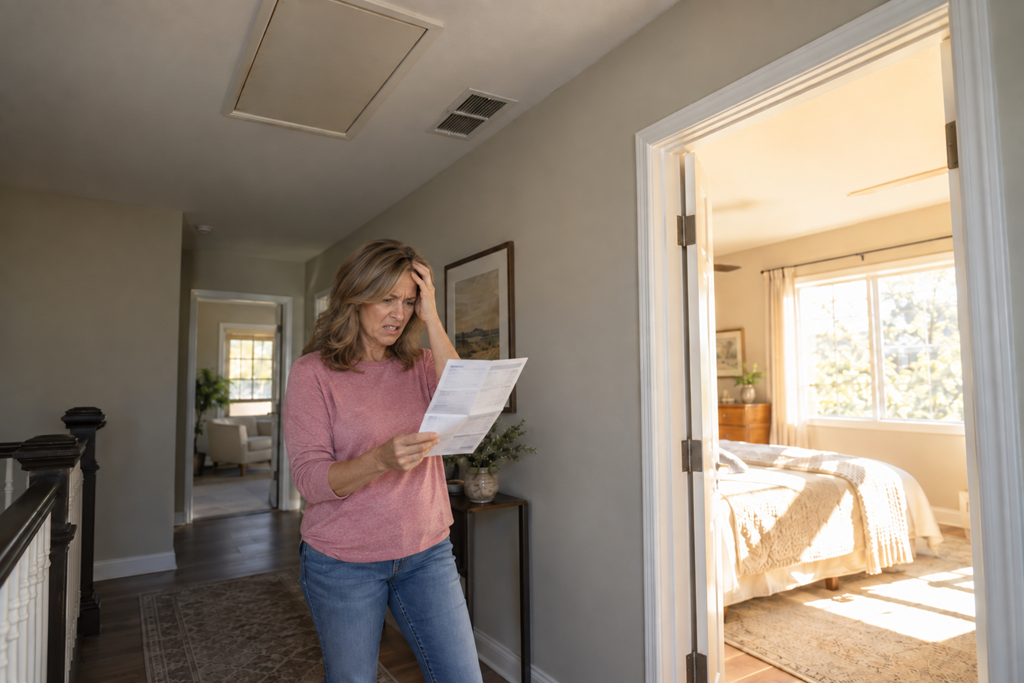
A high energy bill does not automatically mean your home has an insulation problem, but it can be one useful clue. If heating or cooling costs seem high and parts of the home are also hard to keep comfortable, insulation may be one of several factors worth discussing with a qualified local professional before assuming the HVAC system is the only issue.
When Higher Costs And Comfort Problems Show Up Together
Many homeowners first notice the financial side of the problem. A utility bill arrives higher than expected, and the immediate question is often whether the heating or cooling system is using too much energy.
The more useful question may be whether anything else has changed inside the home.
Perhaps an upstairs bedroom stays noticeably warmer than the rest of the house during Sacramento's hotter weather. Maybe one section of the home takes longer to cool, or certain rooms never seem to feel as comfortable as nearby spaces.
Those patterns do not prove that insulation is inadequate. But when higher energy use appears alongside persistent comfort differences, insulation becomes one reasonable part of the conversation.
Insulation Affects How Easily Indoor Temperatures Change
Insulation helps slow the movement of heat between conditioned living spaces and areas outside that conditioned space.
When insulation is missing, uneven, compressed, deteriorated, or simply not performing as expected in parts of a home, heating and cooling equipment may have a harder time maintaining the temperature residents want.
That can matter during Sacramento's hot, sunny stretches, when roofs and exterior surfaces may be exposed to substantial heat for hours at a time.
The result is not always a dramatic hot or cold spot. Sometimes the experience is subtler: the air conditioner seems to run frequently, one area feels less comfortable than another, or the home loses the temperature you prefer faster than expected.
These observations can help explain why an insulation evaluation may be worth discussing, even when nothing looks obviously wrong from the living space.
One High Bill Is Not Enough To Identify The Cause
Energy bills can change for many reasons.
Weather, household routines, thermostat settings, equipment performance, duct conditions, windows, air leakage, energy rates, and changes in how the home is being used can all affect energy consumption or cost.
That is why a single unusually high bill should not automatically lead to an insulation project.
It is more useful to look at the broader pattern. If higher energy use keeps appearing alongside difficult-to-condition rooms or noticeable differences between parts of the home, there may be more reason to ask whether the building envelope—including insulation—should be evaluated.
The distinction matters because replacing or upgrading something before understanding the actual problem can lead to spending money without addressing the cause.
Uneven Comfort Can Be As Informative As The Bill
Homeowners sometimes focus so heavily on the utility bill that they overlook what the house itself is telling them.
Consider whether the discomfort has a pattern.
A room directly beneath the attic may behave differently from a lower interior room. One side of the home may become uncomfortable sooner during the afternoon. Certain rooms may consistently feel different even though the thermostat setting has not changed.
These experiences still do not diagnose an insulation problem. They simply give a professional more useful context.
Instead of saying only, "My energy bill seems too high," a homeowner can explain where comfort problems occur, when they are most noticeable, and whether they seem limited to particular sections of the property.
That information can make an evaluation more focused.
Do Not Assume The HVAC System Is Automatically To Blame
When cooling costs rise, the air conditioner is an obvious place to look. Sometimes that is appropriate.
But the equipment is only one part of the home's overall comfort system.
If conditioned air is being produced effectively but the home has difficulty retaining the desired indoor temperature, the problem may involve other parts of the property rather than the equipment alone.
That is one reason it can be helpful to avoid jumping directly from "high bill" to "I need a new HVAC system" or from "warm room" to "I need more insulation."
A qualified evaluation should help narrow down which conditions are actually contributing to the problem.
A Professional Evaluation Should Explain The Reasoning
If you decide to contact an insulation provider, the goal should not simply be to receive a recommendation for more insulation.
You should understand what the provider observed and why those observations support the proposed work.
Useful questions may include:
- Which areas of the home appear most relevant to the comfort or energy-use concern?
- What observations suggest insulation may be contributing to the problem?
- Could other conditions be affecting the same rooms or areas?
- What part of the recommended work addresses the specific problem I described?
- How is the proposed scope reflected in the estimate?
Clear answers help separate a property-specific recommendation from a generic suggestion to add insulation everywhere.
They also make it easier to compare local providers because you can evaluate not just the price, but how clearly each company explains what it found and what it believes should be addressed.
The Goal Is To Understand The Pattern Before Choosing The Fix
High energy bills can be frustrating because the number on the bill does not explain why the home used that amount of energy.
Insulation may be part of the explanation, especially when higher costs appear alongside recurring comfort differences or difficulty maintaining indoor temperatures. But it is only one possibility.
For Sacramento-area homeowners, the more useful approach is to treat the bill as a clue rather than a diagnosis. Pay attention to how different parts of the home feel, describe those patterns clearly, and ask a qualified professional to explain what evidence supports any recommendation.
That can help you compare estimates and make a more informed decision before committing to insulation work or another home-comfort project.