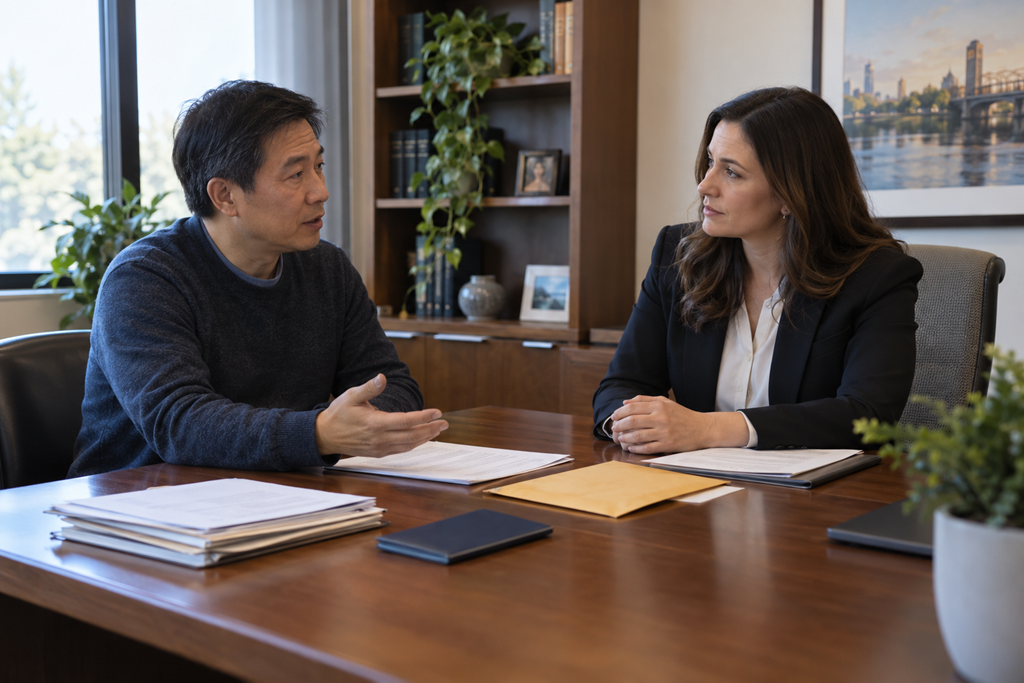
Immigration status concerns are difficult to evaluate from fragments of information, online searches, or another person’s experience. When you are unsure how your history, documents, prior filings, travel, family circumstances, or an official notice may affect your situation, a qualified immigration lawyer can help you understand which facts matter and what questions need to be answered. The goal is not to assume the worst or to guess at an outcome. It is to get advice that is based on your specific circumstances before you make an important decision.
For Sacramento-area residents, uncertainty about immigration status can affect ordinary decisions in ways that are not always easy to sort through alone. A person may have documents from different points in time, questions about something that happened years ago, concerns about an upcoming plan, or information from friends and relatives that does not seem to match their own circumstances.
That uncertainty does not automatically tell you what your legal situation is. It usually means there are details that need to be considered together rather than separately.
Immigration Questions Are Often More Individual Than They First Appear
One reason immigration concerns can become confusing is that people naturally look for a simple answer.
They may search for a particular document, situation, application, notice, or immigration term and find explanations that appear to match what they are experiencing. They may also hear from someone whose circumstances sound similar.
The difficulty is that two situations that appear alike on the surface may involve different histories or details.
For example, questions may involve prior applications, entries or departures, family circumstances, employment, travel plans, past communications, or documents received at different times. Which details are important depends on the individual situation and the legal question being considered.
That is why a qualified lawyer is useful when immigration status itself is uncertain. Instead of trying to draw a conclusion from one piece of information, the lawyer can review the broader context and explain what information is relevant to the question you are actually asking.
Another Person’s Experience May Not Explain Your Situation
Friends, relatives, coworkers, online forums, videos, and social media can make complicated topics feel easier to understand.
They can also create false confidence.
Someone may say that a particular process was simple for them, that a certain document meant one thing, or that they were told not to worry about a similar issue. Their experience may be completely genuine while still being a poor guide to someone else’s circumstances.
The missing information is often everything surrounding the story.
You may not know the person’s complete immigration history, what documentation they had, what previous filings had occurred, or what other circumstances affected the advice they received.
A useful distinction is this: another person’s experience can help you identify questions, but it should not automatically become the answer to your own legal situation.
That shift alone can reduce a great deal of unnecessary guessing.
Avoid Making Important Decisions From One Document Alone
Official-looking paperwork can understandably receive a lot of attention.
A person may repeatedly reread a notice, application copy, travel document, approval, denial, receipt, or other piece of paperwork while trying to determine exactly what it means for their immigration status.
But an individual document may be only one part of a larger history.
The more useful approach before a legal consultation is usually to preserve the information you have and be ready to explain the surrounding circumstances accurately.
You do not need to become your own immigration-law researcher before speaking with a lawyer.
You also do not need to decide in advance whether a particular detail is important. Something that appears minor to you may be worth discussing, while something that has caused considerable worry may turn out to require additional context before any conclusion can be reached.
A qualified lawyer can help separate those questions.
Preparing For The Conversation Can Make It More Useful
You do not need a perfect file before scheduling a consultation.
It can still help to gather the information that is already available to you.
Depending on your circumstances, that might include copies of immigration-related documents, notices, previous applications or filings, travel-related records, or other paperwork connected with the concern you want to discuss.
It can also be helpful to think through the basic timeline in your own words.
Instead of trying to analyze the law yourself, focus on what happened, approximately when it happened, what documents you received, and what you are currently trying to decide.
That gives the lawyer a clearer starting point.
If some information is missing or you do not remember an exact date, say so rather than trying to fill the gap with a guess.
Be Direct About The Concern That Brought You There
People sometimes spend so much time explaining background information that they never clearly state the question that is worrying them.
It is reasonable to say plainly what you are concerned about.
You might be uncertain about your current status, worried that something in your history could affect a future decision, unsure how a document should be understood, or trying to determine whether you should take a particular concern more seriously.
The lawyer can then ask follow-up questions based on that concern.
A consultation is also an opportunity to notice how clearly the lawyer communicates. Immigration matters can involve unfamiliar terminology, so explanations should help you understand the issue rather than leave you more confused.
If you do not understand something, asking for a plain-language explanation is appropriate.
Useful Questions To Ask During A Consultation
You do not need dozens of prepared questions. A few focused ones can help you understand what the lawyer needs from you and what the next conversation should cover.
Consider asking:
- Which parts of my history are most important to this particular concern?
- Are there documents or information you would want to review before giving advice about my situation?
- Are there facts I have mentioned that need additional clarification?
- What questions should I avoid answering through assumptions or online research?
- What would you need to know before discussing possible options?
- How will you explain the next steps if I decide to continue working with you?
You can also ask how confidentiality applies to your consultation before discussing information you consider especially sensitive.
The purpose of these questions is not to predict an outcome. It is to understand how the lawyer will evaluate your individual situation.
Pressure To Reach An Immediate Conclusion Can Create More Confusion
Immigration concerns can feel personal and consequential, which can make uncertainty uncomfortable.
That discomfort sometimes pushes people toward quick conclusions.
They may assume that one unfamiliar document signals a serious problem. They may also move in the opposite direction and dismiss a concern because someone else says they experienced something similar without difficulty.
Neither reaction replaces individualized legal advice.
A more useful goal is to identify what is known, what remains uncertain, and what information a qualified lawyer would need before discussing the issue responsibly.
That creates a better foundation for whatever decision comes next.
A Qualified Lawyer Can Help Put The Pieces In Context
When immigration status is part of the concern, the most important information is rarely just the one document, search result, conversation, or personal story that first caused the worry.
The broader circumstances matter.
For Sacramento residents trying to understand an immigration-related concern, speaking with a qualified immigration lawyer can provide a structured way to review those circumstances and ask questions that apply to the individual situation.
You do not need to know the answer before the consultation.
You need to be prepared to explain the situation accurately, share the information you have, identify what you are uncertain about, and ask for advice based on your own circumstances rather than someone else’s experience.
That can make the decision in front of you easier to understand without relying on guesses, assumptions, or generalized information.