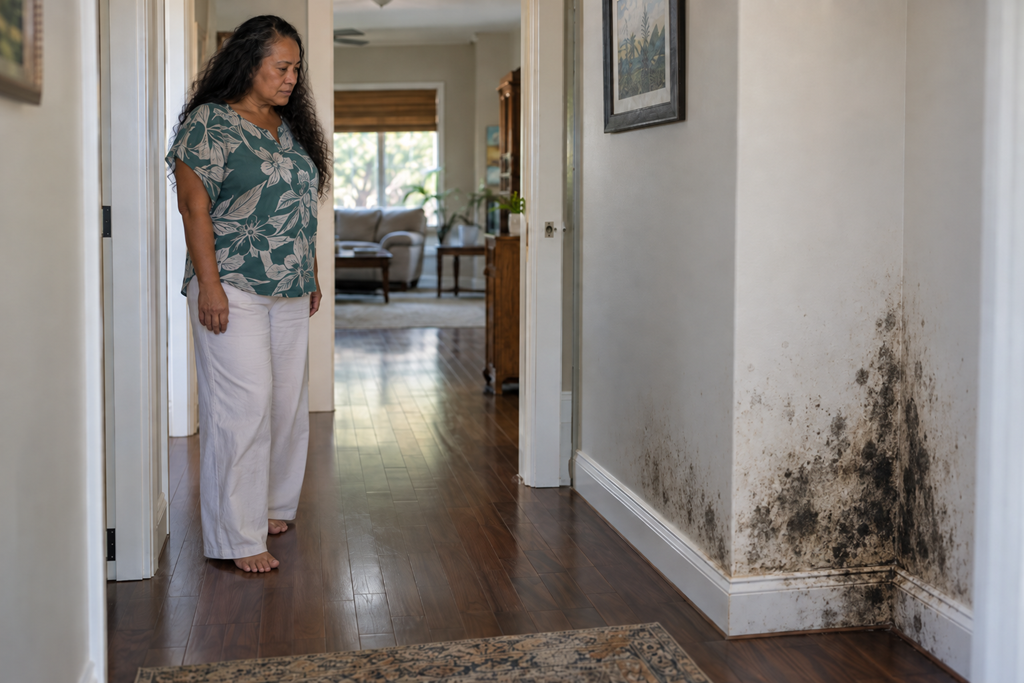
Mold concerns after water damage should be handled carefully because the part you can see is not always the full problem. A wall, floor, cabinet, or ceiling may look mostly dry while moisture remains in nearby materials or hidden spaces. The goal is not to assume that mold is present or to panic over every stain, but to understand what stayed wet, what has changed, and whether a qualified professional should evaluate the area before repairs or cleanup move forward.
For Sacramento-area homeowners and renters, that uncertainty can make water damage especially frustrating. The original leak, overflow, or intrusion may already be stopped, yet questions can remain about what happened behind finishes, underneath flooring, or inside materials that absorbed moisture.
Handling those questions carefully means avoiding two opposite mistakes: assuming every water-damaged area has a serious mold problem, or assuming everything is fine simply because the visible surface has dried.
A Dry-Looking Surface Does Not Always Tell the Whole Story
After water damage, the most obvious signs can improve quickly.
Standing water may be gone. A damp spot may feel dry. A stain may stop spreading. The room may begin to look normal again.
That can be reassuring, but appearance alone does not explain what happened to surrounding materials.
Water can affect drywall, insulation, flooring, baseboards, cabinetry, carpet padding, framing, and other materials differently. Some surfaces release moisture readily, while other materials can retain it or conceal what is happening behind them.
This is why a mold concern is often less about what can be seen from across the room and more about understanding the history and scope of the water exposure.
The Important Question Is What Was Actually Affected
One small visible stain does not necessarily mean there is a large mold problem.
At the same time, a small stain does not establish that the affected area is limited to what is visible.
What matters is the relationship between the water source and the materials around it.
For example, water near a wall may have affected more than the painted surface. Water reaching flooring may also have reached underlayment or neighboring materials. Moisture around a cabinet may have entered areas that are difficult to inspect casually.
That does not mean those hidden areas are damaged. It means the visible condition alone may not answer the question.
A careful evaluation is intended to reduce that uncertainty before someone makes assumptions about cleanup, repairs, or replacement.
Mold Concerns Are Easy to Overinterpret
Water damage can leave behind discoloration, odors, swelling, peeling finishes, or other visible changes.
Those conditions can understandably make someone wonder about mold.
But a homeowner generally should not have to determine the entire cause or scope from appearance alone.
A dark mark is not automatically proof of a widespread mold problem. A musty odor does not tell you exactly where moisture may remain. A wall that looks normal does not necessarily confirm that every nearby material is dry.
The useful question is not simply, “Is that mold?”
It is also, “What happened here, what materials were exposed, and has the affected area been properly evaluated?”
That shift helps keep the decision focused on the property condition rather than on assumptions based on one visual clue.
The Source of the Water Still Matters
Understanding how the water entered the area can help a restoration professional evaluate the situation more clearly.
A brief appliance leak, plumbing problem, roof leak, overflow, or other water event can affect a property in different ways depending on where the water traveled and what materials were exposed.
The important point for the homeowner is not to diagnose those differences independently.
Instead, be prepared to explain what you know.
Where did you first notice the water? Which areas were visibly wet? Was furniture or flooring affected? Did staining or odor appear later? Has the water source already been addressed?
Those observations can give a professional useful context without requiring you to determine what is happening behind walls or beneath flooring yourself.
Avoid Letting the Next Repair Hide the Previous Problem
One reason to address mold concerns carefully is that restoration and repair decisions can overlap.
A homeowner may be eager to repaint a stained wall, replace flooring, reinstall trim, or move belongings back into a room once the original water problem appears resolved.
But finishing the cosmetic repair before the underlying moisture question is understood can make the situation more confusing.
The issue is not that every water-damaged area requires extensive work. Many do not.
The point is that the sequence matters.
Before damaged finishes are covered, replaced, or restored, it can be useful to understand whether the affected area is ready for that next stage.
Be Careful About Disturbing an Unclear Area
When someone sees suspicious discoloration after water damage, the natural reaction may be to scrub it, scrape it, open the wall, pull up materials, or otherwise investigate.
That can create unnecessary complications when the condition has not yet been identified or the extent of the water damage is uncertain.
Sacramento Local Pros articles are designed to help readers make service decisions rather than provide technical mold-removal instructions. If an area appears questionable, professional evaluation may be a better next conversation than experimenting with aggressive cleanup or demolition.
A restoration professional can explain how they plan to evaluate the affected materials and what they believe should happen before reconstruction or cosmetic repairs continue.
Questions Can Reveal How Carefully a Provider Approaches the Problem
When comparing Sacramento-area restoration providers, you do not need to know all the technical answers yourself. The quality and clarity of the provider's explanation can tell you a great deal.
Useful questions can include:
- What areas do you believe were affected by the water?
- How will you determine whether moisture remains in nearby materials?
- What conditions would change the proposed scope of work?
- How will you explain which materials can remain and which may need further attention?
- What should happen before reconstruction or cosmetic repairs begin?
- How will I know when the affected area is ready for the next stage of work?
The purpose of these questions is not to challenge the provider's expertise. It is to understand the reasoning behind the recommendation before agreeing to a scope of work.
Watch for Explanations That Jump Too Quickly to a Conclusion
A careful provider should be able to explain what they observed, what remains uncertain, and why they are recommending particular next steps.
Be cautious when communication skips that explanation entirely.
That could include immediately treating a minor visible mark as proof of a major hidden problem, dismissing a homeowner's concerns without explaining why, or recommending extensive work without clearly connecting it to the observed conditions.
A professional evaluation may still lead to a larger restoration scope. It may also determine that the concern is more limited than expected.
The important distinction is whether the recommendation follows a clear evaluation rather than an assumption.
Separate Property Questions From Health Questions
Mold discussions can quickly become mixed with questions about personal health.
A restoration or mold professional can discuss property conditions, affected materials, evaluation methods, and restoration work. Personal symptoms, medical risks, or individual health concerns are different questions and should be discussed with a qualified healthcare professional.
Keeping those roles separate can make conversations with service providers more useful and prevent a property evaluation from turning into unsupported medical claims.
The Goal Is to Understand the Scope Before Moving Forward
Finding signs of water damage does not mean you need to assume the worst.
It also does not mean the situation should be judged only by whether the surface looks dry today.
The more useful approach is to understand what happened, which materials may have been affected, what remains uncertain, and how a qualified professional plans to evaluate those questions.
For Sacramento-area homeowners and renters, that information can make it easier to compare restoration recommendations, ask better questions, and decide what should happen before cleanup, repairs, or reconstruction continue.
Handling mold concerns carefully is ultimately about replacing guesswork with a clearer understanding of the affected area before committing to the next stage of work.