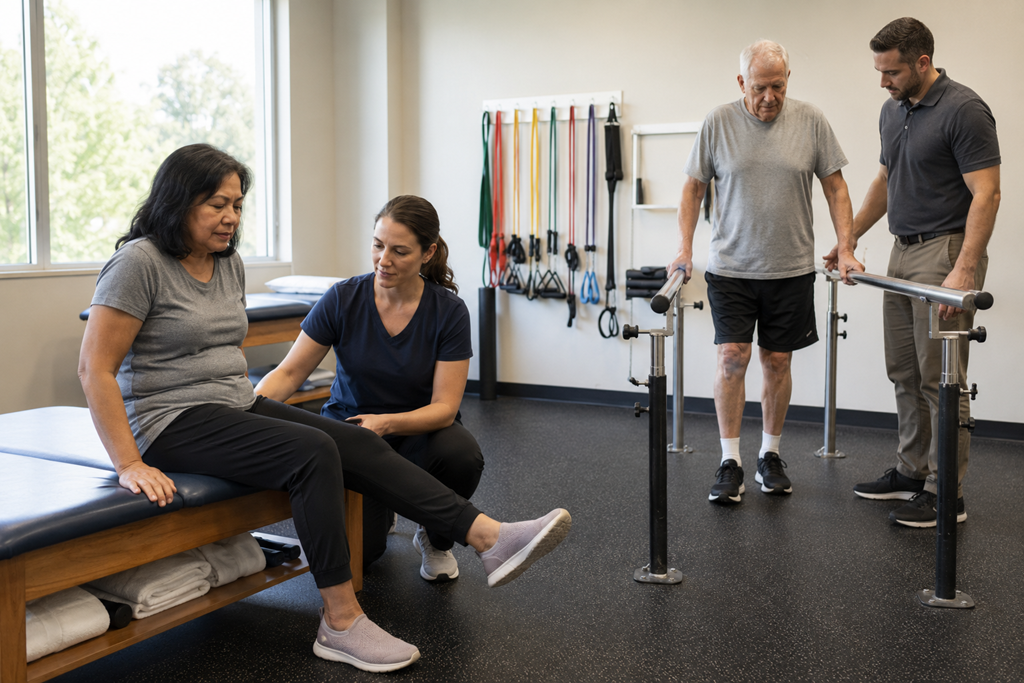
Physical therapy progress can vary from person to person because every patient starts with a different body, history, condition, pain level, daily routine, and recovery goal. Two people may receive physical therapy for a similar concern, but that does not mean they will move through treatment at the same pace or respond to the same plan in the same way.
For Sacramento-area patients, this is important to understand before comparing providers, judging early results, or assuming that slower progress means something is wrong. Physical therapy is often less about matching someone else’s timeline and more about understanding what progress should look like for your specific situation.
This article is educational and not medical advice. Personal questions about pain, diagnosis, treatment, recovery, or outcomes should be discussed with a qualified physical therapy provider who can evaluate your individual situation.
Progress Is Not Always A Straight Line
Many people expect physical therapy to feel like steady improvement: less pain, more movement, stronger function, and clearer progress from one appointment to the next. Sometimes that happens. Other times, progress feels uneven.
A patient may notice one week feels better, then another feels harder. A movement that felt manageable during one visit may feel different after a busy workday, poor sleep, increased activity, or a change in symptoms. This can be frustrating, especially when someone is trying to return to work, exercise, caregiving, household tasks, or everyday routines.
That unevenness does not automatically mean therapy is failing. It often means the body is responding to several factors at once.
People Start Physical Therapy From Different Places
One reason progress varies is that people do not begin physical therapy from the same starting point.
A person recovering from a recent injury may have different needs than someone managing a long-term issue. Someone who was already active before therapy may respond differently than someone who has been avoiding movement because of pain. A patient with a physically demanding job may face different challenges than someone who can rest more easily between appointments.
Even when two people have discomfort in the same general area, their movement patterns, strength, flexibility, symptoms, medical history, and daily demands may be very different. A good physical therapy conversation should account for those differences instead of treating every patient as if they are on the same track.
Pain, Strength, Mobility, And Confidence Can Improve At Different Speeds
Physical therapy progress is not limited to one measurement.
Some people notice pain changes first. Others notice better balance, more confidence, easier movement, improved endurance, or fewer flare-ups during daily tasks. In some cases, a person may still feel discomfort but can move more safely or do more than they could before.
That can make progress easy to miss. If someone is only watching for one sign, such as pain disappearing quickly, they may overlook other meaningful changes.
This is why it helps to ask a physical therapist what kinds of progress are realistic to watch for in your situation. The answer may include function, comfort, range of motion, strength, activity tolerance, or the ability to return to specific parts of daily life.
Daily Life Can Affect The Pace Of Recovery
Physical therapy does not happen only during appointments. What happens between visits can also affect progress.
Work demands, sleep, stress, childcare, commuting, home responsibilities, activity levels, and consistency with provider-recommended home guidance can all influence how someone feels. A Sacramento resident who spends long hours standing, lifting, sitting, driving, or caring for others may have a different experience than someone with a more flexible schedule.
This does not mean patients should blame themselves when progress feels slow. It simply means physical therapy exists inside real life, and real life can affect recovery expectations.
A helpful provider should be willing to talk through those practical details. If a plan does not fit your schedule, symptoms, or responsibilities, it may be worth asking how the approach can be adjusted.
Comparing Your Progress To Someone Else Can Create Confusion
It is natural to compare. A friend, coworker, family member, or online comment may make it sound like physical therapy worked quickly for them. That can make a patient wonder why their own progress feels slower.
But someone else’s result may not reflect your condition, starting point, goals, consistency, provider plan, or health history. Even a similar injury or body area does not guarantee a similar recovery path.
A better comparison is not “Am I progressing as fast as someone else?” It is “Do I understand what my provider is watching, why the plan is set up this way, and what signs would suggest we should adjust it?”
That shift can reduce unnecessary pressure and make the provider conversation more useful.
Clear Communication Matters As Much As The Plan
When progress feels unclear, communication becomes especially important.
Patients should not feel lost about why they are doing certain movements, what the goals are, or how progress is being evaluated. A physical therapist may not be able to promise an exact outcome or timeline, but they should be able to explain the general purpose of the plan and what they are monitoring.
This matters when choosing or evaluating a local physical therapy provider. A patient may want to pay attention to whether the provider listens carefully, explains expectations in plain language, adjusts based on feedback, and encourages questions.
Physical therapy can involve effort and patience. But the process should not feel like guesswork.
What To Ask When Progress Feels Different Than Expected
A short, focused conversation can often clear up confusion. Patients who are unsure about their progress may want to ask questions such as:
“What signs of progress should I be watching for?”
This helps separate meaningful improvement from assumptions. The answer may involve movement, strength, function, pain patterns, or daily activity tolerance.
“What factors could be slowing things down in my situation?”
This can help identify whether symptoms, workload, consistency, movement habits, or other personal factors may be affecting progress.
“How will we know if the plan needs to change?”
This question can make the process feel less vague. It also helps the patient understand whether the provider is actively monitoring results.
“What should I bring up between visits?”
Patients sometimes avoid mentioning pain changes, missed home exercises, fear of movement, or practical barriers. Those details may help the provider adjust guidance more effectively.
These questions are not about challenging the provider. They are about becoming a more informed participant in your own care.
Be Careful With Exact Promises Or One-Size-Fits-All Expectations
Because physical therapy progress can vary, patients should be cautious about any message that makes recovery sound identical for everyone.
It may be a concern if a provider or promotional message seems to guarantee a specific result, dismisses your questions, minimizes your symptoms without explanation, or offers the same expectations regardless of your situation. Physical therapy should involve professional judgment, but it should also leave room for individual differences.
A provider does not need to predict every detail perfectly. But they should help you understand the reasoning behind the plan and what would lead to a change in approach.
Slower Progress Does Not Always Mean No Progress
One of the most helpful reframes is this: slower progress is not automatically failure.
Sometimes improvement shows up as fewer setbacks, better tolerance for daily movement, more confidence, or a clearer understanding of what aggravates symptoms. Sometimes the first phase is about learning how your body responds before larger improvements become obvious.
That does not mean patients should ignore concerns. If symptoms feel worse, expectations are unclear, or the plan no longer makes sense, it is reasonable to bring that up with the provider. The point is not to silently wait. The point is to understand what progress means in context.
A Better Way To Think About Physical Therapy Progress
Physical therapy progress varies because people vary. Bodies, injuries, routines, goals, and recovery responses are not identical.
Before judging your own pace, it helps to understand what your provider is measuring, what factors may affect your progress, and what questions to ask when the process feels unclear. For Sacramento-area patients comparing local physical therapy options or preparing for an appointment, that understanding can make the experience feel less confusing and more practical.
The goal is not to match someone else’s timeline. The goal is to have a clear, individualized conversation with a qualified provider so you can better understand what progress may look like for you.