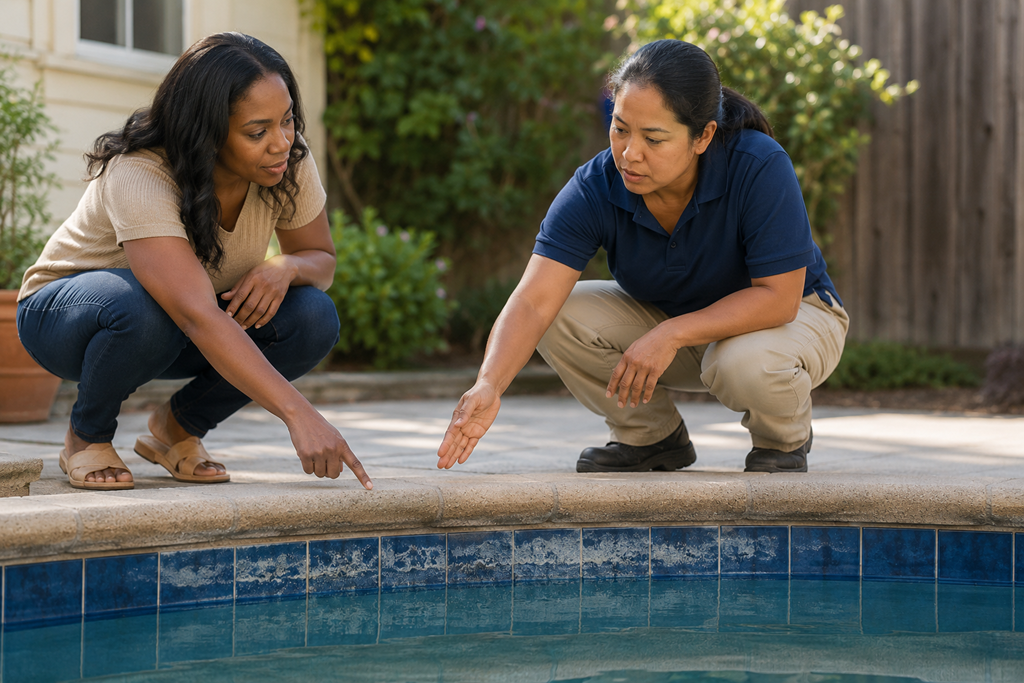
Pool tile develops buildup when dissolved minerals, body oils, sunscreen residue, dust, and other material collect at the waterline and remain after water evaporates. What begins as a faint haze can gradually become a rough white band, dull film, or stubborn ring that ordinary brushing no longer removes. The appearance may seem sudden, but the deposits usually formed through repeated wetting, drying, and exposure over many pool-use cycles.
For many homeowners, the frustrating part is that the rest of the pool may look well maintained. The water can appear clear, the deck can be clean, and the equipment can seem to be operating normally while a noticeable line slowly forms around the tile.
Understanding why that line develops can make it easier to discuss cleaning options, compare local providers, and set realistic expectations about what professional pool tile cleaning may accomplish.
The Waterline Is a Natural Collection Point
The waterline is where pool water, air, sunlight, and surface residue repeatedly meet.
Small waves and normal pool use wet the tile above the resting water level. As that moisture dries, some of what was carried in the water can remain behind. The next splash or rise in water level adds another thin layer.
This cycle may happen many times before the buildup becomes easy to see.
The result is often a narrow band that follows the water level around the pool. Depending on the material involved, that band may appear:
- Chalky or white
- Cloudy or dull
- Greasy or waxy
- Rough to the touch
- Yellow, gray, or slightly brown
- Thicker in certain corners or high-splash areas
The line is not necessarily evidence that the pool has been neglected. Even a regularly maintained pool can develop deposits when water conditions, evaporation, surface texture, and everyday pool use allow residue to accumulate faster than routine brushing removes it.
Not All Pool Tile Buildup Is the Same
One reason pool tile can be difficult to clean is that the visible ring may contain more than one kind of material.
Some buildup is primarily mineral scale. Dissolved minerals remain on the tile after water evaporates and gradually form a hard deposit. Other buildup may include body oils, sunscreen, pollen, airborne dust, organic residue, or traces of algae.
In many cases, the waterline contains a combination of materials rather than one simple layer of dirt.
This distinction matters because a soft film and a hardened mineral deposit may respond very differently to cleaning. A method that lifts oily residue may do little to a thick mineral crust. A method intended for hard scale may be unnecessary or unsuitable for a lighter surface film.
Before scheduling service, it can be useful to ask a provider what type of buildup appears to be present and how that conclusion affects the proposed cleaning method.
Evaporation Leaves Material Behind
Pool water does not evaporate with everything dissolved in it.
When water turns to vapor, dissolved minerals and suspended residue can remain on nearby surfaces. Repeated evaporation can concentrate those materials at the waterline, especially when the same tile is continually wetted and dried.
Sacramento-area heat, sun exposure, dry air, and windblown dust can make this wet-and-dry pattern especially noticeable. A sunny section of a pool may dry differently from a shaded section, and areas exposed to frequent splashing may develop deposits faster than quieter portions of the waterline.
This does not mean climate is the only cause. Pool chemistry, water source, circulation, use patterns, tile condition, and maintenance routines can all influence how quickly buildup becomes visible.
Water Chemistry Can Affect the Rate of Buildup
Balanced-looking water can still contain dissolved minerals that eventually settle on pool tile.
When certain water conditions favor scale formation, minerals may attach more readily to tile, grout, fixtures, and other pool surfaces. As the deposit becomes thicker, it can feel rough and become harder to remove with ordinary maintenance tools.
Pool chemistry can also change over time. Water added to replace evaporation, adjustments made during maintenance, heavy pool use, and changing temperatures can all affect the conditions inside the pool.
A pool tile cleaning appointment addresses the material already attached to the surface. It does not automatically identify or correct every condition that contributed to the buildup.
That is why it may be helpful to ask whether the provider is only cleaning the tile or whether someone should also evaluate the conditions associated with recurring scale.
Pool Use Adds More Than Water to the Tile
Everyday swimming introduces additional material to the waterline.
Sunscreen, lotions, hair products, body oils, and debris from clothing or flotation equipment can collect on tile. These materials may form a thin film that traps dust and minerals, making the waterline appear darker or more uneven.
Areas near steps, benches, spas, return jets, and frequently used entry points may show different buildup patterns because the water moves and splashes differently there.
This can explain why one part of a pool looks relatively clean while another develops a noticeable ring. The difference does not always mean the tile itself is defective. It may reflect how that particular area is used and how often it goes through wetting and drying cycles.
Tile and Grout Conditions Influence What You See
The surface of the tile also matters.
Smooth glazed tile may release certain deposits more easily than tile with a textured, porous, worn, or etched surface. Grout lines can hold residue differently from the tile face, causing the waterline to look uneven even after some material has been removed.
Older tile may also have existing discoloration, surface wear, or mineral etching beneath the visible buildup. Cleaning can remove attached deposits, but it may not restore tile that has permanently changed in color or texture.
This is an important expectation to discuss before work begins. A provider should be able to explain whether the goal is to remove surface buildup, improve the overall appearance, or investigate possible damage beneath the deposits.
Why the Ring Can Seem to Appear Suddenly
Pool tile buildup often becomes noticeable only after it crosses a visual threshold.
A thin deposit may blend into the color of the tile for weeks or months. Once it becomes thick enough to catch sunlight, feel rough, or form a continuous line, it can seem as though it appeared all at once.
Changes in water level can also reveal deposits that were previously hidden. When the water drops slightly, a pale band may become exposed above the new waterline. The deposit was already present, but the lower water level made it easier to see.
This is why homeowners sometimes notice the problem immediately after a period of evaporation, a refill, or a change in normal pool use.
More Scrubbing Is Not Always the Answer
It is natural to assume that a visible waterline ring simply needs harder brushing.
Routine brushing may help with loose residue and early surface film, but firmly bonded scale can resist ordinary tools. Increasing pressure without understanding the tile material or deposit can create a different problem if the surface or grout is scratched, dulled, or damaged.
Household cleaners, abrasive tools, and improvised chemical combinations may also be unsuitable for pool surfaces or water systems.
The safer decision is to first understand what is attached to the tile. The appropriate cleaning approach can depend on the type and thickness of the deposit, the tile finish, the condition of the grout, and how much of the pool perimeter is affected.
Cleaning the Tile Does Not Guarantee the Ring Will Never Return
Professional cleaning can improve the appearance of the waterline by removing deposits that routine maintenance no longer handles effectively.
However, cleaning does not stop evaporation, eliminate normal pool use, or permanently remove minerals from replacement water. If the conditions that encouraged the buildup continue, a new film or scale line may gradually develop.
That does not mean cleaning was unsuccessful. It means tile cleaning and buildup prevention are related but separate parts of pool care.
A helpful provider should be willing to explain:
- What type of deposit appears to be present
- Whether the buildup is light, moderate, or heavily bonded
- What cleaning method is proposed
- Why that method is appropriate for the tile and grout
- Whether existing staining or etching may remain
- What preparation is needed before the appointment
- What factors may contribute to recurrence
Clear answers can help a homeowner distinguish between a realistic service explanation and a promise that sounds broader than the work being performed.
What Can Affect the Cleaning Scope
Two pools with similar-looking waterline rings may require different amounts of work.
The cleaning scope can be influenced by the length of the tiled perimeter, deposit thickness, tile texture, grout condition, pool shape, access, attached features, water-level preparation, and the method selected.
A small patch of recent film is different from a hardened ring that extends around an entire pool. Buildup around raised spas, steps, narrow corners, decorative tile, and attached water features may also require additional attention.
Before comparing estimates, make sure each provider is describing the same area and expected result. One quote may cover only the most visible waterline, while another may include a raised spa, grout detailing, cleanup, or treatment of additional tiled surfaces.
A Better Way to Look at Pool Tile Buildup
The visible ring is usually the end result of many small deposits rather than one sudden event.
Water repeatedly reaches the tile, evaporates, and leaves material behind. Minerals may harden. Oils and sunscreen may form a film. Dust and organic residue may attach to that film. Tile texture and grout condition may make the buildup easier to see or harder to remove.
Recognizing that pattern helps Sacramento-area homeowners approach the problem more realistically. Instead of treating every waterline mark as ordinary dirt, they can ask what the deposit is, what cleaning method fits the surface, and what appearance is reasonable after service.
A qualified pool tile cleaning professional should be able to explain those points without relying on pressure, vague claims, or guaranteed results.