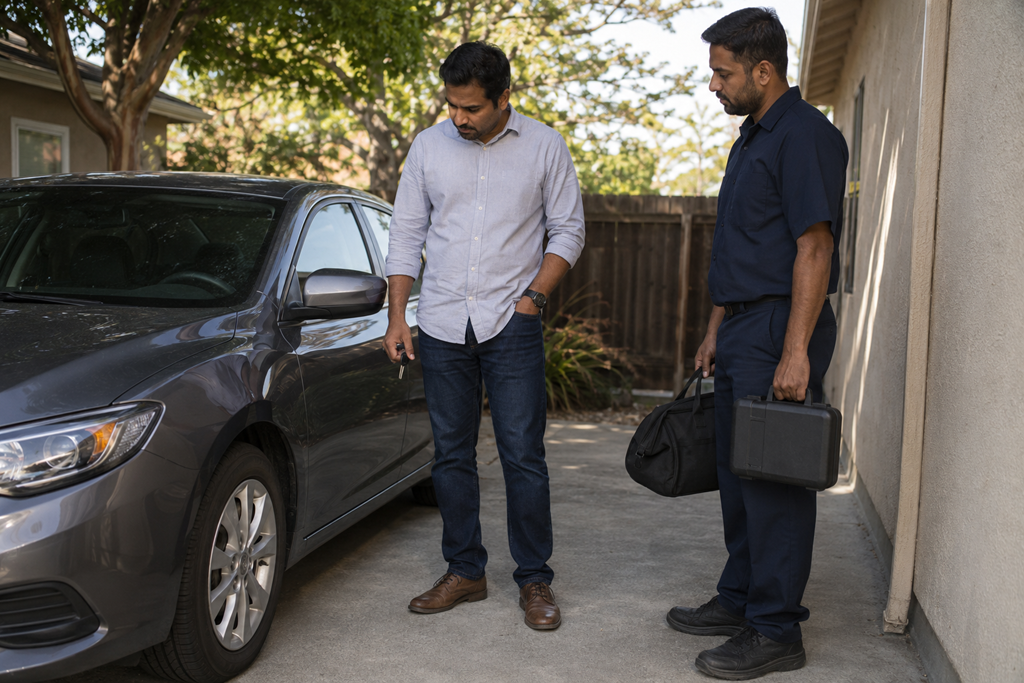
Some vehicle problems can be checked or repaired by a mobile mechanic because they are accessible, safe to work on where the car is parked, and do not require large shop equipment. Other repairs need a shop because the vehicle may need to be lifted, tested with specialized equipment, disassembled more deeply, or handled in a controlled repair environment.
That difference can feel confusing for Sacramento-area drivers. One issue may be handled in a driveway, apartment parking space, or workplace lot, while another starts with a mobile visit but ends with a recommendation to bring the vehicle into a shop. That does not always mean the problem is worse than expected. Often, it means the repair needs conditions that a parking space cannot provide.
Understanding that difference helps drivers ask better questions before scheduling service, avoid unrealistic expectations, and feel more prepared if a mobile mechanic says, “This part needs to be handled in a shop.”
Mobile Repairs Usually Depend On Access And Safety
A mobile mechanic’s biggest advantage is convenience. The vehicle can often be inspected where it sits, which may help when the car will not start, feels unreliable, or is difficult to bring to a shop right away.
But mobile service still depends on the repair environment. The mechanic needs enough space to work safely, a stable surface, reasonable access around the vehicle, and conditions that allow the problem to be evaluated without creating unnecessary risk.
A flat driveway may support one type of work better than a narrow curbside space. A quiet parking lot may be easier to assess than a busy street. A simple part replacement may be realistic on-site, while a repair that requires lifting the vehicle high, removing major components, or running extended tests may be better suited for a shop.
The key point is that “mobile” describes where the mechanic comes to you. It does not mean every repair can safely or properly happen anywhere.
The Repair Itself Is Only Part Of The Decision
Drivers often think the deciding factor is the part that needs repair. In reality, the decision usually involves several factors at once.
A mobile mechanic may consider where the vehicle is parked, how much room is available, whether the vehicle can be safely supported, whether weather or lighting affects the work, whether specialized equipment is needed, and whether the issue can be confirmed without deeper disassembly.
This is why two problems that sound similar can lead to different recommendations. One vehicle may have a straightforward issue that can be handled on-site. Another may show symptoms that point to a larger system problem requiring shop equipment or more controlled testing.
For Sacramento drivers comparing local mobile mechanic services, this is an important distinction. A good question is not only, “Can you fix this?” It is also, “Can this type of repair be safely and accurately handled where the vehicle is parked?”
Shop Repairs Often Require More Control
A repair shop offers things a driveway or parking lot usually cannot: vehicle lifts, heavier equipment, stable work bays, deeper diagnostic tools, controlled access, and more room for longer repairs.
Some jobs are better suited for that environment because the mechanic may need to inspect the underside of the vehicle, remove larger components, perform alignment-related work, test systems under controlled conditions, or deal with issues that could become unsafe in an open parking area.
A shop can also be more practical when a repair may take longer than expected. If a vehicle needs to stay apart while parts are checked, ordered, or replaced, a shop setting can protect the vehicle and keep the work contained.
This does not make shop service “better” in every situation. It simply means certain repairs need the kind of setup a shop is built to provide.
A Mobile Visit Can Still Be Valuable Even If The Repair Moves To A Shop
One common misunderstanding is that a mobile mechanic visit has failed if the final recommendation is to use a shop. That is not always true.
A mobile visit may still help identify likely causes, rule out simpler problems, explain whether the vehicle is safe to move, and give the driver a clearer next step. For a vehicle that will not start or feels questionable to drive, that first look can be useful before deciding whether to tow it, schedule shop service, or compare repair options.
This can be especially helpful when the driver is unsure whether the issue is minor, urgent, or even related to the symptom they noticed. A mobile mechanic may not always complete the repair on-site, but the visit can still turn uncertainty into a more informed decision.
The Parking Location Can Change What Is Realistic
Where the vehicle sits matters more than many people expect.
A car parked on a slope, tight street, uneven shoulder, crowded apartment lot, or restricted workplace garage may limit what can be done safely. Even a repair that is normally mobile-friendly may become less practical if the mechanic cannot access the right side of the vehicle, position equipment safely, or work without blocking traffic or creating a hazard.
Sacramento-area drivers may also need to think about heat, sun exposure, limited shade, and parking rules when planning a mobile appointment. These conditions do not automatically prevent service, but they can affect timing, comfort, and whether the mechanic can complete the work safely.
Before scheduling, it helps to describe the parking location clearly. Mention whether the vehicle is on level ground, whether there is room on both sides, whether it is in a garage or open lot, and whether the mechanic will have permission to work there.
Clear Communication Helps Prevent Surprises
A mobile mechanic cannot always know the full repair path from a short description. A car that “will not start” could point to several different causes. A noise may come from one area but be related to another. A warning light may require diagnosis before anyone can say whether the repair is simple or shop-based.
That is why clear communication before the appointment matters. The more accurately a driver describes the symptoms, location, vehicle condition, and recent changes, the easier it is for the mechanic to explain what may be possible on-site.
Helpful details may include when the issue started, whether the vehicle still drives, whether there are leaks, sounds, smells, warning lights, or starting problems, and whether anything changed recently. The goal is not to diagnose the car yourself. It is to give the mechanic enough context to decide what kind of visit makes sense.
Questions Worth Asking Before Scheduling
A few direct questions can make the service expectation much clearer:
“Is this the kind of issue you usually inspect or repair on-site?”
“What would make you recommend a shop instead?”
“Do you need the vehicle parked on level ground with space around it?”
“If the issue turns out to need shop equipment, what happens next?”
“Can you explain whether the first visit is mainly diagnostic or likely to include the repair?”
These questions help reduce confusion before the appointment. They also give the mechanic a chance to explain limits upfront instead of surprising the driver after arriving.
The Best Choice Is The One That Fits The Problem
Mobile mechanic services can be a practical option for many Sacramento-area drivers, especially when convenience, initial diagnosis, or on-site repair makes sense. But some repairs need the equipment, access, and controlled setup of a shop.
The difference is not always about whether the mechanic is capable. It is often about whether the repair can be done safely, accurately, and responsibly where the vehicle is parked.
When drivers understand that distinction, they can compare local service options with better expectations. A mobile visit may solve the problem directly, or it may help point the vehicle toward the right shop-based repair. Either way, the driver is better prepared to ask the right questions before scheduling, approving work, or making the next service decision.