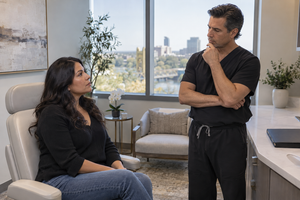
Swelling and healing timelines should be discussed early because they can shape how a person thinks about rhinoplasty results, recovery, scheduling, and expectations. Rhinoplasty is not usually a procedure where the final appearance is fully visible right away. Swelling can change how the nose looks during different stages of healing, and that can be frustrating when someone expects an immediate, polished result.
For Sacramento-area residents considering rhinoplasty, this conversation can be just as important as discussing the desired shape or concern. A qualified provider can explain what may be realistic, what may take time to settle, and what kinds of recovery details may depend on the individual patient and the specifics of the procedure.
This article is educational only and is not medical advice. Personal recovery expectations, risks, candidacy, and results should always be discussed with a qualified medical provider.
Swelling Is Part Of The Decision, Not Just The Recovery
Many people think about swelling as something that happens after surgery. But it is also something that should be considered before deciding whether to move forward.
That is because swelling can affect how someone feels during the recovery period. A person may look in the mirror and wonder whether the procedure worked, whether the shape is final, or whether something looks uneven. In many cases, the appearance during healing may not reflect the final result, but that can be hard to remember when the change is happening on your own face.
Discussing swelling early helps make the process feel less mysterious. It gives the patient a better sense of what questions to ask, what emotional reactions may be normal, and why patience may matter.
Healing Timelines Can Affect Everyday Planning
Rhinoplasty is not only a medical or cosmetic decision. It can also affect work schedules, family responsibilities, social plans, school routines, and how comfortable someone feels being seen during recovery.
A Sacramento resident preparing for a consultation may want to understand more than the procedure itself. They may also be thinking about when they can return to daily responsibilities, how visible swelling may be, and when they might feel comfortable attending events or being photographed.
Those are practical questions. They do not mean the person is being impatient or overly focused on appearance. They mean they are trying to plan realistically.
An early discussion about healing timelines helps connect the medical side of rhinoplasty with real life.
The Final Result And The Early Result Are Not The Same Thing
One of the most important expectations to clarify is the difference between an early post-procedure appearance and the final result.
A nose can look swollen, firm, uneven, or different from what someone imagined during the healing process. That does not automatically mean the final outcome is known. Healing can unfold gradually, and the way swelling changes may depend on the person, the surgical plan, skin thickness, anatomy, and other factors a provider can explain.
This is why it helps to ask about stages of healing instead of only asking, “When will I look normal?”
A better question may be, “What changes might I notice early, and what parts of the result usually take longer to settle?”
That kind of conversation can reduce confusion later.
Early Conversations Help Separate Concern From Panic
It is easy to feel worried when the face looks different during healing. The nose is central to facial balance, and even small changes can feel noticeable to the person seeing them every day.
When swelling has not been explained clearly, the recovery period can feel more stressful than expected. A person may keep checking the mirror, comparing the current appearance to reference photos, or wondering whether every small change is meaningful.
Clear expectations do not remove every concern, but they can give the patient a better frame of reference.
Instead of thinking, “Something must be wrong,” the person may be able to ask, “Is this part of the stage my provider told me about, or is this something I should report?”
That difference matters.
Why This Should Come Up Before Choosing A Provider
A good rhinoplasty consultation should not focus only on the desired look. It should also include a conversation about communication, recovery expectations, and how the provider explains uncertainty.
Before choosing a surgeon or consultation provider, it can help to notice whether they discuss healing in a realistic way. Clear communication about swelling and timelines may show that the provider is not rushing the conversation or encouraging unrealistic expectations.
This does not mean every detail can be predicted perfectly. Healing varies. But a provider should be able to explain general expectations, what may affect recovery, and how follow-up questions are typically handled.
If the conversation feels vague, rushed, or overly focused on the final image without addressing the healing process, that may be worth slowing down and clarifying.
Common Misunderstandings About Rhinoplasty Healing
One common misunderstanding is expecting the nose to look “finished” shortly after the procedure. This can lead to disappointment when swelling is still present.
Another misunderstanding is assuming that every change seen during recovery is permanent. Early swelling can distort appearance, and the way the nose looks at one stage may not represent the long-term result.
A third misunderstanding is comparing one person’s timeline to someone else’s. Friends, online stories, and before-and-after images may not reflect the same procedure, anatomy, provider approach, or healing pattern.
It is also easy to focus only on the visible timeline and overlook the emotional side. Looking different while still healing can feel strange, even when the process is going normally. Naming that possibility early can help the patient feel more prepared.
Questions Worth Asking During A Rhinoplasty Consultation
A consultation does not need to become a long interrogation, but a few focused questions can make the recovery conversation clearer.
You might ask:
- What kinds of swelling should I expect during the early healing period?
- What changes may take longer to settle?
- How will I know which concerns are normal and which should be discussed right away?
- How often are follow-up visits usually part of the process?
- What factors could make my healing timeline different from someone else’s?
- How should I think about social plans, work, or photos during recovery?
These questions are not about demanding guarantees. They are about understanding the process before making a decision.
A Realistic Timeline Conversation Can Reduce Second-Guessing
Rhinoplasty can involve a lot of anticipation. Someone may spend months thinking about a specific concern, imagining how a change might look, and wondering whether the decision is right.
Without a clear conversation about swelling and healing, that anticipation can turn into second-guessing once recovery begins.
Early discussion gives the patient a more practical way to interpret what they are seeing. It also helps them understand that healing is not always a straight line. Some days may feel more reassuring than others. Some changes may be gradual. Some concerns may be worth bringing to the provider rather than trying to interpret alone.
That kind of preparation can make the overall decision feel more informed.
Better Expectations Lead To Better Consultation Conversations
Discussing swelling and healing timelines early does not mean the patient is focusing on the wrong thing. It means they are taking the decision seriously.
A rhinoplasty consultation should help someone understand not only what may be changed, but also how the process may feel before the final result is clearer. For Sacramento-area patients comparing providers or preparing for a first consultation, this topic can help reveal how clearly a provider communicates and how realistic the overall conversation feels.
The main takeaway is simple: ask about healing before you are in the middle of it. A clearer understanding of swelling, timing, and follow-up expectations can help you make a more thoughtful decision before moving forward with rhinoplasty.