If you want more airflow without feeling exposed, ask a security-screen professional to explain how the screen’s openness, mesh density, color, placement, and surrounding light will affect both ventilation and visibility in your actual doorway or window. The goal is not simply to choose the “most open” screen, but to find a balance that lets air move while still giving you the level of privacy and visual comfort you expect.
This question often comes up when a homeowner wants to leave a primary door or window open more frequently but does not want people outside to have a clear view into the home. A security screen may make that arrangement feel more practical, but the screen itself does not automatically create complete privacy.
The way it performs depends on more than the product description. Lighting, viewing angles, nearby walkways, interior room placement, screen color, and the distance between the viewer and the opening can all change the experience.
More Airflow And More Privacy Are Not The Same Setting
It is easy to assume that a screen offering more ventilation will also make the opening feel comfortable and private. In practice, airflow and visibility are separate qualities that must be evaluated together.
A more open screen may allow air to move more freely, but that same openness may make it easier to see through under certain conditions. A denser screen may reduce the view from outside, but it may also change how much air, daylight, and outward visibility pass through the opening.
That does not mean one type is always better. It means the right choice depends on what matters most at that specific door or window.
For example, a side entrance facing a private yard may allow a different balance than a front door facing a walkway. A bedroom window may create different privacy concerns than a kitchen window overlooking a fenced patio.
Before comparing products, explain how you actually plan to use the opening. A professional needs to know whether you want occasional ventilation, hours of open-door use, evening airflow, visibility toward children or pets, or additional separation from a frequently traveled area.
Ask What “Openness” Means For The Actual Screen
Terms such as open, breathable, high-visibility, and privacy-enhancing can sound helpful without telling you what the screen will feel like after installation.
Ask the provider to explain what makes one screen more open than another. The answer may involve the spacing of the woven material, the thickness of individual strands, the frame design, or how much of the opening is occupied by structural components.
You do not need a technical lecture. You need a practical explanation of what those differences mean when standing inside your home.
Useful questions include:
- How does this screen affect airflow compared with the other options you offer?
- Will it noticeably change the amount of daylight entering the room?
- How clearly can someone see through it from several feet away?
- Does the screen look different when viewed straight on rather than from an angle?
- Can I compare full-size samples instead of relying on a small handheld piece?
A small sample can show color and texture, but it may not reveal how the material performs across an entire doorway or window. The larger opening, surrounding frame, nearby walls, and depth of the entry can all affect the final result.
Visibility Changes As The Light Changes
One of the most important questions to ask is how visibility changes when the brighter side of the screen shifts.
During the day, the exterior may be much brighter than the room inside. Under those conditions, the screen may appear darker from outside and provide more visual separation than expected.
Later, interior lighting may become brighter than the porch, yard, or walkway. That difference can make the room behind the screen easier to see.
This is why a screen that feels private during a daytime consultation may create a different impression in the evening. The material has not changed, but the lighting relationship has.
Ask the provider to discuss both daytime and evening use. If the opening is especially important to your privacy, consider how it looks when interior lights are on, curtains are open, and someone approaches from the most likely viewing direction.
The question is not simply, “Can people see through this screen?” A more useful question is, “Under what lighting and viewing conditions will people be able to see through it?”
Consider Where Outside Viewers Can Stand
A screen may limit visibility from one position while offering a clearer view from another.
Someone standing directly in front of the opening may see something different from a person approaching along a side path. A raised porch, nearby driveway, shared walkway, or neighboring property can create sightlines that are easy to overlook when choosing a screen indoors.
Ask the professional to evaluate the opening from the places where people are most likely to pass or pause.
This does not require treating every passerby as a concern. It is simply a way to make the screen fit the real layout of the property.
For Sacramento-area homeowners, that might mean checking the view from a front path, side-yard gate, driveway, courtyard, or outdoor seating area. The goal is to identify the angles that affect everyday comfort before the screen is installed.
Explain What You Want To See From Inside
Privacy is only one side of the decision. Your ability to see outward may matter just as much.
You may want to see who is approaching the door, watch children in the yard, check on a pet, notice a delivery, or enjoy an unobstructed view while allowing air into the home.
A screen that provides greater visual separation may also change how clearly you can see outside, especially from farther back in the room. Frame components, door hardware, and the position of the screen relative to the primary door can also affect the view.
Tell the provider which outward views matter to you. Stand where you normally sit, work, cook, or move through the room and look toward the proposed opening.
This often reveals that the decision is not about maximum privacy or maximum visibility. It is about preserving the particular view you use while reducing the exposure that bothers you.
Ask How The Frame And Hardware Affect The Opening
The screen material receives most of the attention, but the completed installation includes a frame, hinges, handles, locks, supports, and other components.
These elements may slightly reduce the open area or interrupt specific sightlines. A heavier frame near eye level can feel different from one positioned around the outer edge of the opening. A handle or lock may also land where you naturally look through the screen.
Ask to see how the complete assembly will occupy the opening. The provider should be able to explain where major frame and hardware elements will sit and how they may affect airflow or visibility.
This is particularly important for smaller windows, narrow doors, and entries that already have limited clearance. The screen material may perform well, but the surrounding installation still needs to fit the way you use the opening.
Do Not Treat Screen Color As A Decorative Choice Only
Screen and frame color can affect more than appearance.
A darker screen may visually recede under some conditions, which can make it easier to look outward from inside. The same material may appear more noticeable when paired with a contrasting frame or brightly lit background.
Lighter colors may coordinate well with the exterior but create a different visual effect when viewed through the opening.
Ask how the available colors influence both the exterior appearance and the view from inside. Compare samples against the actual doorway, window trim, stucco, interior wall colors, and surrounding light rather than selecting from a brochure alone.
The most attractive sample on a table may not create the most comfortable view after it covers a full opening.
Request A Realistic Demonstration When Possible
The most helpful evaluation uses conditions that resemble normal use.
Ask whether a temporary full-size panel, display door, or installed example is available. If the provider only has small samples, hold them at different distances and angles rather than directly in front of your face.
Try to evaluate:
- The view from inside the room
- The view from the nearest exterior path
- The opening under brighter exterior light
- The opening with interior lights turned on
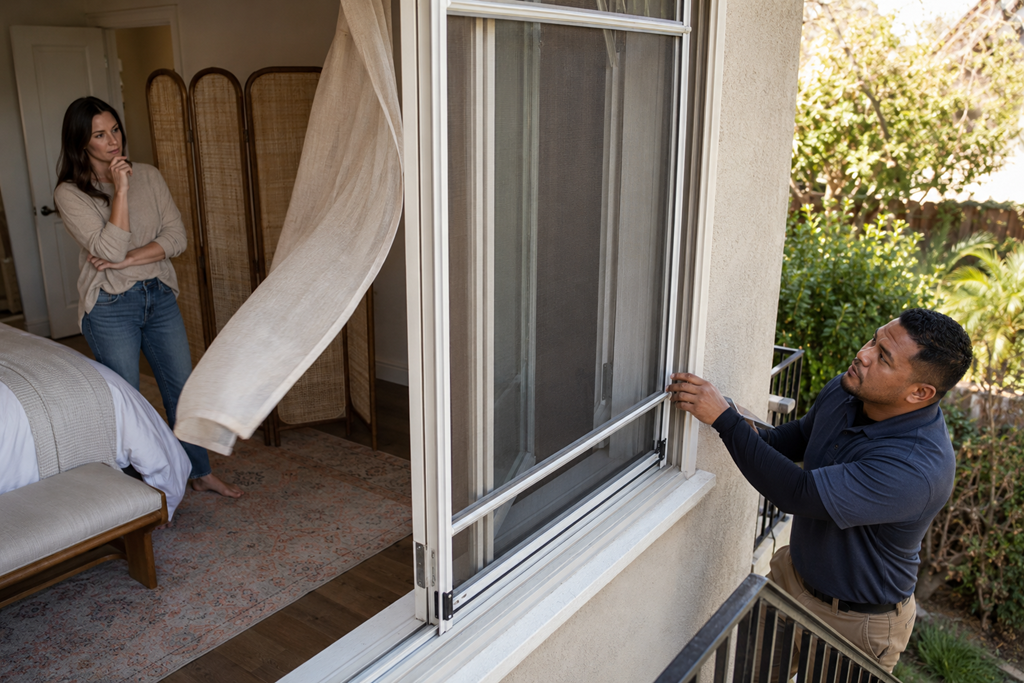
- The amount of movement in a nearby lightweight curtain or fabric
This is not a laboratory airflow test. It is a practical way to notice differences that may matter during daily use.
A provider should be willing to acknowledge that every screen involves tradeoffs. Be cautious when someone describes a product as offering unrestricted airflow, perfect visibility, and complete privacy without explaining the conditions that affect those claims.
Privacy May Still Require Help From The Room Itself
A security screen can change how exposed an opening feels, but it does not necessarily replace curtains, blinds, shades, landscaping, or thoughtful interior lighting.
If nighttime privacy is a major concern, ask how the screen will work with the window coverings or door treatments you already use. You may be able to keep the opening ventilated while partially adjusting a curtain or shade, depending on the layout.
Interior furniture placement can matter as well. A chair, desk, bed, television, or brightly lit wall positioned directly behind the screen may be more visible than objects located farther to the side.
This is a useful reframe: the screen is one part of the privacy arrangement, not the entire arrangement.
The Best Choice Is A Balance You Have Actually Seen
Choosing a security screen for airflow should not require guessing whether you will feel exposed after installation.
Ask the provider to explain the tradeoffs in plain language, evaluate the most important viewing angles, discuss changing light conditions, and show how the full frame will fit the opening. Make sure the conversation includes what you want to see from inside as well as what you want to limit from outside.
The strongest decision is usually not the product described with the most impressive individual feature. It is the screen that creates an acceptable balance of airflow, outward visibility, privacy, appearance, and everyday usability in the specific place where it will be installed.