A security screen works best when visibility, mesh strength, and frame fit are considered together rather than as separate upgrades. For Sacramento-area homeowners, the goal is not simply to choose the heaviest-looking screen. It is to find a screen system that still lets you see through the entry, uses mesh suited to the level of protection you want, and fits the opening closely enough for the frame, mesh, and hardware to work as intended.
That balance can be easy to overlook. A security screen may look substantial in a showroom or product photo, but the real question is how the entire screen will function at your particular entry. Something that appears strong may feel overly obstructive once installed. A screen with good visibility may still deserve a closer look at its construction. And even a well-made screen can be a poor match when the frame and opening do not work well together.
Visibility Matters Because You Still Have To Live With The Screen
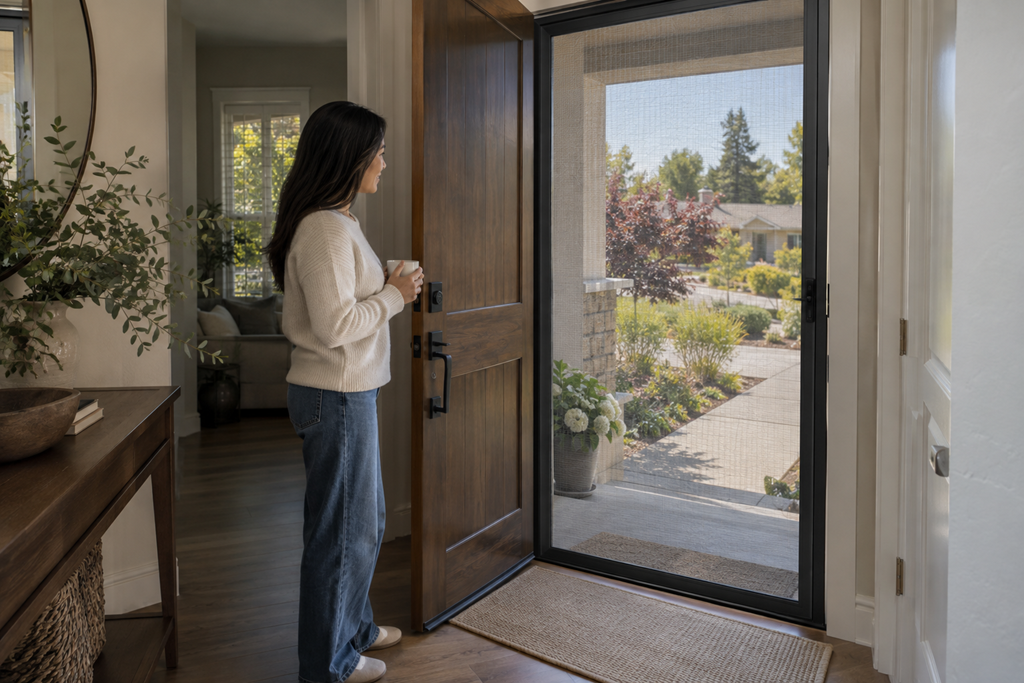
A security screen becomes part of an entrance you may use every day. That means visibility is not merely an appearance issue.
You may want to see who is approaching the door, check whether a package has been left outside, look toward the driveway, or simply maintain some of the open feeling you had before the screen was installed. A screen that interferes too much with those everyday sightlines can feel different once you live with it than it did when you were comparing products.
Mesh construction, viewing angle, lighting, and the contrast between the interior and exterior can all influence how visible a screen feels. A Sacramento entry exposed to bright daylight may also look different from the shaded side of the door than it does from outside.
This is why looking at an actual mesh sample can be more useful than relying only on photographs. When possible, consider how easily you can see through the material under conditions that resemble your own entry.
Mesh Strength Is Important, But Heavier-Looking Does Not Automatically Mean Better
It is understandable to associate thicker, darker, or more industrial-looking material with greater security. Appearance alone, however, does not explain how a security screen is constructed or how the complete system is intended to perform.
When comparing screens, ask what the mesh is made from, how the manufacturer describes its construction, and what role the mesh plays within the complete screen system. If a provider or manufacturer makes specific security or performance claims, ask what those claims are based on rather than assuming that the visual appearance of the mesh tells the whole story.
This also helps separate two different questions: how substantial the screen looks and how the screen is actually designed.
Some homeowners may prefer a more visually open screen. Others may place greater emphasis on a more substantial mesh construction. The useful comparison is not simply which screen looks strongest, but which combination of visibility and construction makes sense for the entry and the homeowner's priorities.
Frame Fit Is Where The Screen And The House Have To Work Together
The mesh receives a lot of attention because it occupies most of the visible surface, but the surrounding frame matters too.
Residential openings are not all identical. Door dimensions, trim, thresholds, surrounding materials, and existing conditions can influence how a security screen fits the entry. That is one reason a homeowner should understand how a provider plans to evaluate the actual opening rather than comparing screens only by their advertised dimensions or appearance.
A well-considered fit should allow the screen to look intentional at the entry while supporting normal operation of the door and the rest of the screen system.
If something about the opening requires an adjustment, special sizing, or a different approach, it is useful to understand that before committing to the project. A clear explanation from the provider can help distinguish a normal property-specific consideration from a proposal that has not fully addressed the entry.
The Three Factors Affect One Another
Visibility, mesh strength, and frame fit are easiest to understand when they are treated as connected decisions.
Imagine choosing a screen because the mesh appears extremely substantial. After installation, however, you realize that the view from your foyer is much more restricted than expected. The screen may still have qualities you value, but one important everyday consideration was not given enough attention.
The reverse can happen as well. A highly transparent appearance may initially be appealing, but you may still want to understand the material, construction, frame, and other components before deciding whether the complete system matches what you expect from a security screen.
Frame fit adds another layer. Even when you like the mesh and visibility, the screen still has to make sense for the actual opening.
Thinking about all three together gives you a better basis for comparing options than asking only, "Which mesh is strongest?"
Compare The Complete Screen, Not Just The Most Noticeable Feature
Security screen discussions can become overly focused on one specification.
One provider may emphasize mesh material. Another may emphasize the frame. Product photos may emphasize appearance. Homeowners may initially focus on whichever feature seems easiest to compare.
A more useful conversation is about how those pieces work together at your entry.
Before choosing a screen, you can ask:
- How does this mesh affect visibility from inside and outside the home?
- What is the mesh made from, and how is its construction described?
- How will the frame be sized or matched to my particular opening?
- Which parts of the complete screen system support the performance claims being made?
The answers do not have to be overly technical. What matters is whether the provider can explain the differences clearly enough for you to understand what you are comparing.
A Security Screen Should Make Sense After The Installation Too
The best comparison is not necessarily between the most imposing-looking screen and the least noticeable one.
It is between complete screen systems and how well they match what you actually want from the entrance.
For Sacramento-area homeowners, that may mean balancing an unobstructed-enough view with the mesh construction they are comfortable with, while making sure the frame is properly considered for the specific opening. Looking at those factors together can make provider conversations more useful and help prevent one impressive-sounding feature from dominating the entire decision.
A security screen is something you will see and use long after the estimate is approved. Understanding visibility, mesh strength, and frame fit before hiring gives you a clearer way to compare what different providers are actually proposing.