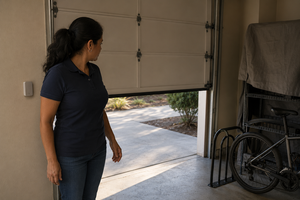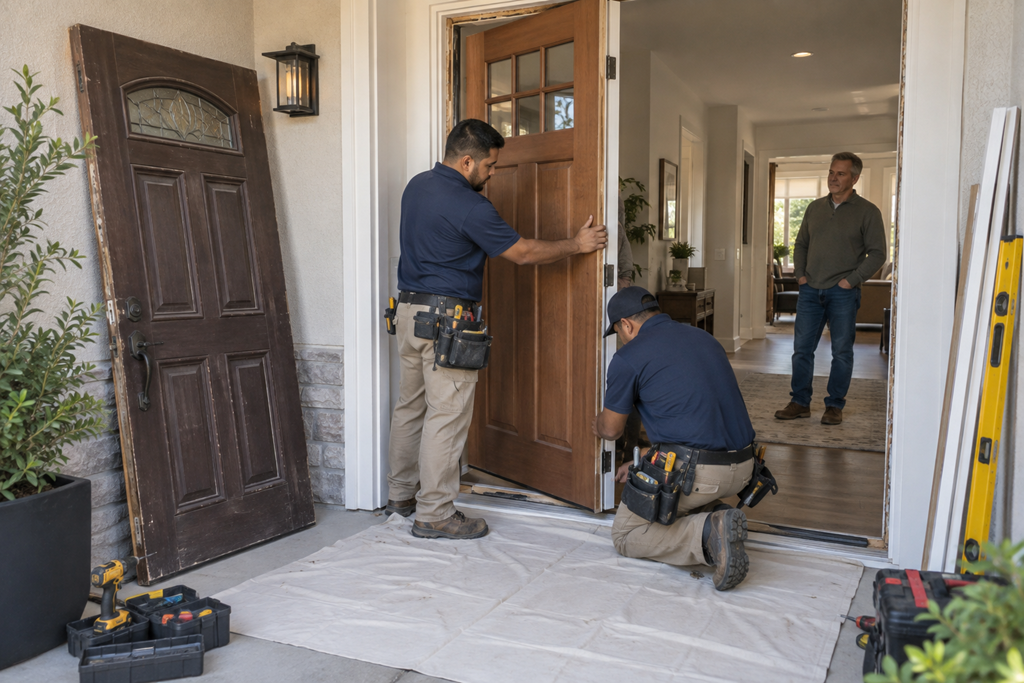
Door replacement usually moves through a few connected stages: an initial conversation or estimate, measurements and scope decisions, ordering or preparation, removal of the existing door, installation of the replacement, and final adjustments. The exact details can vary, but understanding that sequence makes it easier to compare estimates and know what to expect on installation day.
For Sacramento-area homeowners, a door replacement can seem like a relatively simple project from the outside. There is an old door, a new door, and an opening between them. But the work involved may depend on more than simply taking one door off its hinges and hanging another one.
The condition and configuration of the existing opening, the type of replacement being discussed, hardware choices, surrounding trim, and other project details can all affect what happens between the first estimate and the finished installation.
Understanding those stages can make conversations with local door replacement providers much easier to follow.
The Estimate Is Usually About More Than the Door Itself
An estimate typically begins with understanding what you want to replace and what you expect the finished doorway to accomplish.
That may include discussing the existing door, how it operates, the appearance you want, the type of replacement under consideration, and whether related components are expected to remain or change.
Measurements are also an important part of this early stage.
A provider may need to evaluate the opening rather than relying only on the nominal size of the existing door. That distinction matters because the replacement has to work with the actual opening and surrounding conditions.
This is one reason two door replacement projects that appear similar at first glance may involve different scopes.
The estimate should help define what is actually being included.
A Clear Scope Makes the Rest of the Project Easier to Understand
One of the most useful things to establish before moving forward is whether the estimate describes the complete work you believe you are purchasing.
For example, replacing a door can involve more than the visible door panel. Depending on the project, discussions may also involve the frame or jamb, trim, threshold, hardware, finishing, disposal of the old materials, or adjustments to the surrounding area.
That does not mean every project includes all of those items.
It means the words door replacement can describe different scopes.
When comparing Sacramento-area providers, look beyond whether both estimates appear to describe the same door. Consider whether they describe the same work.
A lower or higher price is difficult to interpret if one estimate includes related work that another estimate leaves unclear.
Measurements and Product Decisions Usually Come Before Installation Day
Once the scope is settled, there is often a period between agreeing to the project and the actual installation.
The replacement may need to be selected, ordered, prepared, or otherwise matched to the project.
During this part of the process, details that seemed minor during the first conversation can become important. Door style, configuration, hardware, finish, swing direction, glass options, or other features may affect what eventually arrives for installation.
This stage is a useful point to make sure you understand what has been selected.
A door that looks right in a catalog or sample still needs to match the choices discussed for the actual opening.
If something about the selection is unclear, asking before installation is generally easier than discovering a misunderstanding after materials have been prepared.
Installation Day Is Usually More Organized Than “Remove One, Put One In”
When installation begins, the provider generally has to work through the existing doorway in a controlled sequence.
The surrounding area may be protected first. The old door and the portions of the existing assembly included in the scope are then addressed so the replacement can be positioned and installed.
What gets removed depends on what was agreed upon.
That distinction is important.
A project involving only certain door components can look different from a project involving a more complete replacement of the door assembly.
The installer may also need to evaluate how the new unit fits the actual opening as the work progresses. Small adjustments and finishing work are part of why the installation should not be viewed simply as swapping two interchangeable objects.
For the homeowner, the most useful expectation is that there will normally be a period when the doorway is actively being worked on before it looks finished again.
The Existing Opening Can Affect What Happens Next
One reason door replacement projects do not always unfold identically is that some conditions become easier to evaluate after parts of the existing assembly are removed.
That does not automatically mean a problem will be discovered.
It simply means an installed door can conceal parts of the opening that were not fully visible during an initial estimate.
If the provider encounters something that could change the agreed scope, the important issue becomes communication.
You should be able to understand what was found, why it matters to the installation, whether it changes the proposed work, and whether there would be any change to what you previously approved.
A project becoming slightly different from the initial expectation is not the same thing as a provider making unexplained changes.
The difference is whether the reason and revised scope are clearly discussed.
A Finished Installation Includes More Than Seeing the New Door in Place
Once the replacement is positioned, additional work may still be needed before the project is complete.
The installer may make final adjustments, address components included in the agreed scope, install or check hardware, finish surrounding areas that were part of the project, and clean the immediate work area.
This final stage is also when the homeowner can look at how the completed doorway operates and compare the finished work with what was discussed during the estimate.
A new door being physically present does not necessarily mean every agreed detail has been completed.
That is why it helps to think of installation as a process rather than a single moment.
Ask What Will Happen Before, During, and After the Opening Is Worked On
You do not need to understand door installation techniques to ask useful questions.
Before hiring a local provider, questions such as these can make the expected process much clearer:
- What exactly is included in the replacement scope?
- Which parts of the existing doorway are expected to remain?
- Are measurements finalized before the replacement is ordered or prepared?
- What should I move or clear before installation day?
- How will the work area be protected?
- What happens if the opening reveals something that could change the original scope?
- What finishing work is included?
- What should I review with the installer before the project is considered complete?
The goal is not to manage the installation yourself. It is to know what you are agreeing to and what the provider expects to deliver.
Not Every Change During the Project Means Something Went Wrong
Homeowners can become concerned when installation does not look exactly the way they imagined from the estimate.
Some variation is normal because the estimate, preparation, removal, installation, adjustment, and finishing stages serve different purposes.
What matters is whether the project continues to match the agreed scope—or whether any meaningful change is explained before additional work moves forward.
That is a more useful way to evaluate the process than expecting every door replacement to follow an identical script.
A Good Estimate Should Help You Picture Installation Day
Before committing to a door replacement, you should have a reasonable understanding of the path from the existing doorway to the finished one.
You may not know every installation detail, and you do not need to.
But you should understand what is being replaced, what is included, what needs to happen before installation, how unexpected scope questions would be handled, and what completion is expected to look like.
For Sacramento-area homeowners comparing local pros, that understanding makes an estimate more useful than a price alone. It gives you a clearer basis for comparing providers and helps installation day feel like the next stage of an understood project rather than a completely separate event.