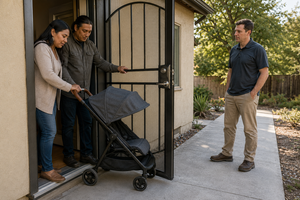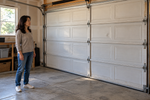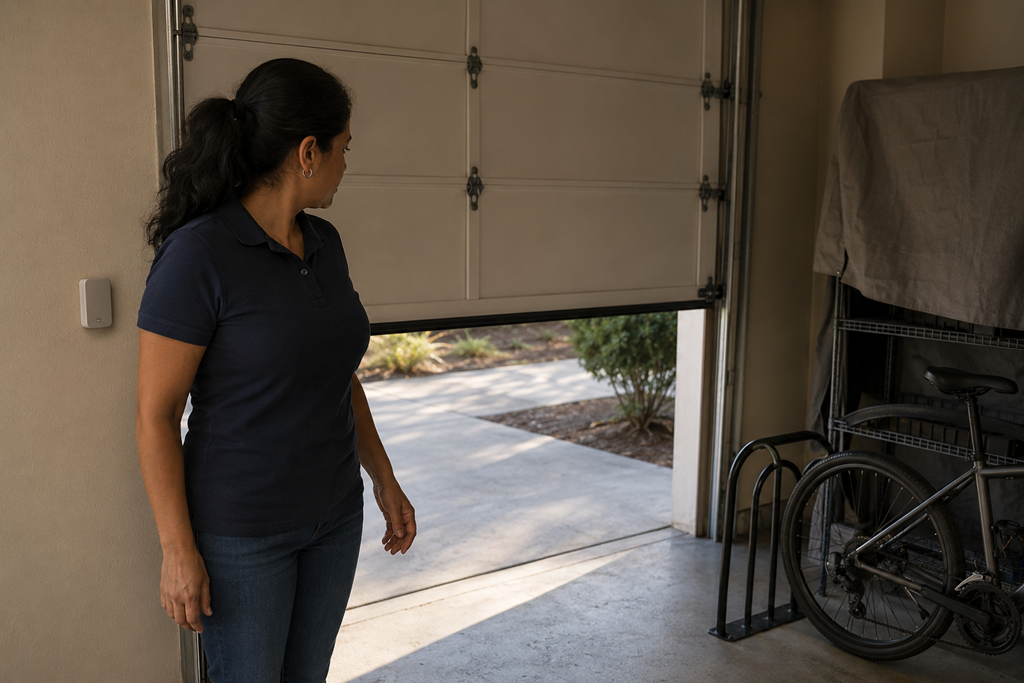
Garage door safety sensors matter because they help the door recognize when something is in its path before closing fully. For Sacramento-area homeowners, that small feature can affect everyday safety, convenience, and confidence every time the garage door is used.
When sensors are working as expected, they are easy to forget. The door opens, closes, and reverses when needed. When something is off, though, the experience can become frustrating quickly. The door may refuse to close, reverse unexpectedly, stop partway down, or make a simple morning routine feel more complicated than it should.
Safety sensors are not just another garage door accessory. They are part of the system that helps prevent the door from closing on people, pets, objects, bikes, toys, storage bins, or anything else that may be in the way.
The Small Parts Near the Floor Have a Big Job
Garage door safety sensors are usually positioned low on each side of the garage door opening. Their role is to help detect whether the path under the door appears clear before the door finishes closing.
That matters because a garage door is heavy, and the closing area is often part of daily household traffic. Children walk through it. Pets move around it. Homeowners carry groceries, tools, laundry baskets, sports equipment, and trash bins through the same space. In many Sacramento homes, the garage also works as storage, a workshop, a side entry, or a transition space between the driveway and the house.
Because the sensors sit close to the floor, they can also be affected by ordinary garage life. Dust, bumps, clutter, sunlight, vibration, or small shifts around the door opening can sometimes contribute to confusion about what the door is “seeing.” The important point is not to diagnose the exact cause on your own. The point is to understand why sensor-related symptoms should not be brushed aside as only a minor annoyance.
What Sensor Trouble Can Feel Like Day to Day
A sensor issue often shows up during normal routines, not during a planned inspection. You may be leaving for work, bringing the car in at night, unloading groceries, or trying to close the garage before going inside.
The door may start down and then reverse. It may not close unless you keep trying. The opener light may flash. The door may seem fine one day and stubborn the next. That inconsistency is part of why homeowners sometimes ignore the issue or assume the opener is simply being temperamental.
This can be confusing because the door may still open normally. The problem may only appear when closing. That makes it easy to think the system is mostly fine, when the closing function is exactly where safety sensors matter most.
Why It Matters Beyond Convenience
A garage door that will not close properly can create more than a scheduling hassle. It can affect how secure the home feels, how easy it is to leave the house, and whether the garage can be used normally.
For families, the concern is often practical. A garage may hold bikes, scooters, tools, storage bins, pet supplies, laundry machines, or home entry access. If the door behaves unpredictably, the household may start working around the problem instead of understanding it.
That workaround mindset is where small issues can become more stressful. Someone may keep pressing the button repeatedly, move objects around without knowing what changed, or assume the door is safe because it eventually closes. A better approach is to treat sensor behavior as useful information. The system may be signaling that something about the closing path, alignment, wiring, opener communication, or door setup deserves attention.
Why Safety Sensors Are Easy to Misunderstand
One common misunderstanding is thinking that sensor problems are only about the sensor itself. Sometimes the sensors are part of the issue, but the larger garage door system may also need to be considered. The opener, door balance, tracks, brackets, wiring, nearby objects, and overall condition can all affect how the door behaves.
Another misunderstanding is assuming that a door closing problem is automatically an opener problem. The opener may be involved, but a door that reverses or refuses to close can also be reacting to what the safety system detects.
Homeowners may also underestimate how often garages change. Storage gets moved. A bike leans in a new place. A trash can shifts closer to the opening. A box gets stacked near the sensor path. A small bump may move something just enough to affect the system. The change may be subtle, but the result can feel sudden.
This is why safety sensor issues are often less about blame and more about awareness. The door may be doing what it is designed to do: preventing a close cycle when something does not appear right.
Avoiding Risky Shortcuts
When a garage door refuses to close, it is tempting to look for a quick workaround. That is understandable, especially when the car is inside, the door is open, or the household is trying to leave.
Still, safety features should not be bypassed, ignored, or treated as obstacles to get around. If the door is repeatedly reversing or refusing to close, that behavior is worth taking seriously. A qualified garage door professional can evaluate what is happening without the homeowner needing to guess or attempt risky adjustments.
The goal is not to make the door close at any cost. The goal is to understand why the system is not closing normally and whether the safety function is responding to a real obstruction, misalignment, damaged component, wiring issue, opener problem, or another condition.
When It Makes Sense to Ask a Local Pro
For Sacramento-area homeowners, sensor concerns are worth discussing with a garage door service provider when the door keeps reversing, fails to close consistently, behaves differently at certain times of day, or seems affected by objects, light, movement, or small changes near the garage opening.
A professional evaluation can help separate a simple obstruction or alignment concern from a broader garage door problem. It can also help the homeowner understand whether the issue is limited to the sensors or connected to other parts of the door system.
This matters before comparing quotes or scheduling service because vague symptoms can lead to vague conversations. Instead of saying only, “My garage door is broken,” it can help to describe what the door does, when it happens, and whether the issue appears only while closing.
Helpful Questions to Ask Before Scheduling Service
When contacting a garage door service provider, the questions do not need to be technical. The best questions are often practical.
You can ask whether the provider checks the safety sensor system as part of the service visit. You can ask whether the symptoms could involve the opener, door movement, sensor alignment, wiring, or an obstruction. You can also ask how they explain findings before recommending repair or replacement.
It is reasonable to ask what the technician will inspect and whether they will explain the difference between a sensor issue and a larger door system issue. Clear communication matters because homeowners should not feel pressured into a repair they do not understand.
If an estimate is provided, it should be clear what is being addressed. A helpful provider should be able to explain the problem in plain language, describe what is included, and clarify whether the issue affects safety, reliability, convenience, or all three.
What Clear Communication Looks Like
A good service conversation should leave the homeowner with a better understanding of the problem. That does not mean the homeowner needs to become a garage door expert. It means the provider should be able to explain what was observed, why it matters, and what options are reasonable.
Clear communication may include explaining whether the sensors are blocked, misaligned, damaged, unstable, or showing signs of a larger system concern. It may also include explaining whether other parts of the door are contributing to the symptom.
Unclear communication can make the decision harder. Be cautious if the explanation feels rushed, if the recommendation jumps straight to replacement without context, or if the issue is described in a way that leaves you more confused than before. The homeowner should understand the basic reason for the recommendation before agreeing to work.
A Better Way to Think About Sensor Issues
Garage door safety sensors are easy to overlook because they are small and usually quiet. But their role is important: they help the door respond when the closing path may not be safe.
When sensor-related problems appear, the most useful mindset is not panic or frustration. It is attention. The door may be giving you a sign that something about the system needs a closer look.
For Sacramento homeowners comparing garage door service options, understanding the role of safety sensors can make the conversation easier. You can describe the symptoms more clearly, ask better questions, avoid risky shortcuts, and feel more prepared before scheduling service.
The takeaway is simple: safety sensors matter because they help the garage door close with awareness, not just force. When they stop behaving as expected, it is worth understanding the issue before deciding what kind of service is needed.