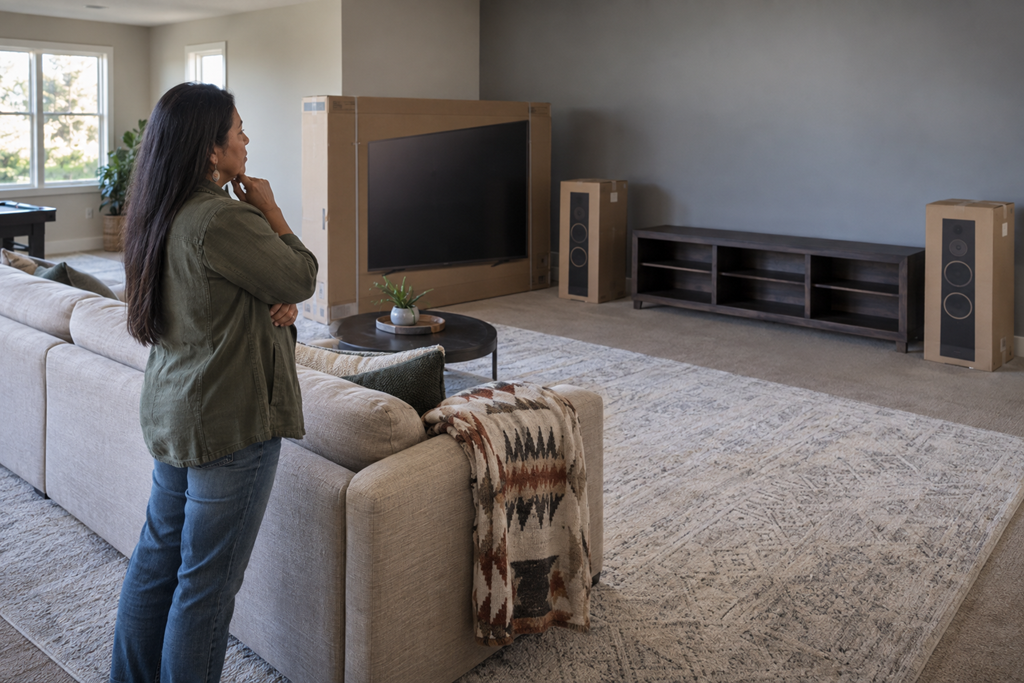
Home theater installation usually happens in stages rather than as one simple equipment hookup. A typical project starts with understanding the room, the way you want to use it, and the equipment you already have or plan to buy, then moves through layout decisions, installation preparation, equipment placement, system setup, and a final walkthrough.
That distinction matters because the visible equipment is only part of the project. A television or projector, speakers, receiver, streaming devices, seating, wiring, power access, internet connection, and the characteristics of the room may all affect what needs to happen before everything is ready to use.
For Sacramento-area homeowners considering professional home theater installation, understanding that progression can make conversations with installers easier and help set more realistic expectations before the project begins.
The Project Usually Starts With How You Want To Use The Room
Before equipment is mounted or connected, an installer generally needs to understand what you are trying to create.
A dedicated movie room may have different priorities from a family room that also happens to include a large television and surround sound. Some households primarily stream movies and television. Others may want gaming systems, music, sports viewing, multiple media sources, or equipment they already own incorporated into the setup.
This early conversation can also reveal preferences that are easy to overlook when concentrating only on equipment.
For example, you may care about keeping components visually unobtrusive, minimizing visible wiring, using existing furniture, preserving access to windows or doors, or making the system straightforward enough for everyone in the household to operate.
The goal at this point is not simply to choose more equipment. It is to define what the finished room is supposed to do.
The Room Helps Shape The Installation Plan
Once the installer understands the goal, attention generally shifts to the physical room.
Viewing distance, seating location, wall space, ceiling configuration, windows, lighting, existing power locations, available network connectivity, equipment storage, and possible speaker locations can all influence the proposed setup.
Existing rooms can introduce additional considerations. A finished family room, for example, may offer fewer convenient ways to route wiring than a room being remodeled. A television may appear to fit perfectly on a wall until furniture placement, viewing angles, windows, or nearby openings are considered.
This is one reason an initial idea can change after an installer sees the space.
A change does not necessarily mean the original idea was poor. It may simply mean the physical room introduces factors that were difficult to judge from equipment specifications or photographs alone.
Equipment Decisions Come After The Goal And Space Are Understood
Home theater projects can involve equipment the homeowner already owns, equipment purchased specifically for the project, or a combination of both.
Before installation starts, it helps to establish which components are staying, what may need to be added, and who is responsible for obtaining each item.
Compatibility can matter as much as individual product quality. A collection of highly rated components does not automatically mean they will work together in the way a homeowner expects.
A professional installer may therefore discuss the overall system rather than evaluating each device in isolation.
This is also a useful point to clarify whether the proposed scope includes items such as mounting hardware, speakers, receiver or amplification equipment, streaming devices, control equipment, cables, equipment storage, or other project-specific components.
The more clearly the equipment and responsibilities are defined before installation day, the less room there is for confusion later.
Installation Preparation May Be A Separate Part Of The Project
Homeowners sometimes picture installation day as the moment a provider arrives, mounts the display, connects the speakers, and leaves.
Some projects are that straightforward.
Others need preparation first.
Depending on the room and proposed system, the installer may need to account for equipment mounting locations, cable routing, component storage, access to power, network connectivity, speaker placement, or coordination with other work taking place in the room.
A larger project can therefore have a noticeable gap between deciding what you want and actually seeing the system installed.
That preparation is part of the process rather than necessarily a delay. It creates the conditions for the equipment to be placed and connected according to the agreed scope.
The Physical Installation Is Only One Stage
Once the room and equipment are ready, the visible installation work can begin.
This may include placing or mounting the display equipment, positioning speakers, locating components, organizing connections, and completing other work included in the project scope.
The exact amount of work can vary considerably.
Installing a television with a simple sound system in an existing room is different from setting up a dedicated theater space with multiple speakers, a projector, several connected sources, and equipment located away from the viewing area.
That is why two projects both described as “home theater installation” can involve very different amounts of preparation and on-site work.
When comparing Sacramento-area installers, it can be more useful to compare the actual proposed scope than to assume every home theater installation includes the same tasks.
Setup Continues After The Equipment Is In Place
A system is not necessarily finished simply because every component has been physically installed.
The installer may still need to configure connected devices, verify that sources are communicating properly, adjust system settings, check speaker operation, confirm control functions, and make sure the system works as intended within the agreed scope.
This stage can expose issues that were not obvious earlier.
A device may need additional configuration. An existing component may behave differently when incorporated into the new system. A streaming device may need to be connected. A control arrangement that seemed simple during planning may need refinement once everything is operating together.
This is one reason it is useful to distinguish installation from setup when discussing a project with a provider.
Ask what happens after the equipment is physically in place and what the installer considers a completed system.
The Final Walkthrough Can Be More Important Than It Seems
A good handoff is not just about confirming that sound and video are working.
The homeowner also needs to understand the finished system well enough to use it.
That can include learning how to turn the system on and off, select common sources, adjust everyday settings, use the intended controls, and recognize which equipment should normally remain powered or connected.
The walkthrough is also an opportunity to identify anything that still feels confusing.
A system can technically work while still being frustrating for a household if everyday operation requires a sequence nobody clearly understands.
If several family members will use the theater, consider whether the control arrangement makes sense to the people who will actually live with it rather than only to the person most familiar with the equipment.
Changes During The Project Are Easier To Evaluate When The Original Scope Is Clear
Home theater projects sometimes change after planning begins.
A homeowner may decide to add equipment. A preferred mounting location may prove impractical. Existing components may not integrate as expected. The room may present access limitations that were not apparent earlier.
The important issue is not that a project can never change.
It is whether changes are clearly explained.
When something different from the original plan is recommended, you should be able to understand what changed, why it affects the project, whether it changes the scope or cost, and what alternatives are available.
Clear communication becomes especially valuable when a project includes several pieces of equipment and multiple stages.
A Few Questions Can Clarify The Process Before Work Begins
You do not need to understand home theater technology at a professional level to have a productive planning conversation.
A few practical questions can establish how the project is expected to move from idea to finished setup:
- What needs to be decided before installation can be scheduled?
- Which equipment and materials are included in the proposed scope?
- Am I expected to purchase any components separately?
- Does anything in the room need to be prepared before installation?
- Are equipment installation and system configuration both included?
- What happens if an existing component does not work as expected with the new setup?
- What will the final walkthrough cover?
- Who should I contact if I have questions about operating the system afterward?
The answers can also make it easier to compare providers on more than equipment brands or a single quoted price.
A Home Theater Project Is Really A Series Of Connected Decisions
The easiest way to understand professional home theater installation is to think of it as a progression rather than one appointment.
The installer first needs to understand the experience you want, then evaluate how the room affects that goal, define the equipment and project scope, prepare the space as necessary, complete the physical installation, configure the system, and hand it over in a way you can actually use.
Not every project requires an elaborate process. A simple setup may move through these stages quickly, while a more involved room may require considerably more coordination.
Knowing those stages in advance gives Sacramento-area homeowners a better basis for discussing scope, comparing installers, and understanding what “finished” should mean before committing to a project.