Planning tree care is easier when you stop treating every branch, root, or patch of shade as a separate problem. For Sacramento-area homeowners, the better approach is to weigh three things together: what could affect safety, how the tree contributes shade and comfort, and how its growth interacts with the home, yard, driveway, fences, roof, and neighboring spaces.
A tree can be healthy-looking and still create a practical concern in one part of the property. It can also need attention without requiring major pruning or removal. The goal is not simply to decide whether a tree should stay or go. It is to identify what needs attention, what benefits are worth preserving, and how the property is actually used.
Tree Care Is Usually A Tradeoff, Not A Single Goal
Many homeowners begin with a broad question such as, “Does this tree need trimming?” That question may be too general to produce a useful plan.
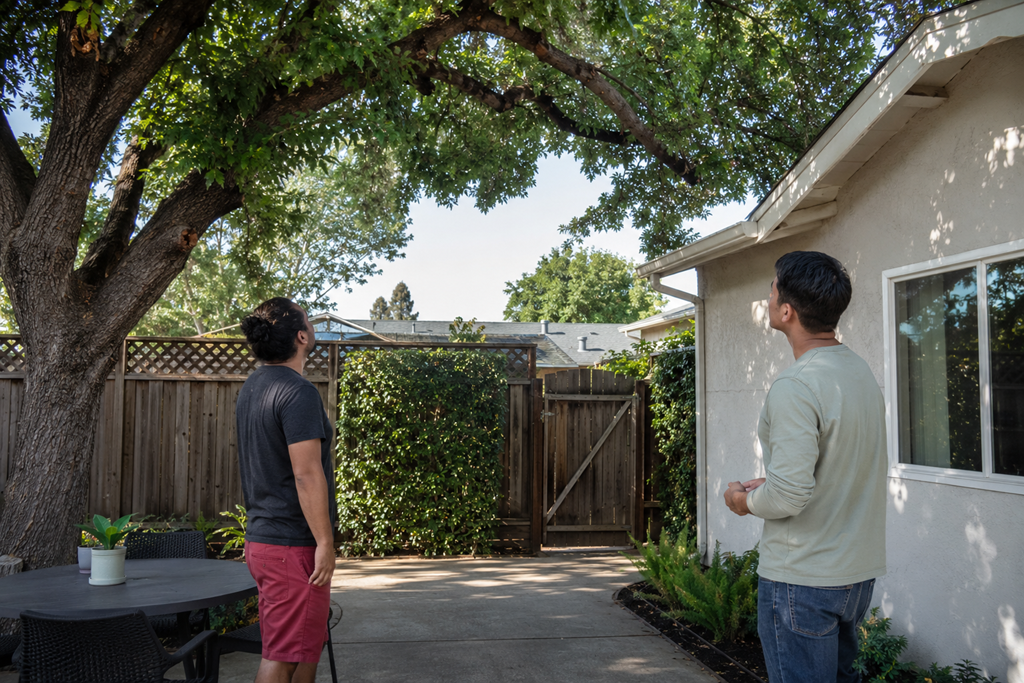
A mature tree might shade a west-facing room while also extending over a driveway. Another tree might provide privacy near a patio while its roots are affecting a nearby walkway. A branch may appear too close to the roof, but removing too much canopy could change the shade pattern around the home.
These situations are not always solved by doing the most work possible. They are better understood by asking three narrower questions:
- What specific concern are we trying to address?
- What benefit should remain after the work?
- Which parts of the property could be affected by the decision?
This shift helps turn a vague request for “tree work” into a conversation about priorities.
Safety Concerns Belong At The Top Of The Conversation
Potential safety concerns should be identified before appearance, convenience, or additional sunlight is discussed.
Examples worth bringing to a qualified tree professional’s attention include a recently broken branch, a large dead section over an occupied area, a branch suspended in the canopy, a noticeable change in the tree’s lean, disturbed soil near the root base, or growth interfering with important property access.
These observations do not automatically reveal what service is needed. A branch over a driveway is not necessarily unsafe simply because of its location, and an unusual-looking tree does not necessarily need to be removed. The condition of the tree, the branch attachment, the surrounding targets, and any recent changes all affect the evaluation.
Prioritizing safety means getting the right concern evaluated. It does not mean assuming the most drastic outcome.
It also helps to consider what is beneath or beside the tree. A questionable branch over an unused planting bed presents a different property concern than a similar branch over a patio, parked vehicle, entrance, play area, or frequently used walkway.
Shade Is A Property Feature, Not An Afterthought
Shade can be one of the most useful benefits a mature tree provides to a Sacramento-area property. It may make a patio more comfortable, reduce direct afternoon sun through a window, protect outdoor furnishings, or make part of the yard more usable during warm weather.
That benefit should be included in the planning conversation before branches are removed.
This does not mean every branch should be preserved. It means the homeowner should understand how the proposed work may change the canopy. Removing a few carefully selected branches may have little effect on useful shade, while broader cutting could noticeably change how sunlight reaches the roof, windows, lawn, or seating areas.
Before approving work, it is reasonable to ask which parts of the canopy will remain and how the tree is expected to look afterward. A tree professional should be able to explain the purpose of the proposed work in terms that are more specific than simply “cutting it back.”
The desired outcome might be improved clearance, removal of a damaged branch, reduced interference with a structure, or better management of growth near a frequently used area. Each objective can lead to a different scope of work.
The Way You Use The Property Should Shape The Plan
Tree care decisions become more practical when they are connected to everyday property use.
Consider how people and vehicles move through the space. Look at the relationship between the tree and the driveway, patio, walkway, fence, roof edge, garden, pool area, outdoor equipment, and side-yard access. A part of the yard that receives little attention may become more important if it is being converted into a seating area, play space, garden, or storage route.
The same tree may create several different experiences around the property. One side may provide welcome shade. Another may interfere with a gate. Surface roots may be noticeable near a walkway, while the canopy is beginning to crowd a section of the roof.
These concerns should not be combined into one vague instruction to “trim the tree.” Some involve the canopy, some involve property access, and some may require observation rather than immediate work.
A useful tree care discussion looks beyond the trunk and canopy. It considers what the surrounding property needs to continue functioning well.
Separate Immediate Concerns From Longer-Term Improvements
Not every tree-related goal needs to be handled during the same service visit.
A homeowner may have one concern that deserves prompt professional evaluation, such as a lodged branch above a frequently used area. At the same time, the homeowner may also be considering optional changes such as allowing more light into a garden, improving clearance near a fence, or adjusting shade over a patio.
Separating those goals can make the decision easier.
The first part of the plan can address conditions that affect safety or access. Later work can focus on maintenance, appearance, sunlight, or changing property needs. Some trees may only need monitoring after an evaluation rather than immediate service.
A phased approach can also make estimates easier to understand. Instead of receiving one large scope that combines every possible improvement, the homeowner can see which work is important, which work is preventive, and which work is optional.
This makes it easier to decide what fits the property and budget without treating every recommendation as equally urgent.
A Useful Estimate Explains What Is Being Protected
Two estimates may both say “tree trimming” while describing very different work.
One may focus on a damaged branch over the driveway. Another may include broad canopy reduction, roof clearance, deadwood removal, cleanup, and access through a narrow side yard. Comparing only the total price would overlook the difference in scope.
A useful estimate should connect the proposed work to the homeowner’s stated priorities. It should make clear which tree or portion of the tree is involved, why the work is being recommended, and what areas of the property will need access or protection.
It should also help the homeowner understand the expected result. That does not require a guaranteed prediction about future growth. It means explaining what will change and what should remain.
Questions That Can Improve The Planning Conversation
Before approving a tree care proposal, consider asking:
- Which concern should be addressed first, and why?
- What useful shade or screening will remain?
- How will the work affect the driveway, roof, patio, fence, or walkway?
- Is any part of the proposed work optional or suitable for a later visit?
- What access will the crew need around the property?
- Are there changes the homeowner should continue watching afterward?
Clear answers can reveal whether the provider understands the property as a whole or is responding only to the most visible branch.
Common Planning Mistakes Can Lead To Unnecessary Work
One common mistake is deciding how much of the tree should be removed before identifying the actual objective. Asking for the tree to be cut back heavily may produce more sunlight, but it may also reduce valuable shade without solving the original concern.
Another mistake is treating every branch near a structure as equally problematic. Distance alone does not explain branch condition, growth direction, attachment, or the consequence of leaving it in place. A professional evaluation should distinguish between ordinary proximity and a condition that deserves action.
Homeowners may also focus entirely on the canopy while overlooking roots, surface movement, access limitations, irrigation patterns, or changes in how the yard is being used. These factors can influence the overall plan even when the immediate question involves a branch.
It can also be difficult to compare providers when each one is asked a different question. Giving each provider the same priorities—safety, shade, and property use—creates a better basis for comparing recommendations and estimates.
A Balanced Plan Should Still Make Sense After The Work
Good tree care planning is not about maximizing the amount of cutting. It is about making a deliberate decision that addresses the property’s most important concern while preserving the benefits the tree can continue to provide.
For Sacramento homeowners, that often means discussing safety first, recognizing the practical value of shade, and explaining how the home and yard are used. A qualified tree professional can then evaluate those priorities and recommend a scope that fits the actual situation.
When the purpose of the work is clear, it becomes easier to compare estimates, ask useful questions, and avoid approving a larger or less focused project than the property needs.