Security screen installation usually begins with an estimate and a close look at the opening, then moves through product selection, measurements, scheduling, site preparation, installation, and a final check of how the screen fits and operates. For Sacramento-area homeowners, the useful thing to understand is that the estimate is only the starting point: the project can involve several separate decisions before anything is installed.
That distinction matters because it is easy to think of a security screen project as a single appointment. In practice, the person providing the estimate may first need to understand the opening, the type of screen being considered, the desired appearance and operation, and any conditions that could affect the scope. The actual installation may happen later after those details have been settled.
Understanding those broad stages can make it easier to compare providers, review estimates, and know what still needs to be clarified before committing to the project.
The estimate is usually about more than getting a price
An estimate is often the first opportunity to define what the project actually includes.
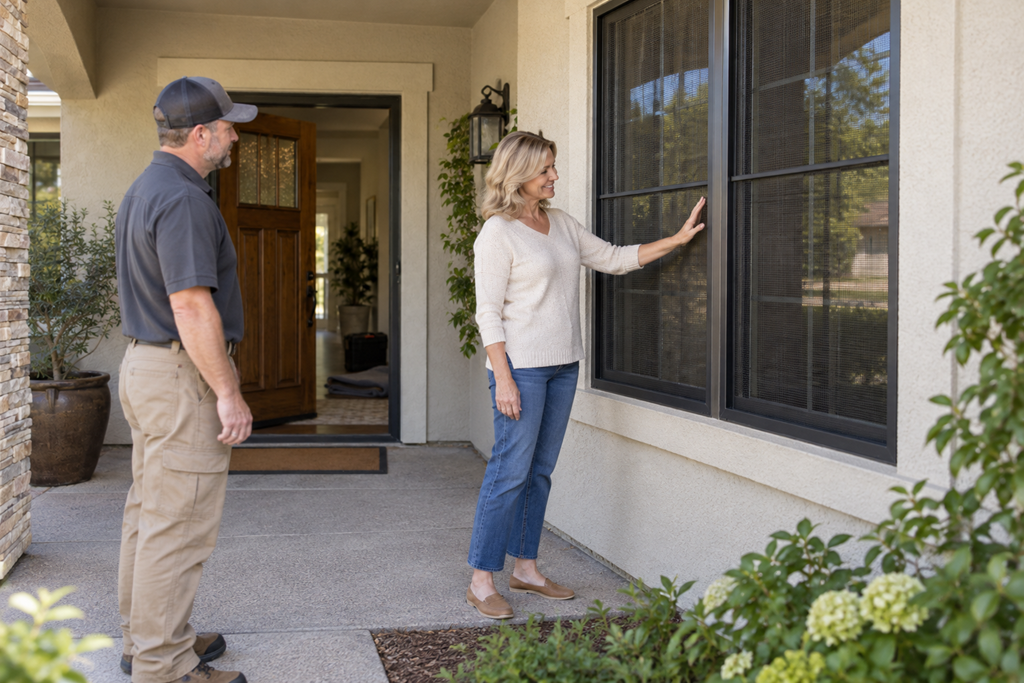
A provider may look at the opening where the security screen would be installed, discuss what the homeowner wants from the project, and take measurements or gather other information needed to prepare the proposal. Depending on the project, that could involve an entry door, another exterior opening, or a window being considered for a security screen.
This is also where differences between proposals can start to become important.
Two estimates that appear to describe the same general project may not necessarily include the same product configuration, preparation, removal of existing materials, finishing details, hardware, or final service. That is why the clearest estimate is not simply the one with the most detail or the lowest total. It is the one that helps you understand what you are actually agreeing to.
Product decisions usually come before installation day
After the opening has been evaluated, there may still be choices to make before installation can be scheduled.
Those choices can involve the type of security screen, frame appearance, finish, hardware, or other available options appropriate to the opening. A provider should be able to explain which decisions need to be made without pressuring you into selecting more than you understand.
This is a useful point to separate appearance preferences from practical questions.
A homeowner may care about how the screen looks from the street, how much of the existing entry remains visible, or how the finish works with the home. At the same time, it is reasonable to ask how the proposed screen is expected to open, close, latch, and function in normal everyday use.
For Sacramento-area properties, homeowners may also naturally think about ventilation, sunlight, and how often they expect to leave an interior door open while the security screen is closed. Those everyday-use priorities can be worth discussing during selection rather than discovering after installation.
Measurements can affect what happens next
Security screens are intended to fit a particular opening, so measurements taken during the estimate or a later verification visit can become an important part of the process.
Homeowners generally do not need to determine the technical measurements themselves. What matters from a consumer standpoint is understanding whether the proposed screen is being selected or prepared specifically for the opening and whether another measurement visit is expected before the project moves forward.
This can also explain why a project does not always move directly from an approved estimate to immediate installation.
There may be a period between those stages while the selected screen, components, or project details are prepared. Rather than assuming what that period should look like, ask the provider what needs to happen after approval and what will indicate that the project is ready for installation.
Installation day should match the scope you approved
By the time installation begins, the major decisions should no longer feel uncertain.
The homeowner should have a reasonable understanding of which opening is being worked on, what security screen is being installed, what preparation is included, and what the provider expects to accomplish during the visit.
You should not need to understand the technical installation process to recognize whether the work taking place appears consistent with the agreed scope.
If something about the opening turns out to be different from what was expected, or the provider recommends changing part of the plan, it is reasonable to ask for an explanation before assuming the change is simply part of the original estimate.
A project can become confusing when new work, different materials, or additional decisions appear only after installation has started.
Completion means more than seeing the screen in place
The project is not necessarily finished simply because the security screen has been attached to the opening.
A useful final check focuses on ordinary operation and the condition of the completed area. The screen should be reviewed in the way the homeowner is expected to use it, with any questions about opening, closing, locking, care, or other normal operation discussed before the provider leaves.
This is also the time to notice anything that does not match what you expected from the estimate or earlier conversations.
The goal is not to perform a technical inspection yourself. It is to make sure you understand what was installed, how it is intended to function, and whether any remaining items still need attention.
That final conversation can prevent a small uncertainty from becoming a frustrating follow-up later.
A few questions can make the process easier to follow
Before approving an estimate, consider asking:
- What exactly is included in this estimate?
- Are any additional measurements or product decisions needed before installation?
- What happens between approving the estimate and scheduling the installation?
- Is there anything I should prepare or move before the installation visit?
- How will we review the screen's operation and completed work afterward?
- If something unexpected changes the proposed scope, how will that be discussed with me?
The answers do not need to be complicated. What matters is whether the provider can explain the process in a way you understand before the project starts.
Watch for gaps between the estimate and the actual project
One of the easiest ways for a security screen project to become confusing is for important assumptions to remain unspoken.
A homeowner may assume a certain feature is included because it was discussed verbally. A provider may assume the homeowner understands that a particular choice still needs to be made. An estimate may identify the screen itself without making another part of the scope equally clear.
None of those situations automatically means something is wrong. They do mean it is worth clarifying the project before installation day.
Be cautious about feeling pressured to approve an estimate while important questions are still unanswered. A professional explanation should help you understand the proposed work rather than make you feel that you need to decide before you have had time to review it.
A clear process makes the finished project easier to evaluate
Security screen installation is easier to understand when you think of it as a short sequence of connected decisions rather than one installation appointment.
The estimate establishes the proposed scope. Measurements and product decisions help define what will actually be installed. Preparation and scheduling move the project toward installation. The final review gives you an opportunity to understand the finished screen and confirm that the project you received matches the one you expected.
Knowing those stages gives Sacramento-area homeowners a practical way to compare estimates, ask better questions, and recognize when something still needs clarification before committing to a security screen installation project.