The best way to avoid losing important items during a move is to separate them before packing begins, keep them out of the main moving flow, and decide who is personally responsible for them on moving day. Most lost-item problems do not happen because someone is careless. They happen because keys, chargers, documents, medications, wallets, jewelry, remotes, and small essentials get mixed into boxes, drawers, bags, or furniture at the exact moment everything is being moved quickly.
For Sacramento-area renters, homeowners, and families preparing for a local move, this matters because moving day often feels more crowded than expected. Boxes are stacked near doors. Furniture is being carried out. People are answering questions. Someone may be checking the lease, the new address, the garage opener, or payment details while the space is already being cleared.
That is when small but important items disappear into the wrong box.
Important Items Get Lost When They Stay Too Close To The Move
Many people assume the safest place for important items is somewhere familiar, like a kitchen drawer, bedroom nightstand, desk tray, or entry table. That works during normal life. During a move, those same places can become risky because movers, family members, or friends may see everything nearby as part of the packing or loading process.
A small envelope can end up inside a miscellaneous box. A remote can stay tucked in a couch cushion. A passport can be packed with office supplies. A medication bottle can get swept into a bathroom bin. A garage remote can be left in the old carport while the rest of the move continues.
The issue is not just losing the item forever. It is losing access to it when timing matters. A missing key, ID, lease document, payment card, phone charger, or medication can make an otherwise manageable move feel disorganized fast.
Create One Personal Essentials Zone Before The Move Starts
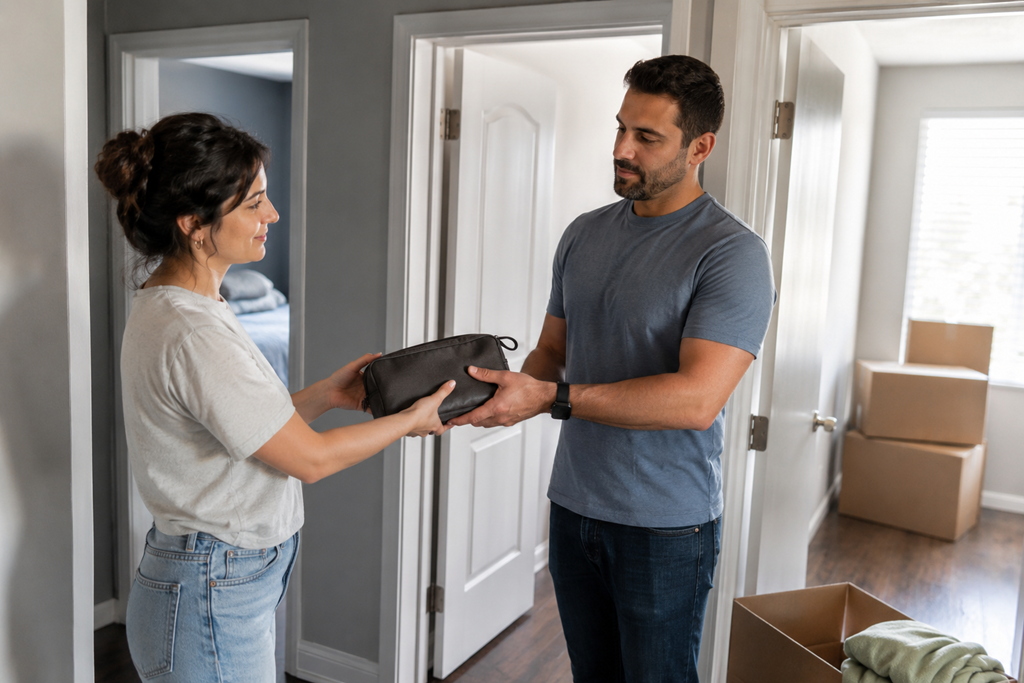
A simple way to reduce this risk is to create one clearly separate personal essentials zone before boxes start moving. This can be a zippered bag, small suitcase, backpack, plastic bin, or personal tote that is not part of the moving truck load.
The important part is not the container itself. It is the decision that this container does not get packed, stacked, loaded, or handed off without your control.
This personal zone may include items such as keys, wallet, ID, medications, chargers, important documents, moving paperwork, small valuables, garage remotes, pet supplies, children’s essentials, basic toiletries, and anything needed during the first night in the new place.
For Sacramento local moves, this is especially useful because people sometimes assume a short-distance move will be easy to manage casually. But even a move across town can involve several hours of loading, driving, unloading, parking, communication, and decision-making. If essentials are not separated early, they can still get buried.
Small Items Need A Different Plan Than Furniture And Boxes
Furniture and large boxes are easy to track because they are visible. Small items are different. They often sit in pockets, drawers, baskets, cabinets, closets, and car cup holders. They may not seem important until they are needed.
That is why small essentials should not be treated like ordinary packing. They need a different plan.
Instead of thinking, “I’ll remember where that is,” it is safer to decide, “This does not go into the moving system at all.” That shift helps keep important belongings from blending into the larger move.
This does not mean every valuable item has to be handled with stress or suspicion. It simply means personal, sensitive, or time-sensitive items should stay under your own supervision rather than being mixed in with general household goods.
Ask The Moving Company What Should Stay With You
Before hiring or confirming a local moving company, it is reasonable to ask how they prefer customers handle personal essentials and valuables. A clear moving company should be able to explain what they can move, what they recommend you keep with you, and how they handle questions about small or high-value items.
Helpful questions may include:
- Are there items you recommend customers transport personally?
- Do you move small valuables, documents, medications, or personal electronics?
- How should remotes, keys, cords, and loose parts be handled?
- Do you prefer drawers emptied before moving furniture?
- How do you handle items that are loose, fragile, or not boxed?
These questions are not about accusing anyone of mishandling belongings. They are about setting clear expectations before moving day. Clear communication helps both the customer and the moving crew know what belongs in the moving process and what should stay separate.
The Last-Minute Sweep Matters More Than People Think
A final walk-through is not just about checking whether rooms are empty. It is about looking in the places where important items hide.
That includes drawers, cabinets, closets, medicine areas, wall outlets, shower shelves, refrigerators, garage corners, outdoor storage spaces, mail areas, and the inside of furniture. It also includes checking behind doors, under beds, inside nightstands, and near entryways where keys and small items often collect.
This final sweep is most useful when it happens before the moving truck leaves, not after everyone is tired at the new place. Once boxes are unloaded, finding one missing item can mean opening several containers that were packed correctly but not precisely.
Why “I’ll Keep Track Of It” Often Fails During A Move
Most people do not lose important items because they are disorganized in everyday life. Moving creates a different kind of environment.
There are interruptions. People ask questions. Doors stay open. Items are carried through rooms quickly. Boxes that looked separate at the start can be moved closer together. A small pile on the counter can get boxed because someone is trying to help.
This is why memory alone is not a dependable system on moving day. A better approach is to make important items physically separate and visually obvious to you, while making sure they are not attractive as “one more thing to load.”
For example, a personal backpack kept in your own car is usually easier to protect than a small box sitting near ten other boxes. A clearly chosen overnight bag is easier to manage than loose items spread across the bedroom, bathroom, and kitchen.
When Losing Items Can Affect Cost, Timing, Or Stress
Misplaced items can also affect the practical side of a move. If keys, parking access, building entry information, payment methods, appliance parts, bed hardware, or important cords are missing, the day can slow down.
For people coordinating a Sacramento-area apartment move, home move, or small business move, delays can create frustration even when the move itself is going well. A missing elevator fob, storage key, desk cord, or set of furniture screws may not be expensive on its own, but it can interrupt the order of the day.
That is why avoiding lost items is not only about protecting valuables. It is also about keeping the move easier to manage.
A More Organized Move Starts Before The Truck Arrives
The most useful time to protect important items is before the first box is carried out. Once the move is underway, it becomes harder to tell whether something is missing, packed, loaded, or simply sitting in another room.
A good moving plan separates belongings into two basic groups: items that can safely go through the normal move, and items that should remain personally controlled. When that difference is clear, the rest of the move becomes easier to supervise.
Sacramento residents comparing local movers or preparing for a moving estimate can also use this topic as a communication test. A provider who answers questions clearly, explains expectations, and encourages preparation can make the process easier to understand before moving day arrives.
The Takeaway Before Moving Day
Avoiding lost items during a move starts with one practical decision: do not let your most important belongings blend into the larger packing and loading process. Separate them early, keep them personally supervised, and ask your moving company how they recommend handling valuables, small essentials, loose parts, and items you will need right away.
A move does not have to be perfect to be well managed. When important items have their own plan, you are less likely to spend the first night searching through boxes for the things you needed most.