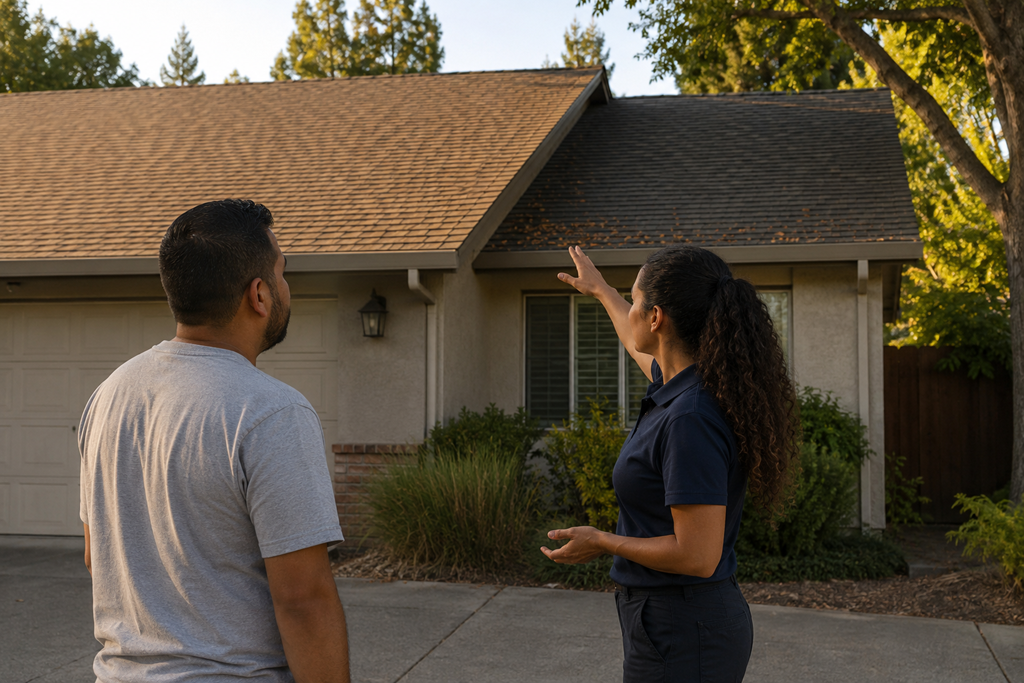
Roof age matters because it helps place visible wear, past repairs, and future planning in context, but the number of years alone does not tell a homeowner whether a roof is still serviceable or needs replacement. A newer roof can have installation or damage concerns, while an older roof may still be performing well enough to justify continued monitoring. The useful question is not simply, “How old is it?” but “What does its age mean when combined with its material, condition, history, and exposure?”
For many homeowners, roof age becomes important when they notice a stain, find loose material near the house, prepare to sell, review an inspection report, or receive different recommendations from roofing companies. The uncertainty often comes from assuming that age should provide a simple yes-or-no answer.
In reality, age is best treated as one piece of evidence.
A Roof’s Age Is a Starting Point, Not a Diagnosis
Knowing approximately when a roof was installed can help a roofing professional interpret what they are seeing. It may explain why certain materials are fading, why previous repairs are becoming noticeable, or why the homeowner is beginning to receive different repair and replacement recommendations.
However, two roofs installed at roughly the same time can perform very differently.
One may have been installed carefully, maintained consistently, and exposed evenly to the weather. Another may have experienced drainage problems, repeated repairs, heavy debris accumulation, or more intense sun exposure on one side.
This is why a roofing recommendation should not be based on age alone. A qualified professional should be able to explain how the roof’s age relates to its current condition rather than treating the installation date as the entire answer.
Different Roofing Materials Age Differently
Roofing materials do not all follow the same aging pattern. Asphalt shingles, tile, metal, wood, and low-slope roofing systems each respond differently to heat, moisture, movement, debris, and normal wear.
Even within the same general material category, product quality and installation details can vary.
A homeowner may hear that a certain type of roof “usually lasts” for a particular amount of time. Those general ranges can be useful for planning, but they should not be interpreted as an expiration date.
A roof does not automatically fail when it reaches a certain birthday. It also does not automatically remain dependable simply because it is younger than an expected service range.
The more useful discussion is whether the roof’s visible condition appears consistent with its age and material.
Roof Sections May Not All Be the Same Age
Many homeowners assume the entire roof was installed at one time. That is not always the case.
A room addition, enclosed patio, garage conversion, previous leak repair, or partial replacement may have introduced a newer section. One slope may contain different materials or show a different level of wear than the rest of the house.
In other cases, a newer roofing layer may have been installed over an older system. From the ground, the roof may appear more recent than the underlying structure actually is.
This can make the age question more complicated than finding one installation year.
When reviewing an estimate or inspection, Sacramento-area homeowners can ask whether the professional believes all roof sections are the same age and whether any additions, overlays, or past repairs affect the assessment.
Sacramento Conditions Can Create Uneven Aging
Sacramento-area roofs may experience strong sun exposure, prolonged dry conditions, windblown debris, and periods of seasonal rain. These conditions do not affect every part of a roof equally.
A south- or west-facing section may receive more direct sunlight than a shaded slope. Roof areas beneath mature trees may collect leaves, seed pods, or small branches. Valleys and drainage areas may hold debris longer than open sections.
As a result, one part of a roof may appear more weathered even though the entire roof was installed at the same time.
Uneven appearance does not automatically mean the whole roof needs replacement. It does mean the homeowner may benefit from asking which sections are showing age-related wear and which sections are creating the greatest concern.
Repairs Do Not Reset the Roof’s Age
A repaired area may look newer than the surrounding roofing material, but the repair does not change the age of the rest of the system.
This distinction can become important when a roof has received several isolated patches over the years. Each repair may have addressed a specific issue, while the surrounding materials continued to age normally.
Homeowners sometimes view a recently repaired roof as if the entire surface has been renewed. Others assume that any visible patch means the whole roof is failing. Neither conclusion is necessarily accurate.
The better question is whether the past repairs remain isolated and stable or whether new concerns are appearing in multiple areas.
A roofing professional should be able to explain whether a repair is functioning as intended, whether nearby materials are still in reasonable condition, and whether the repair history changes the long-term recommendation.
A Younger Roof Can Still Have Problems
Homeowners may feel reassured when they learn that a roof is relatively young. That information can be useful, but it should not cause visible concerns to be dismissed.
Installation problems, storm damage, foot traffic, drainage issues, falling branches, or movement around roof penetrations can affect a roof before widespread age-related wear develops.
A younger roof with a specific problem may need a focused repair rather than replacement. The key is identifying what is actually happening.
When a provider relies heavily on the roof’s young age without examining the concern, the homeowner may not receive a complete explanation. Age should support the evaluation, not replace it.
An Older Roof Does Not Automatically Require Immediate Replacement
The opposite misunderstanding is assuming that an older roof must be replaced simply because it has reached a commonly mentioned age range.
Age may increase the likelihood that broader wear will be found, but the recommendation should still be connected to observable conditions.
A useful explanation might address whether the materials remain secure, whether deterioration is localized or widespread, whether water movement appears controlled, and whether previous repairs are holding.
A provider who recommends replacement should be able to explain what evidence supports that recommendation. The homeowner should not have to rely only on a statement such as, “It is old.”
When the Installation Date Is Unclear
Roof records are often incomplete. A homeowner may know that work was performed before the property was purchased without knowing whether it involved a full replacement, a partial replacement, or a repair.
Helpful records may include previous inspection reports, seller documents, invoices, warranty information, photographs, or paperwork left by an earlier owner. The visible materials and construction details may also help a qualified roofing professional estimate an approximate installation period.
An estimate is not the same as a confirmed date, but it may still provide useful context.
Homeowners should avoid climbing onto the roof to investigate its age. Photographs taken from safe locations and an on-site evaluation by a qualified professional can provide better information without creating an unnecessary fall risk.
Questions That Can Make a Roof Evaluation More Useful
A few focused questions can help homeowners understand how much weight a provider is placing on roof age:
- Does the visible wear appear consistent with the roof’s approximate age?
- Do all sections appear to have been installed at the same time?
- Are any areas aging faster because of sun, shade, debris, or drainage?
- How do previous repairs affect the current recommendation?
- Is the concern isolated, or is similar wear appearing across the roof?
- What visible evidence supports repairing, monitoring, or replacing the roof?
- Can the provider show photographs of the specific areas being discussed?
The strongest answers should connect age to physical observations. A clear explanation is more useful than a broad statement based only on the number of years.
Be Cautious When Age Is Used as a Sales Shortcut
Roof age can become a pressure point during service discussions.
A homeowner may be told that an older roof has no remaining value or that a younger roof could not possibly have a meaningful problem. Either statement may oversimplify the situation.
Other warning signs include a provider who cannot explain which sections are concerning, does not distinguish between isolated and widespread wear, or avoids showing evidence behind a recommendation.
This does not mean every disagreement between roofing companies is a red flag. Different professionals may reasonably interpret borderline conditions differently. The important question is whether each recommendation is supported by a clear explanation of the roof’s material, age, condition, exposure, and repair history.
Let Roof Age Inform the Decision
Roof age is valuable because it gives homeowners and roofing professionals a timeline for understanding wear. It can support maintenance planning, help explain recurring repairs, and provide context when comparing repair and replacement options.
It should not make the decision by itself.
Before hiring a Sacramento-area roofing provider, ask how the roof’s age relates to what is actually visible. When the explanation includes the material, different roof sections, previous repairs, environmental exposure, and documented condition, the homeowner has a stronger basis for deciding whether to repair, monitor, or discuss replacement.