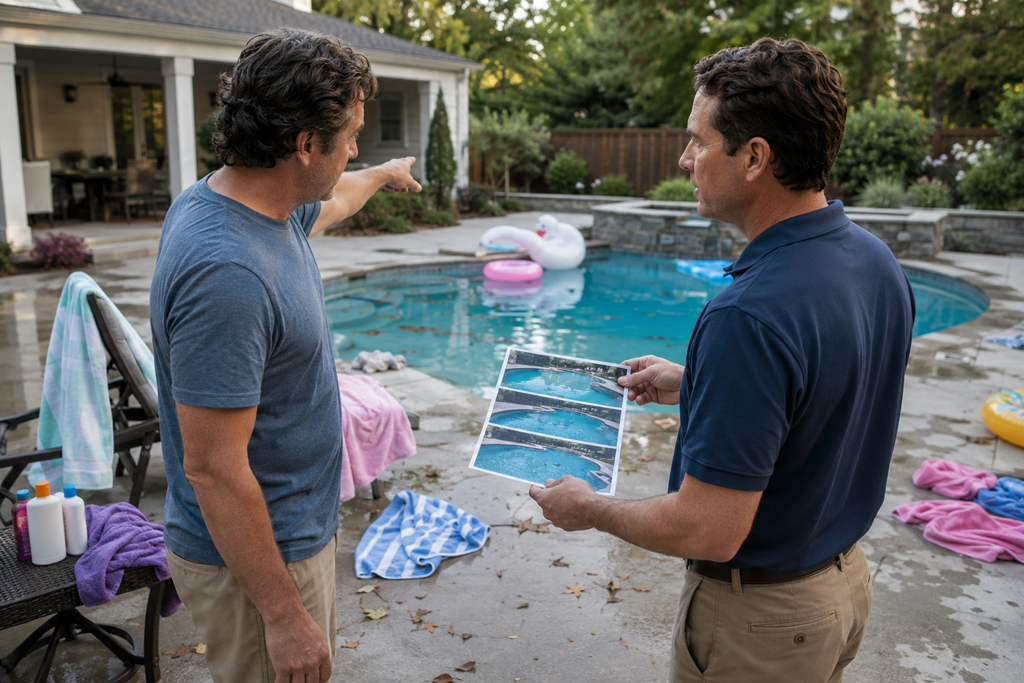
Pool maintenance changes with weather and usage because the water is constantly reacting to what enters the pool and what happens around it. A quiet pool during mild conditions may need a different level of attention than the same pool after intense sun, windy days, heavy debris, rain, or frequent swimming. That does not automatically mean something is wrong. It means a maintenance plan should respond to actual conditions rather than follow the calendar without adjustment.
This can be confusing for homeowners who expect every service visit to look exactly the same. One week, a provider may spend more time removing debris or evaluating the water. Another week, the pool may require fewer visible adjustments. The difference may reflect changing conditions rather than inconsistent service.
A Pool Can Change Even When the Service Day Does Not
A regular service schedule creates consistency, but the pool itself does not operate on a fixed weekly pattern.
Weather can change from one visit to the next. The number of swimmers may increase suddenly. Landscaping work, a family gathering, nearby construction, pets, or uncovered periods can also affect what enters the water.
This is why two pools receiving service on the same schedule may need different attention. It is also why the same pool may not require identical work during every visit.
The schedule determines when the provider arrives. Conditions help determine what should be evaluated and addressed during that visit.
Heat and Sun Can Increase the Pool’s Workload
Sacramento-area pools can experience extended periods of heat and strong sun exposure. Those conditions may affect water loss, water balance, sanitizer demand, and how quickly certain conditions change between visits.
A pool that remains stable during mild weather may require closer observation when temperatures rise. This does not necessarily mean the equipment has failed or the previous service was ineffective. The pool may simply be responding to a more demanding environment.
Shade also matters. A pool exposed to direct afternoon sun may behave differently from one protected by a structure or mature landscaping. Even two pools located on nearby properties may not have identical maintenance needs.
The important question is not whether hot weather automatically causes a problem. It is whether the service approach accounts for the added stress created by heat and sunlight.
Wind and Dry Conditions Bring More Than Leaves
Wind can introduce leaves, dust, pollen, seed pods, insects, and fine particles that are not always obvious from a distance.
Some debris floats visibly on the surface. Other material settles, collects near steps, or moves toward circulation and filtration components. A pool may look reasonably clear while still handling a larger-than-normal debris load.
Dry landscaping and nearby trees can make this especially noticeable. One windy afternoon may create more cleanup needs than several quiet days combined.
A responsive maintenance plan should recognize that the amount and type of debris can change quickly. Treating every visit as though the surrounding conditions were identical may leave homeowners wondering why the pool looks different from week to week.
Rain Can Change Conditions in a Different Way
Rain does not affect every pool in exactly the same manner, but it can introduce water, dirt, organic material, and runoff from nearby surfaces.
After a period of rain, the pool may need a different evaluation than it did during dry weather. The provider may need to consider the water level, visible debris, clarity, and whether surrounding areas contributed material to the pool.
This does not mean every rainfall creates a serious maintenance concern. A brief shower and a prolonged period of wet weather are not the same event. Pool location, drainage, covers, landscaping, and deck conditions can all influence what happens.
The useful takeaway is that rain should be treated as a changing condition, not as a predictable maintenance result.
Swimmer Activity Changes What Enters the Water
Weather is only part of the picture. Pool usage can also alter maintenance needs.
Every swimmer introduces some combination of body oils, sunscreen, hair products, lotions, dirt, and other material. Toys, floats, pets, food near the pool, and repeated entry from lawns or patios may add to the overall load.
A pool used by one or two adults occasionally may behave differently from the same pool after a weekend gathering. The water can look similar immediately afterward even though the maintenance demands have changed.
This is one reason homeowners may notice a difference after holidays, parties, visiting relatives, or periods when children use the pool more frequently. The issue is not simply how many people entered the water. Duration, surrounding activities, and what was carried into the pool also matter.
More usage does not automatically mean the pool was misused. It means the maintenance approach may need to reflect how the pool was actually used.
Visit Frequency and Visit Scope Are Not the Same
Homeowners sometimes assume that a regular weekly visit should involve the same tasks in the same amounts every time. That expectation can make appropriate adjustments look like inconsistency.
A provider may continue visiting on the same schedule while changing the focus of the visit. After windy weather, debris removal may require more attention. During hotter conditions, the water may need closer evaluation. After heavy use, the provider may spend more time checking how the pool has responded.
During a mild, low-use period, fewer visible corrections may be necessary.
This distinction is important when comparing pool service plans. Frequency tells you how often service is scheduled. Scope explains what the provider evaluates, what routine work is included, and how changing conditions are handled.
A clear service plan should address both.
A Fixed Routine Can Miss the Reason Conditions Changed
Following a routine is useful, but relying on routine alone can create confusion.
For example, a homeowner may see debris return shortly after a service visit and assume the pool was not cleaned properly. If strong wind arrived later that day, the new debris may reflect the weather rather than the quality of the earlier visit.
Similarly, a pool that needs additional attention after a crowded gathering is not necessarily evidence that the regular schedule is inadequate. The gathering may have created a temporary maintenance load that was not present during an ordinary week.
This does not mean every changing condition should be dismissed as weather or usage. Recurring cloudiness, unexplained water loss, circulation concerns, surface changes, or equipment problems may deserve professional evaluation.
The goal is to separate a reasonable response to changing conditions from a repeated problem that lacks a clear explanation.
Good Communication Makes Changing Needs Easier to Understand
A pool service provider should be able to explain why the maintenance approach may differ from one visit to another.
The explanation does not need to be highly technical. Homeowners should be able to understand what changed, how that change affected the pool, and whether the condition appears temporary or recurring.
Clear communication is especially helpful when additional service is suggested. A homeowner should not be left guessing whether the recommendation is related to unusual weather, increased usage, an equipment concern, deferred maintenance, or something outside the regular service scope.
Vague statements such as “the pool just needs more work” provide little help. A more useful explanation connects the recommendation to an observable condition.
Questions to Ask When Comparing Pool Service Plans
Before hiring a Sacramento-area pool service provider, consider asking:
- How do you adjust your service approach during hot, windy, or rainy conditions?
- Does the regular plan change after unusually heavy pool usage?
- What work is included during a normal visit?
- How do you communicate when a pool needs attention beyond the regular service scope?
- How do you distinguish a temporary weather-related change from an equipment or maintenance problem?
- What information should I share before or after a gathering with heavier pool use?
These questions can reveal whether a provider follows a rigid routine or evaluates the pool based on its actual condition.
The Pool’s Recent History Matters
A pool service visit is only a snapshot of what is happening at that moment. The days leading up to the visit can provide important context.
A provider may benefit from knowing that the pool was used heavily, a cover was left off, nearby landscaping was trimmed, a wind event occurred, or unusual debris entered the water. These details can help explain why the pool looks or behaves differently.
Homeowners do not need to document every minor event. However, mentioning a meaningful change can help the provider evaluate the situation more accurately and avoid treating an unusual week like a normal one.
A Better Plan Responds Without Becoming Unpredictable
Responsive maintenance should not mean that service feels random or impossible to understand.
The schedule, regular responsibilities, communication process, and boundaries of the plan should still be clear. What changes is the amount of attention given to specific conditions.
A dependable provider should be able to explain:
- What remains consistent during each visit
- What may vary because of weather or usage
- What is included in the regular plan
- What may require approval or an additional service
- When a recurring change may indicate a larger concern
This balance gives homeowners consistency without pretending that every week places the same demands on the pool.
The Main Takeaway
Pool maintenance changes because the pool’s environment and usage change. Heat, sun, wind, rain, debris, and swimmer activity can all influence what the pool needs between service visits.
A regular schedule remains useful, but it should be paired with an approach that responds to actual conditions. Before choosing a local provider, look for someone who can explain what stays consistent, what may change, and how unusual conditions will be communicated.
Understanding that difference can make it easier to compare service plans, evaluate recommendations, and set realistic expectations for maintaining a Sacramento-area pool.