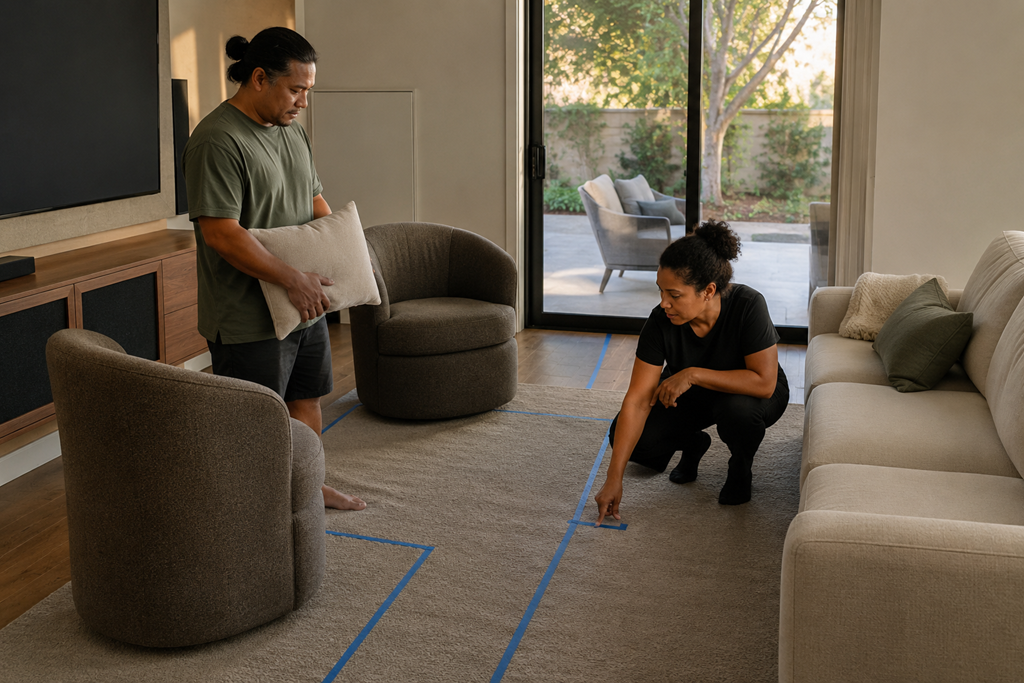
A good home theater plan is not just about buying a larger screen or adding more speakers. It should connect comfort, sound, room layout, lighting, wiring, everyday habits, and the way people actually use the space. For Sacramento-area homeowners, that means thinking beyond equipment and asking how the room will feel during a weeknight movie, a family game, a quiet show, or a crowded gathering before choosing an installation approach.
Many people start with the exciting parts first. They picture the screen size, the sound system, the recliners, or the clean finished look. Those details matter, but they work best when they are planned around the room’s real purpose. A home theater that looks impressive but feels awkward to sit in, sounds uneven from seat to seat, or becomes inconvenient for daily use can quickly feel less enjoyable than expected.
A stronger plan starts with three connected questions: Where will people sit comfortably, how will sound move through the room, and how will the space be used when it is not a perfect movie-night setup?
The Best Home Theater Plans Start With Real Seating Habits
Comfort is not just about buying comfortable chairs. It is about where people naturally sit, how far they are from the screen, whether they can see clearly, and whether the room still feels easy to move through.
In many Sacramento homes, a media room may also be a family room, bonus room, den, converted space, or shared living area. That means the “best” layout on paper may not match how the household actually uses the space. A row of theater seats may look polished, but it may not work well if the room also needs open floor space, a walkway to the backyard, storage access, or flexible seating for guests.
Before comparing home theater installation options, it helps to think about the seats people will use most often. The main seats should not feel like an afterthought. If the preferred seats are too close, too far away, too angled, or blocked by furniture, the room may not feel comfortable even with good equipment.
A qualified home theater professional can help evaluate viewing distance, sightlines, speaker placement, and room limitations, but the homeowner’s daily habits still matter. The plan should fit the household, not just the equipment list.
Sound Quality Depends On The Room, Not Just The Speakers
One common misunderstanding is that better speakers automatically create better sound. Speakers matter, but the room plays a major role in how sound is experienced.
Sound can feel different depending on seating position, wall surfaces, ceiling height, furniture, flooring, windows, open doorways, and where the speakers and subwoofer are placed. One seat may feel balanced while another feels too loud, too thin, or too heavy on bass. This is why a home theater plan should consider the whole room before final equipment placement.
Hard surfaces can reflect sound. Soft materials can absorb it. Open areas can let sound escape. Corners can make bass feel stronger. These are not problems a homeowner needs to solve alone, but they are useful to understand before hiring or comparing providers.
When a local installer talks about sound, the conversation should not only be about wattage, speaker count, or brand names. It should also include how the room itself affects the listening experience. A clearer plan accounts for where people sit, what surfaces surround them, and whether the system is being designed for balanced everyday use rather than maximum volume.
Daily Use Can Reveal Problems A Showroom Setup Misses
A home theater may be planned for movies, but most households use their media spaces in more than one way. People watch shows, stream sports, play games, listen to music, host relatives, fold laundry, help kids settle down, or relax after work. A plan that ignores those ordinary uses can become frustrating.
Daily use affects practical details such as remote access, lighting control, furniture spacing, cable management, equipment location, storage, and whether the system is simple enough for more than one person to operate. A room that requires too many steps just to watch something may not get used as often as expected.
Lighting is a good example. A dark room may be great for movies, but a shared room may also need soft lighting for snacks, conversation, cleanup, or safe movement. The same is true for furniture. Deep seating may feel luxurious, but it may not work if people need to reach side tables, walk behind chairs, or use the room casually during the day.
Planning around daily use does not make the theater less serious. It makes the finished space more livable.
Equipment Should Support The Plan, Not Lead It
It is easy to build a home theater plan backward by choosing equipment first and trying to make the room fit later. That can lead to oversized screens, awkward speaker placement, visible wire issues, blocked pathways, or features that sound good in theory but do not fit the household.
A better approach is to decide what the room needs to do before focusing on exact products. For example, the right setup may depend on whether the room is mostly for family movie nights, casual streaming, gaming, sports, music, or a mix of uses. It may also depend on how many people usually watch at once and which seats matter most.
This does not mean equipment choices are unimportant. It means the equipment should support the room’s comfort, sound, and use pattern. The right system for a dedicated theater room may not be the right system for a shared living space. The right screen size for one wall may feel too large or too small in another room.
When homeowners understand this, they can have more useful conversations with local providers. Instead of asking only, “What is the best system?” they can ask, “What setup fits this room and the way we actually use it?”
Small Planning Details Can Affect The Finished Experience
Some home theater disappointments come from details that seem minor during planning. A chair blocks a walkway. A speaker location conflicts with a door. A window creates glare at the wrong time of day. A cabinet hides equipment but makes it annoying to access. A subwoofer fits in the corner but makes one seat feel too intense.
These issues are not always obvious when looking at equipment online or walking through a showroom. They show up when the room is used.
That is why it helps to walk through the space before committing to a layout. Think about where people enter, where they place drinks, how they adjust lighting, where pets or children move, how often guests come over, and whether the room needs to stay flexible. These ordinary details can shape the final plan as much as the screen or sound system.
A qualified installer may notice limitations or opportunities that are easy to miss, especially around wiring, placement, acoustics, and equipment access. Still, the homeowner should feel comfortable explaining how the room is used in real life. The best plan usually comes from combining technical evaluation with practical household habits.
Helpful Questions To Ask Before Comparing Installation Options
Before hiring a home theater installation provider, Sacramento-area homeowners may want to ask questions that connect the project to comfort, sound, and daily use:
- How would you recommend arranging the main seating area for this room?
- Will sound feel balanced from more than one seat?
- Are there any surfaces or room features that may affect sound quality?
- How will wiring and equipment access be handled?
- What lighting or glare issues should be considered?
- Is this layout practical for everyday use, not just movie nights?
- Are there tradeoffs between the setup I want and the way the room is shaped?
- What parts of the plan should be decided before equipment is selected?
These questions help shift the conversation from simply buying components to designing a room experience. They also make it easier to compare providers, because clearer answers can reveal whether someone is thinking about the full space or only the equipment.
A Strong Plan Makes The Room Easier To Enjoy
A home theater should feel enjoyable, usable, and comfortable, not complicated or awkward. The goal is not always the biggest screen, the loudest sound, or the most dramatic setup. The better goal is a room that works for the people who live there.
When comfort, sound, and daily use are considered together, the project becomes easier to evaluate. Homeowners can better understand tradeoffs, ask more useful questions, and recognize whether a proposed installation fits the room’s actual needs.
For Sacramento residents planning a home theater project, the most useful starting point is simple: picture how the room will be used on an ordinary day, not only on the perfect movie night. That perspective can make the entire installation conversation clearer before comparing quotes or committing to a plan.