Dry rot usually needs professional repair when the damaged wood feels soft, crumbles easily, affects a structural or load-bearing area, covers more than a small isolated spot, or appears connected to an ongoing moisture problem. A professional evaluation can help separate surface damage from decay that may continue behind trim, siding, flooring, or framing.
The decision is not always obvious. A homeowner may notice peeling paint, a discolored board, a soft section near a window, or wood that looks cracked and unusually dry. The visible area may seem small, but it can be difficult to tell whether the problem is limited to the surface or extends into concealed materials.
That uncertainty is often the main reason to consider a professional inspection. The question is not simply whether damaged wood can be replaced. It is whether the full extent of the decay and the condition that allowed it to develop have been identified.
A Small Visible Spot May Not Show the Full Problem
Dry rot is a form of wood decay associated with fungal growth and moisture exposure. Although the affected wood may eventually look dry, brittle, or cracked, the process generally begins where wood has remained damp enough for decay to develop.
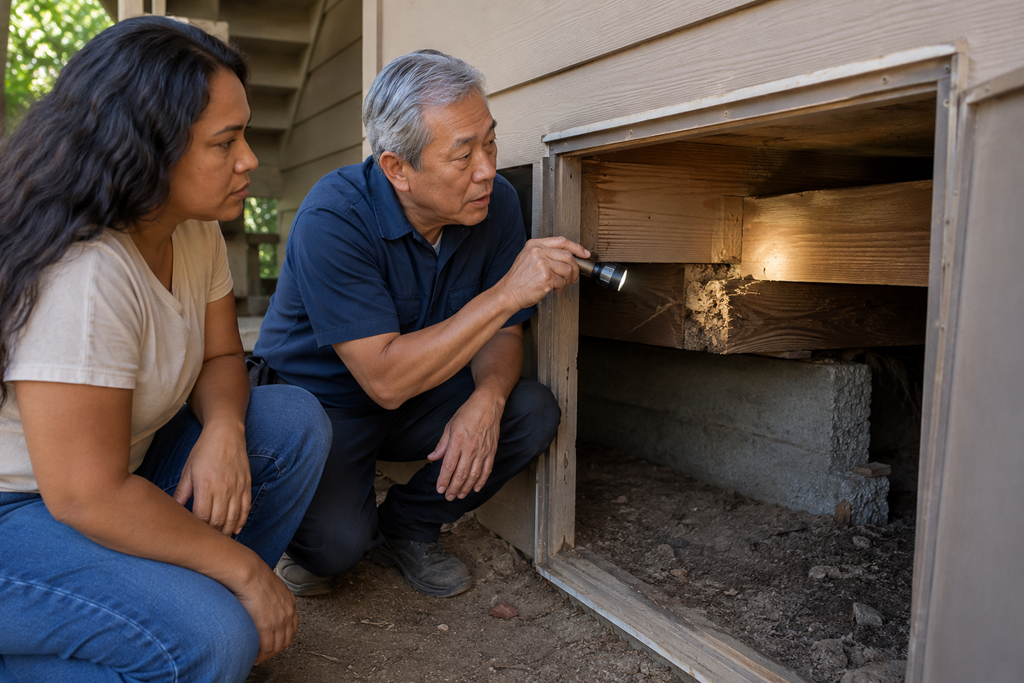
This means the visible damage may be only one part of the problem. Moisture can enter around windows, doors, roof edges, plumbing penetrations, decks, siding joints, or other vulnerable transitions. Wood behind the finished surface may be affected before the damage becomes easy to see.
A professional evaluation becomes more useful when the visible spot is close to an area where water may be entering or collecting. Replacing one damaged board without understanding why it deteriorated can leave the underlying condition unresolved.
For Sacramento-area homeowners, seasonal rain, irrigation overspray, drainage issues, aging exterior materials, and repeated wetting around vulnerable building components can all be relevant considerations. The presence of one of these conditions does not automatically confirm extensive dry rot, but it can make a closer evaluation worthwhile.
The Condition of the Wood Matters More Than Its Appearance Alone
Discoloration or peeling paint does not always mean the wood has lost its strength. At the same time, wood can look relatively intact while becoming soft beneath the surface.
Signs that may justify professional evaluation include:
- Wood that gives way when lightly pressed
- Sections that crumble, flake, or break apart easily
- Deep cracking or a block-like pattern in the wood
- Trim or siding that no longer sits firmly in place
- Repeated deterioration after earlier patching or repainting
- Damage near framing, stairs, railings, decks, roof supports, or other safety-related components
- A musty odor or signs of persistent dampness nearby
- Similar deterioration appearing in more than one connected location
These signs do not determine the exact repair by themselves. They help show that the issue may involve more than a cosmetic surface defect.
The location is especially important. A deteriorated decorative trim piece presents a different decision from decay affecting a deck connection, floor system, window opening, or structural framing. When the damaged wood helps support weight, keeps water out, or protects another building component, professional assessment is usually the safer choice.
Professional Repair Is More Likely When the Moisture Source Is Unclear
One of the strongest reasons to involve a qualified professional is uncertainty about where the moisture is coming from.
A homeowner may assume rainwater is entering through one visible crack when the actual source is higher on the wall. Water may travel behind siding or trim before appearing at the damaged location. Irrigation, condensation, plumbing leaks, poor drainage, or failed sealant may also contribute.
Without identifying the source, a repair can improve the appearance while leaving the conditions that caused the decay in place.
This is also why repeated repairs deserve attention. When the same area has been patched, filled, painted, or partially replaced more than once, recurring damage may indicate that the underlying moisture path has not been corrected.
A professional should be able to explain both parts of the proposed work:
- What damaged material appears to need removal or replacement
- What condition must be corrected to reduce the chance of the problem returning
An estimate that addresses only the visible wood without discussing moisture control may be incomplete.
An Isolated Cosmetic Defect Is Different From Active Decay
Not every cracked, weathered, or discolored piece of wood requires a major repair project.
Exterior wood can develop surface checking, worn paint, small gaps, or minor damage from age and exposure. In some cases, the issue may be limited to a replaceable trim component rather than extending into the surrounding structure.
The challenge is determining where that boundary lies.
A small, clearly isolated area may be less concerning when the surrounding wood remains firm, there are no signs of continuing moisture, and the damaged piece does not serve a structural or water-management function. Even then, homeowners should avoid assuming that appearance alone proves the damage is superficial.
A focused professional inspection does not necessarily lead to a large repair. It may confirm that the affected material is limited and that a straightforward replacement is appropriate. The value of the evaluation is better information about the scope, not automatically more work.
Waiting Can Make the Scope Harder to Predict
Dry rot does not always create an immediate emergency, but delaying an unresolved moisture-related problem can make the eventual repair less predictable.
Wood decay may continue as long as the necessary conditions remain present. Damage can also spread indirectly when moisture reaches adjoining materials. Over time, a repair that once involved accessible trim may require opening a larger area to inspect concealed components.
That does not mean every suspicious spot requires rushed action. It means homeowners should distinguish between taking time to compare repair options and ignoring a condition that may still be active.
A practical approach is to arrange an evaluation, understand whether moisture is still present, and ask whether temporary protection is needed while estimates are being reviewed. This allows the decision to move forward without unnecessary pressure.
A Clear Estimate Should Explain the Boundaries of the Repair
Professional dry rot estimates can differ because contractors may make different assumptions about how much concealed damage will be found.
A useful estimate should describe the currently visible scope while explaining how hidden damage will be handled if it appears after materials are opened. The document does not need to predict every possible condition, but it should make the process understandable.
Before choosing a provider, consider asking:
- Which wood appears damaged, and which surrounding materials currently appear sound?
- Does the affected area serve a structural or water-protection function?
- What is the likely source of moisture?
- Is additional opening or inspection needed before the full scope can be confirmed?
- How will unexpected concealed damage be documented and priced?
- Does the repair include correcting the moisture source?
- Which finishes, trim, siding, paint, or surrounding materials will need restoration?
- What should be monitored after the work is completed?
The answers should be specific enough to help you compare the proposed scope between providers. Vague explanations such as “replace all bad wood” do not clearly define how the contractor will identify the limits of the repair.
Be Cautious of Both Minimizing and Overstating the Damage
Dry rot can create two opposite decision problems.
The first is minimizing the issue because the visible spot looks small. This can lead to repeated cosmetic repairs that do not address concealed decay or moisture.
The second is assuming that any damaged wood requires an extensive reconstruction project. That can make homeowners feel pressured before the area has been properly evaluated.
A reliable professional should be willing to explain what is known, what remains uncertain, and what evidence would justify expanding the repair. Recommendations should be tied to the wood’s condition, location, moisture exposure, and function rather than fear-based claims.
Be cautious when a provider recommends major work without clearly showing where the damage is located or why the proposed scope is necessary. It is also reasonable to question a quick patch when the surrounding wood is soft, the damage keeps returning, or the moisture source has not been identified.
The Right Decision Depends on Scope, Location, and Cause
Dry rot is more likely to need professional repair when the wood has lost strength, the damage may extend beneath finished surfaces, the affected area protects or supports part of the home, or the moisture source remains unresolved.
A small visible defect does not automatically mean a large project. It does, however, deserve closer attention when the condition of the surrounding wood or the origin of the moisture is uncertain.
The most useful next step is often a focused evaluation that separates three questions: how much material is damaged, why it became damaged, and what must be done to keep the problem from returning. With those answers, Sacramento-area homeowners can compare repair recommendations more carefully and avoid approving either an inadequate patch or an unnecessarily broad project.