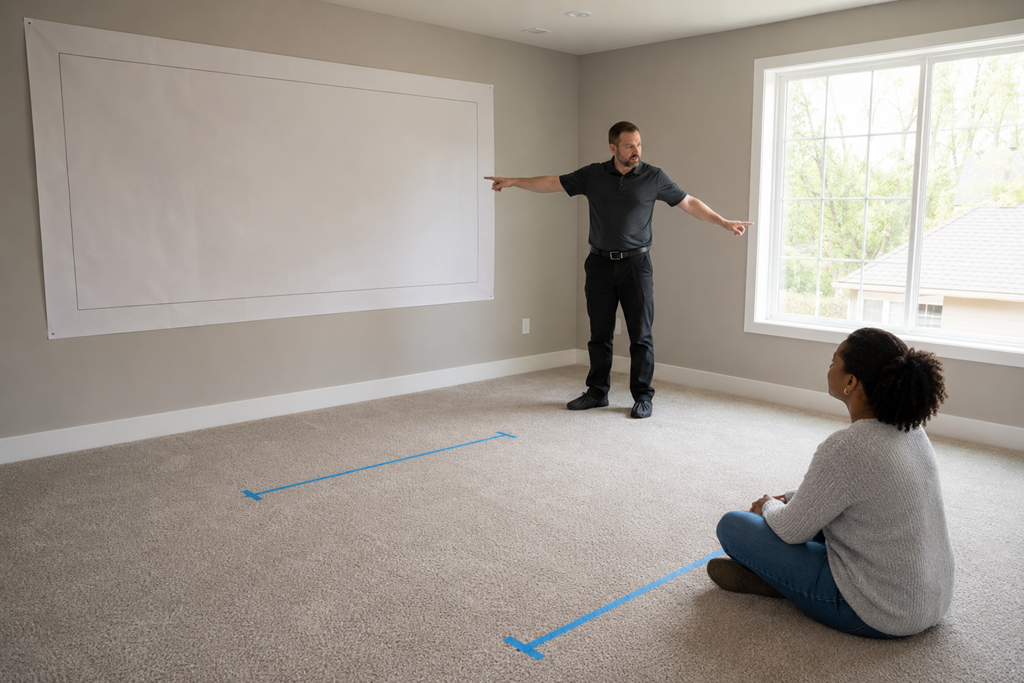
Professional home theater installation is usually worth considering when the room, equipment, wiring, or performance goals create more coordination than a simple television setup. The value is not just having someone mount a screen. It is having the space, sound, seating, lighting, connections, and controls planned as one working system before money is committed.
Many homeowners reach this decision after realizing that buying good equipment does not automatically create a good viewing experience. A television may be too high for comfortable viewing. Speakers may sound unbalanced from the main seats. Afternoon light may wash out the picture. Devices may connect successfully but remain frustrating to control.
Professional installation can help solve those problems, but not every room or system needs the same level of support. The decision depends less on whether professional installation sounds impressive and more on how many parts of the project need to work together.
The Real Question Is How Complicated the Room Makes the Project
A straightforward setup may involve placing a television on an existing stand, connecting one or two compatible devices, and using a basic soundbar. When the room already supports the desired screen position, viewing distance, power access, and cable management, professional installation may provide convenience without being essential.
The decision changes when the room creates constraints.
A Sacramento-area homeowner might be working with a bright multipurpose living room rather than a dedicated theater. The ideal screen wall may have windows, a fireplace, an awkward doorway, or limited electrical access. Seating may need to serve daily conversation as well as movie viewing. Sound may travel into bedrooms, shared walls, or adjoining spaces.
In those situations, the project is not simply about attaching equipment. It is about deciding where everything should go and what compromises will be noticeable during everyday use.
Professional guidance becomes more valuable when correcting a poor decision later would mean moving equipment, reopening walls, replacing cables, rearranging furniture, or buying different components.
Installation Has More Value When Several Decisions Depend on Each Other
Home theater decisions are often connected.
Changing the screen location can affect viewing distance, speaker placement, glare, wiring routes, furniture arrangement, and where equipment can be stored. Moving the seating may improve the picture angle while creating an uneven listening position. Hiding components inside cabinetry may improve appearance but introduce ventilation or remote-control concerns.
A professional installer may be worthwhile when the homeowner wants someone to evaluate these relationships before the final layout is chosen.
This is especially relevant when the project includes several of the following:
- A projector and screen rather than a basic television
- Multiple speakers that need coordinated placement
- In-wall or in-ceiling wiring
- Several streaming, gaming, audio, or media devices
- Whole-home networking or wireless reliability concerns
- Custom cabinetry or equipment storage
- Lighting or window-control considerations
- Multiple remotes, control systems, or household users
- A room being remodeled around the entertainment system
The presence of one feature does not automatically require professional installation. The value increases when several features interact and no single purchase can solve the room’s overall limitations.
A Simple Setup May Not Need Full-Service Installation
Professional installation should not be treated as the default choice for every television or speaker purchase.
A homeowner may reasonably handle a basic system without full-service support when the room layout is already settled, the equipment is designed to work together, the screen will use a stable existing stand, and exposed cables are not a concern. Someone who is comfortable configuring consumer electronics may also need only limited help with mounting or cable routing.
The important distinction is between avoiding professional help because the project is genuinely simple and avoiding it because the complications have not been identified yet.
A setup can appear simple while still involving questions such as:
- Is the proposed screen height comfortable from the actual seating?
- Will daylight affect viewing during the hours the room is normally used?
- Can the chosen speakers work well from the available locations?
- Are the devices compatible with the desired picture and sound features?
- Can cables reach their destinations safely and cleanly?
- Will the home network support the household’s streaming needs?
- Can every household member operate the system without repeated troubleshooting?
When these questions have clear answers, a simpler installation may be reasonable. When several answers are uncertain, an evaluation before purchasing equipment can prevent guesswork.
The Best Equipment Cannot Fix Every Room Decision
One common misunderstanding is that spending more on equipment will automatically produce a better result.
Picture quality, sound quality, and ease of use are affected by the room as much as the product specifications. A powerful speaker system may still sound uneven if the placement is restricted. A large screen may feel uncomfortable if the main seats are too close. A premium projector may disappoint in a room that cannot control daylight. A collection of advanced devices may become inconvenient when they require several remotes and complicated startup routines.
Professional installation may be worth the cost when it helps the homeowner avoid paying for performance the room cannot support.
That does not mean an installer should always recommend more equipment. A useful professional assessment should help identify what the room can realistically accommodate and where simpler choices may perform just as well.
Wiring Is Often the Point Where the Decision Changes
Wiring can turn a manageable electronics project into a broader home-service decision.
Running cables through walls, ceilings, cabinets, attics, or other concealed spaces may involve obstacles that are not visible from inside the room. The desired equipment location may also be far from suitable power, network access, or ventilation.
Homeowners should avoid assuming that a clean-looking installation will be easy simply because the finished cables will not be visible.
Professional assistance may be especially worthwhile when the project requires concealed wiring, new equipment locations, wall-mounted components, or coordination with electrical, carpentry, painting, or remodeling work. The installer should clearly explain which work is included and whether any part will require another qualified trade.
This is also where vague proposals can create problems. A quote that promises a “complete installation” without explaining cable routes, wall repairs, equipment mounting, configuration, testing, or cleanup may leave important expectations unresolved.
Everyday Usability Matters as Much as Technical Performance
A home theater is only valuable when the household actually enjoys using it.
A system that requires a precise sequence of inputs, remotes, apps, and settings can become frustrating even when the sound and picture are excellent. Guests, children, older relatives, tenants, or other household members may need a simpler experience than the person who selected the equipment.
Professional installation may be worthwhile when the installer can reduce unnecessary complexity and show the household how the completed system operates.
Before choosing a provider, ask what the finished daily experience will be like. Will one remote or control method handle the main activities? What happens when someone wants to switch from television viewing to gaming or music? What basic instructions will be provided? Who helps if a device stops communicating with the rest of the system?
A polished installation should not merely work during the installer’s demonstration. It should remain understandable after the installer leaves.
Consider the Cost of Mistakes, Not Just the Installation Fee
The installation fee is only one side of the decision.
The other side is the potential cost of buying incompatible equipment, choosing the wrong screen size, placing speakers poorly, damaging finished surfaces, rerouting cables, replacing mounts, or paying for separate visits to correct problems.
Professional installation tends to make more financial sense when the equipment investment is significant or when changes would be difficult after the room is finished.
It may make less sense when the equipment is modest, the layout is flexible, the devices are uncomplicated, and adjustments can be made without altering the property.
Renters and landlords may have additional considerations. A renter may need to avoid permanent wall changes, while a landlord may want an installation that is durable, understandable, and removable without excessive repair. Those limitations should be discussed before equipment or mounting hardware is selected.
What a Useful Proposal Should Clarify
When comparing Sacramento-area home theater installers, look beyond the total price and equipment list. The proposal should make the actual responsibility of the provider understandable.
Useful questions include:
- Will the room and seating layout be evaluated before equipment is finalized?
- Which equipment is included, and which items must the homeowner supply?
- Does the scope include mounting, wiring, configuration, testing, and cleanup?
- How will visible and concealed cables be handled?
- Are wall repair, painting, cabinetry, or electrical work included or separate?
- How will device and network compatibility be checked?
- Will the system be demonstrated using the homeowner’s normal activities?
- What documentation or basic operating guidance will be provided?
- How are post-installation questions or adjustments handled?
The goal is not to find the provider who uses the most technical language. It is to find one who can explain the room, the proposed solution, the limitations, and the finished experience in plain language.
Watch for Solutions That Begin Before the Room Is Understood
A provider should not need every detail settled before an initial conversation, but the recommendation should reflect the actual room and household.
Be cautious when an installer immediately pushes a predetermined equipment package without discussing seating distance, daylight, room use, wiring access, networking, device preferences, or who will operate the system.
Also be careful when the proposal focuses heavily on product specifications while leaving the installation scope vague. A technically impressive component list does not answer practical questions about placement, control, repairs to finished surfaces, or whether the system will be easy to use.
A thoughtful provider should be willing to explain tradeoffs. For example, a larger screen may not be the most comfortable choice. Concealed wiring may require additional work. A simpler speaker layout may be more appropriate for a multipurpose room. Existing equipment may be reusable in some parts of the system but not others.
Clear tradeoffs are often a better sign than promises of a perfect result.
Professional Installation Is Most Worthwhile When It Removes Expensive Uncertainty
Professional home theater installation is generally worth discussing when the project involves a difficult room, concealed wiring, multiple components, significant equipment spending, remodeling coordination, or a strong expectation for reliable everyday use.
It may not be necessary when the setup is uncomplicated, reversible, and easy for the homeowner to configure and adjust.
Before deciding, separate the cost of physical installation from the value of planning. Some homeowners need full design, equipment selection, wiring, mounting, calibration, and training. Others need only a room assessment, a mounting service, or help solving one difficult part of the system.
The strongest decision is not automatically choosing professional installation or rejecting it. It is identifying where uncertainty exists, what mistakes would be difficult to correct, and whether qualified help would meaningfully improve the finished room.