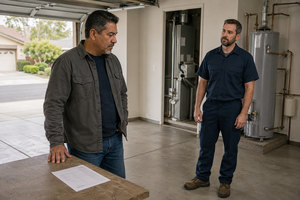
Rainwater collection fits a property when the roof, drainage paths, available storage space, intended water use, and ongoing maintenance all work together in a practical way. For many Sacramento-area homeowners, the real question is not whether collecting rain sounds useful, but whether the property can support a system that is convenient, appropriately sized, and easy to manage over time.
It is easy to begin with the storage tank. You may see a compact rain barrel or a larger tank and wonder whether it could reduce some of your outdoor water use. However, the container is only one part of the decision. A useful system must collect water from the right roof area, direct it safely, store it without disrupting the property, and deliver it where you expect to use it.
Looking at the entire property before choosing equipment can help prevent a system that is inconvenient, undersized, difficult to maintain, or poorly matched to the homeowner’s actual goals.
Begin With the Water You Expect to Use
A rainwater collection system is more likely to be useful when it has a clearly defined purpose.
Some homeowners are mainly interested in watering raised garden beds. Others may want collected water for shrubs, ornamental landscaping, container plants, or another appropriate outdoor use. These goals can require different amounts of storage, different tank locations, and different ways of moving water from the collection point to the area where it will be used.
A homeowner who wants occasional water for a few planters may not need the same system as someone hoping to support a larger garden through extended dry conditions.
Before comparing tanks or requesting estimates, it helps to describe the intended use in ordinary terms:
- What areas of the property would receive the water?
- How often would the water likely be used?
- How far are those areas from the available downspouts?
- Would using the stored water feel convenient during normal routines?
The goal does not need to be complicated. It simply needs to be specific enough for a qualified rainwater collection professional to evaluate whether the property and the proposed system are a reasonable match.
Your Roof and Downspouts Shape What Is Possible
Rainwater collection begins with the surfaces that receive rain and the drainage system that carries it away.
Roof size is important, but roof shape can matter just as much. A home may have several roof sections that direct water toward different downspouts. The downspout closest to the garden may receive only a small portion of the roof runoff, while a downspout on the opposite side of the house may receive considerably more.
Existing gutters and downspouts should also be considered as part of the property evaluation. Their condition, placement, and drainage direction can affect which collection locations are practical.
This is one reason a tank should not be selected solely because it fits beside a wall. The location also needs access to a useful collection point. Otherwise, the project may require additional routing, changes to existing drainage, or a different storage arrangement than the homeowner originally imagined.
A professional property assessment can help connect three important points: where rain falls, where it currently drains, and where the homeowner wants to use the collected water.
Available Space Is About More Than Tank Dimensions
A storage tank may physically fit in a side yard while still creating problems for the property.
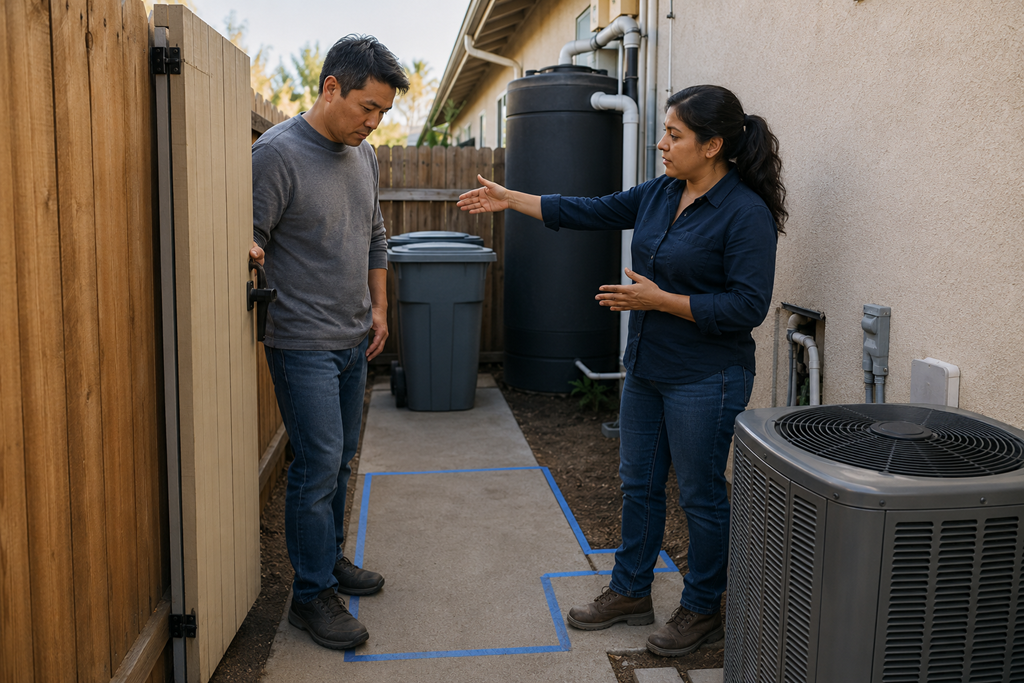
The area around the tank should remain usable. Gates may need to open. Trash and recycling bins may need to pass through. Heating and cooling equipment may require clear working space. Utility access, windows, walkways, fences, and property-line conditions can also affect placement.
The tank itself is not the only space consideration. A practical installation may also need room for connections, maintenance access, stable support, and a suitable overflow path.
This becomes especially important on Sacramento-area properties with narrow side yards or compact outdoor layouts. A large tank may offer more storage, but it may not be the best choice if it blocks an important route or makes routine upkeep difficult.
A smaller system placed in a more convenient location may provide more everyday value than a larger system that dominates the available space.
Seasonal Rain and Seasonal Water Use May Not Line Up Perfectly
Rain does not always arrive when the landscape needs the most water.
A collection tank may fill during rainy periods, while the homeowner’s greatest outdoor water demand may occur after an extended stretch of dry weather. Once the stored supply has been used, the system cannot collect more until additional rain arrives.
This does not mean the system lacks value. It means expectations should match the seasonal pattern.
Rainwater collection may help support certain outdoor uses, reduce some reliance on other water sources, or provide water for a limited period. It should not automatically be viewed as an uninterrupted supply for every landscaping need.
When discussing capacity with a professional, homeowners can ask what the proposed storage amount would realistically support. A useful answer should connect tank size to the homeowner’s intended use rather than simply presenting the largest tank that can be installed.
Overflow Is Part of the System
Every tank has a storage limit. Once it is full, additional rainwater must have somewhere appropriate to go.
This is an important part of deciding whether a property is suitable. The collected water should not create a new drainage problem near the foundation, a walkway, a neighboring property, or an area already prone to standing water.
Homeowners sometimes focus so heavily on saving rainwater that they overlook what happens when the tank reaches capacity. A complete proposal should explain both how water enters the tank and how excess water will be managed.
The existing drainage pattern can provide useful context. If a downspout currently sends water toward a safe discharge area, the collection system should account for how that drainage function will continue after the tank is added.
A vague answer about overflow is a reason to ask more questions before approving the project.
Maintenance Should Match Your Routine
Rainwater collection is not completely hands-off.
Leaves, roof debris, sediment, insects, and other material may need to be managed depending on the system. Gutters, screens, inlet components, storage areas, and water-delivery components may require periodic attention.
The important question is not whether maintenance exists. It is whether the expected maintenance fits the homeowner’s willingness and ability to perform it or arrange for professional service.
A system that is difficult to reach may be neglected. A tank hidden behind stored equipment may become inconvenient to inspect. A collection point beneath trees may require different attention than one beside an open roof area.
Before hiring a local professional, ask for a plain-language explanation of the maintenance the proposed system would require. The answer should identify what needs attention, how accessible the components will be, and which tasks may require professional assistance.
Bigger Is Not Automatically Better
It is understandable to assume that more storage creates more value. In practice, useful capacity depends on the amount of rain that can be collected, the homeowner’s water-use goals, available space, budget, and the timing of expected use.
An oversized tank may occupy valuable space without being filled or used efficiently. An undersized tank may fill quickly and send much of the remaining rainfall through the overflow system.
The best fit is not necessarily the smallest or largest option. It is the system that makes reasonable use of the available roof runoff while supporting a clearly defined purpose.
This is also why comparing estimates based only on tank capacity can be misleading. Two proposals may list similar storage amounts while using different roof areas, placement plans, drainage approaches, or maintenance features.
The scope should explain how the proposed system relates to the property rather than presenting equipment as though it works the same way everywhere.
Questions to Ask During a Property Evaluation
A short set of practical questions can make an initial consultation more useful:
- Which roof sections and downspouts would supply the system?
- How does the proposed capacity relate to the intended water use?
- Where will excess water go when the tank is full?
- Will the installation affect gates, walkways, utilities, or service access?
- What routine maintenance should the homeowner expect?
- How will water reach the garden or other intended use area?
- Are there property conditions that make a smaller or different system more practical?
- Does the intended use require additional design considerations or local review?
A qualified professional should be able to explain these points without relying on vague promises. The discussion should help the homeowner understand why a particular arrangement fits the property.
A Good Fit Should Make Sense in Everyday Use
Rainwater collection may be worth discussing when a property has a suitable roof collection area, a practical storage location, a clear use for the water, manageable drainage conditions, and a homeowner who is comfortable with the expected upkeep.
It may be less suitable when space is extremely limited, the available downspouts are far from the intended use area, overflow cannot be handled appropriately, or the homeowner expects the system to provide more water than the property can realistically collect and store.
The decision does not need to begin with choosing equipment. It can begin with walking the property and connecting the roof, downspouts, available space, drainage, and outdoor water needs.
When those pieces work together, rainwater collection can feel like a useful part of the property rather than an isolated tank that was added without a clear plan.