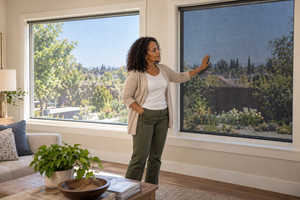
Solar screens are most likely to be a good fit when direct sun through specific windows is creating heat, glare, fading concerns, or daytime privacy problems—and when you are comfortable with the darker appearance and reduced view that denser screen material can create. The decision is less about whether solar screens are “good” in general and more about whether their tradeoffs match the way you use each room.
For many Sacramento-area homeowners, the question comes up after noticing that one room becomes uncomfortable during part of the day, a television or computer screen is difficult to see, or sunlight repeatedly reaches furniture and flooring. Solar screens may help with those conditions, but they are not automatically the right answer for every window or every household.
Start With What the Sun Is Actually Doing
A solar screen is designed to reduce some of the sunlight reaching a window from the exterior. It is not a solar panel, and it does not generate electricity. Its purpose is to change how much sun, glare, and visibility pass through the window.
That makes the source of the problem important.
Solar screens may be worth considering when the discomfort clearly follows direct sun. A room may feel manageable in the morning but noticeably warmer or brighter later in the day. A home office may become difficult to use when glare reaches a monitor. A bedroom may receive strong light during the hours when someone is trying to rest.
The connection is less clear when the room remains uncomfortable regardless of sunlight. Poor airflow, insulation concerns, aging windows, air-conditioning performance, or other property conditions can create similar symptoms. A solar screen might reduce one contributing factor without addressing the larger issue.
Before requesting an estimate, notice which windows are involved, when the problem appears, and what changes when the sun moves away. That observation gives a provider more useful information than simply saying that the entire house feels hot.
The Best Fit Is Often Selective, Not Whole-House
One of the easiest misunderstandings is assuming that every window needs the same solar screen because several windows look similar.
Window orientation, surrounding shade, roof overhangs, nearby trees, room use, and the amount of direct sun can all affect the decision. A west-facing family-room window may create a very different comfort problem from a shaded bedroom window on another side of the home.
A selective approach can help preserve natural light and outdoor views where strong screening is unnecessary. It may also make it easier to choose different screen densities for different parts of the property.
When comparing proposals, ask whether the recommendation is based on the conditions at each window or whether the same product is simply being proposed throughout the home. A clear recommendation should connect the suggested screen to a specific comfort goal.
Reduced Glare Usually Comes With a Visual Tradeoff
Solar screens can change a room in ways that are noticeable even when they are performing as intended.
Denser mesh generally creates a darker view through the window. The room may receive less natural light, and exterior scenery may appear muted. From outside, the screened windows may look darker than unscreened windows.
Some households welcome that effect because it reduces visual intensity and makes an exposed room feel more comfortable. Others discover that they miss the brightness or view more than expected.
This is why choosing a screen based only on a sample held under indoor lighting can be misleading. A sample should be viewed against an actual window from both inside and outside whenever possible. The reader should consider the screen during the time of day when the sun problem normally occurs, not only when the window is shaded.
The most effective screen is not necessarily the densest option available. It is the one that provides enough reduction without taking away more light or visibility than the household wants to lose.
Privacy Depends on Lighting Conditions
Solar screens can make it harder to see into a home during the day, especially when the exterior is brighter than the interior. That can make them appealing for windows facing a sidewalk, neighboring property, parking area, or shared outdoor space.
However, solar screens should not be treated as a complete privacy solution.
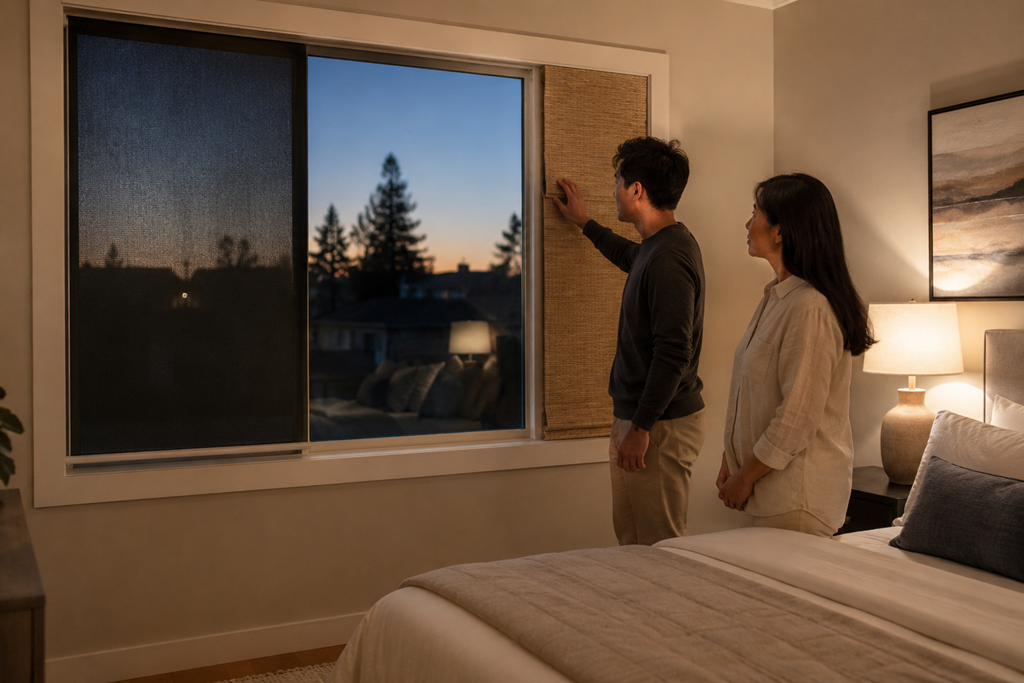
When the interior is brightly lit after dark, visibility may change. Someone outside may be able to see more than the homeowner expects. Screen density, viewing distance, interior lighting, and the angle of observation can all affect the result.
Homeowners who place a high priority on privacy should ask how the proposed mesh performs during changing light conditions. They may still need blinds, shades, curtains, or another interior window treatment for nighttime privacy.
The useful question is not simply, “Will people be able to see through it?” It is, “How will visibility change from inside and outside during the hours when privacy matters most?”
Exterior Appearance Deserves a Closer Look
Because solar screens are installed on the exterior side of the window, they become part of the home’s visible appearance.
Frame color, mesh color, window proportions, trim, and the number of screened windows can influence how coordinated the finished result looks. Screening only a few windows may create a deliberate, functional appearance, or it may look mismatched if the frame and mesh choices do not relate well to the rest of the property.
This does not mean every visible window must receive a screen. It means the homeowner should consider the pattern as a whole before approving the project.
Ask to see examples of available frame and mesh combinations. Look at the home from the street, driveway, patio, or shared property area where the screened windows will be most visible. Renters and property managers should also clarify who must approve exterior changes before materials are ordered.
Attachment Method Affects Everyday Use
How a solar screen is attached may receive less attention than screen density, but it can influence cleaning, removal, window operation, and future maintenance.
A homeowner should understand whether the screens are intended to remain in place, how they can be removed when necessary, and whether the proposed setup affects access to the window or surrounding trim. The provider should also explain how damaged mesh, loose frames, or worn attachment components would be handled later.
This is especially relevant for windows that are opened regularly or cleaned from the exterior. A screen that performs well but makes routine use unnecessarily difficult may not be the right match for that location.
The estimate should identify the attachment approach clearly rather than leaving the homeowner to discover the details after installation.
Maintenance Is Part of the Visibility Decision
Solar screens are exposed to dust, pollen, windblown debris, moisture, and normal outdoor conditions. As material builds up on the mesh, the screen may look darker or the view may become less clear.
The maintenance burden may be modest, but it should still be considered before choosing a denser screen or covering a large number of windows. Access can matter as much as the cleaning itself. A second-story screen or a screen positioned behind landscaping may be more difficult to reach than one beside a patio.
Before hiring a local provider, ask what routine care is recommended and how the screens can be removed or accessed without damaging the frame, mesh, window, or exterior finish.
A clear answer helps the homeowner judge whether the proposed system fits the way the property is maintained.
Questions That Make the Decision Easier
A short conversation with a solar screen provider should connect the product to the specific problem rather than immediately moving to measurements and ordering.
Useful questions include:
- Which windows are receiving enough direct sun to benefit from screening?
- What change in room brightness and outdoor visibility should I expect?
- Can I compare more than one mesh density at the actual window?
- How will daytime and nighttime privacy differ?
- Why is this attachment method recommended for these windows?
- How are the screens removed, cleaned, repaired, or replaced?
- Will every proposed screen use the same material, and why?
Clear answers do not guarantee that solar screens are the right choice, but they make it easier to understand what the proposal is expected to accomplish.
When Solar Screens May Not Match the Real Goal
Solar screens may be less suitable when preserving a bright interior or an unobstructed view is the household’s highest priority. They may also be a poor match when the discomfort does not change with sun exposure or when the homeowner expects the screen to solve a broader cooling, window-performance, or privacy problem by itself.
Another warning sign is a proposal that does not distinguish between rooms, window orientations, or screen densities. The recommendation should explain why each screened area is included and what tradeoff the homeowner is accepting.
It is reasonable to pause when a sample looks too dark, the exterior appearance feels inconsistent, the attachment method is unclear, or the expected benefit cannot be connected to a specific window problem.
Choosing not to screen a particular window can be just as informed a decision as choosing to install one.
Match the Screen to the Room, Not Just the Climate
Sacramento-area sun and warm conditions can make solar screens worth discussing, but local weather alone does not determine whether they belong on a particular home.
The strongest case exists when a homeowner can identify a recurring sun-related problem, compare realistic screen samples, accept the effect on light and view, and understand how the screens will be attached and maintained.
Before approving an installation, focus on the rooms that are genuinely affected and the outcomes that matter most in each one. That makes it easier to choose solar screens as a targeted comfort improvement rather than treating them as an automatic upgrade for every window.