Window replacement is worth considering when the problems are persistent, affect daily comfort or use, and cannot be explained by a smaller repair. A difficult window does not automatically mean every window in the home needs replacing. The better decision comes from separating isolated problems from repeated patterns, then comparing the likely benefit of replacement with the scope, disruption, and cost.
For many homeowners, the decision begins with something ordinary: a bedroom feels drafty, an office becomes uncomfortable in the afternoon, a window sticks every time it is opened, or outside noise seems unusually noticeable. These problems can be frustrating, but they do not all point to the same solution.
The real question is not simply whether the windows are old. It is whether replacement would solve a meaningful problem that cannot be addressed more reasonably another way.
Start With the Problem You Actually Want Solved
Window replacement can improve how a room feels and functions, but its value depends on the problem behind the project.
A homeowner concerned about a window that will not stay open is making a different decision from someone dealing with widespread frame deterioration. A landlord addressing one cloudy glass unit has a different scope from a homeowner who struggles to operate several windows throughout the house.
Before comparing products or requesting whole-home estimates, identify what is prompting the decision:
- Uncomfortable drafts near certain openings
- Rooms that receive intense afternoon sun
- Windows that stick, bind, rattle, or will not remain open
- Condensation or cloudiness between panes
- Noticeable outside noise in priority rooms
- Damaged, deteriorated, or visibly distorted frames
- Repeated repair needs across several windows
This keeps the conversation focused on results rather than turning window replacement into a general upgrade with no clearly defined purpose.
One Problem Window Does Not Automatically Justify a Larger Project
A single troublesome window may be an isolated issue.
Worn hardware, damaged weatherstripping, a failed sash component, deteriorated exterior sealing, or a problem with one insulated glass unit may sometimes be addressed without replacing every window in the home. A window professional may also find that the surrounding frame is still serviceable even though one component needs attention.
Condensation can be especially easy to misinterpret. Moisture trapped between panes may suggest a problem within the insulated glass unit. Moisture appearing on the room-facing surface can have other causes related to indoor humidity, temperature differences, ventilation, or how the room is used.
Water staining near a window also deserves careful evaluation. The visible window may be involved, but staining alone does not prove that the entire unit is responsible. Exterior drainage, flashing, siding transitions, roofing details, or interior moisture conditions may need to be considered before replacement is treated as the answer.
The practical lesson is that the size of the proposed project should match the size of the confirmed problem.
Replacement Becomes More Compelling When the Pattern Repeats
The case for replacement becomes stronger when several windows show similar limitations or when one opening has multiple overlapping problems.
For example, replacement may be more reasonable when a window is difficult to operate, allows noticeable air movement, has deteriorated frame material, and has already required repeated attention. The decision may also become clearer when the same issues appear in several rooms rather than at one isolated opening.
Repeated patterns can include:
- Several windows that no longer open or close reliably
- Multiple failed or cloudy insulated glass units
- Frame deterioration at more than one opening
- Recurring drafts that remain after smaller issues are addressed
- Several high-use rooms affected by noise, glare, heat, or uncomfortable temperatures
- A previous repair history that has not restored dependable function
This does not necessarily mean every window must be replaced at once. It means the homeowner has more evidence that the problem is connected to the windows themselves rather than one small maintenance issue.
Everyday Use Matters More Than the Age of the Window
A window can be old and still serve its purpose. Another window can be newer but poorly suited to the room, difficult to operate, or improperly installed.
That is why age alone is not a reliable measure of value.
Consider how often the window is used and how much the problem affects the household. A stuck window in a rarely used storage room may rank lower than a bedroom window that is opened every morning. Street noise may matter more in a nursery or home office than in a hallway. Strong afternoon sun may be a significant concern in a west-facing room that is occupied for hours each day.
For Sacramento-area properties, sun exposure and extended periods of warm weather may make certain rooms a higher priority than others. Seasonal rain may also reveal concerns that are less noticeable during dry conditions. These factors can help establish priorities without assuming that every opening requires the same solution.
Replacement is more likely to feel worthwhile when it improves a room the household uses frequently or resolves a problem that affects daily routines.
Compare Repair, Selective Replacement, and Whole-Home Replacement
The decision is not always limited to repairing one window or replacing every window.
There may be several reasonable levels of work:
A focused repair may address hardware, weatherstripping, balances, locks, sealing details, screens, or another isolated component.
Glass-unit replacement may be discussed when the frame remains serviceable but the insulated glass has failed or become damaged.
Selective window replacement may focus on a few priority rooms, one side of the property, or the openings with the clearest functional problems.
Whole-home replacement may be considered when problems are widespread, the windows share similar limitations, or the homeowner wants a consistent installation and appearance.
Selective replacement can be especially useful when the evidence does not support a larger project. It allows the scope to follow the most important needs rather than assuming that every window deserves equal priority.
When comparing these options, ask whether the smaller approach would meaningfully solve the problem or merely postpone a replacement that is already reasonably predictable.
The Installation Method Can Change the Scope
Two replacement proposals can sound similar while describing different amounts of work.
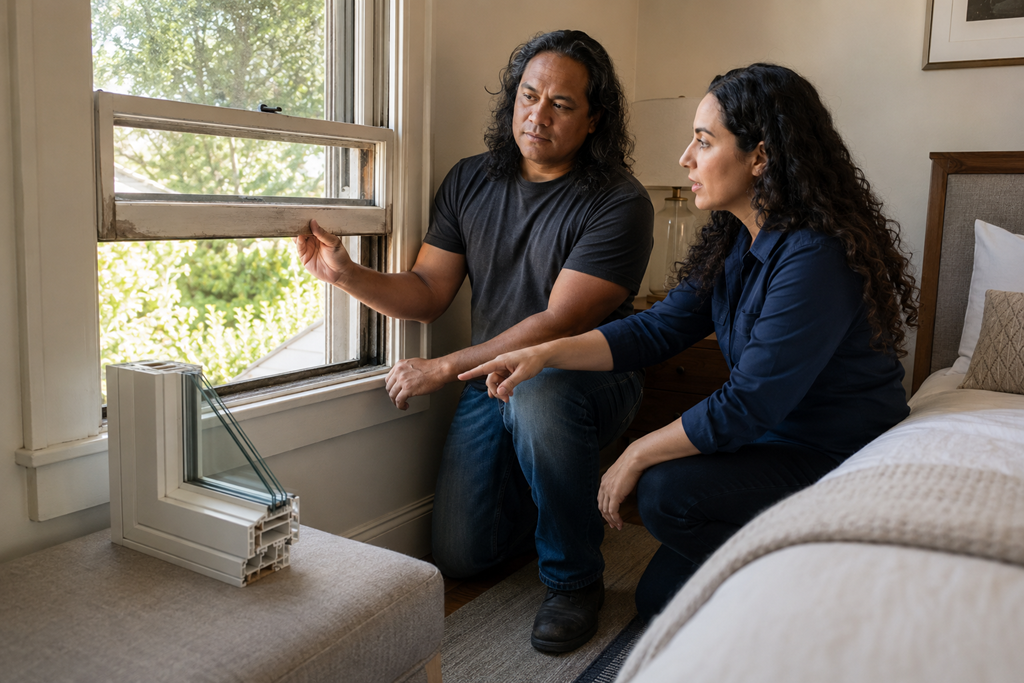
An insert-style replacement generally places the new window within an existing frame that is considered suitable to remain. A full-frame replacement removes more of the existing window assembly and may expose the surrounding opening for closer evaluation.
Neither method is automatically right for every home.
The appropriate approach can depend on frame condition, visible deterioration, previous installations, the desired glass area, interior and exterior trim, and how much of the existing assembly can reasonably remain.
This distinction matters because it can affect:
- How much of the existing window is removed
- Whether surrounding materials are disturbed
- How interior and exterior finishes are handled
- Whether concealed conditions may affect the scope
- How much visible glass remains
- What is included in the quoted work
A proposal should identify the installation method clearly rather than using “window replacement” as though it describes one universal process.
Energy Savings Should Not Be the Only Reason
Homeowners often hear that replacement windows will reduce utility costs. Improved windows may affect comfort and energy performance, but the result depends on the existing windows, the home, installation quality, sun exposure, air leakage elsewhere, heating and cooling habits, and many other conditions.
That makes guaranteed savings claims difficult to evaluate.
A more practical decision looks at several possible benefits together:
- Easier operation
- Reduced drafts near the opening
- Improved comfort in priority rooms
- Better control of outside noise
- Clearer glass and improved appearance
- Less recurring maintenance
- More dependable locking and closing
Energy performance can remain part of the comparison, but it should not be treated as a guaranteed financial calculation unless the estimate is supported by property-specific analysis that the homeowner understands.
A Useful Estimate Explains More Than the Window Brand
The brand and product line matter, but they do not explain the entire project.
A clear estimate should help the homeowner understand what is being replaced, why those openings were selected, how the units will be installed, and what surrounding work is included.
Before comparing proposals, look for details about:
- The exact windows included in the project
- Whether the work is an insert or full-frame installation
- The frame and glass configuration being proposed
- Interior and exterior trim or finish work
- Screens, locks, hardware, and disposal
- Protection and cleanup inside the home
- How unexpected deterioration would be handled
- Items specifically excluded from the price
Two estimates may use similar windows but include very different installation and finish work. Comparing only the total price can hide those differences.
Questions That Help Clarify Whether the Project Is Worth It
A few direct questions can make the decision easier:
- Which specific problem will this replacement solve?
- Could a repair reasonably address the issue?
- Why are these windows included while others are not?
- What condition must the existing frame be in for this installation method?
- What surrounding materials are included in the work?
- What happens if deterioration is discovered after removal?
- Are the proposed glass options suited to the rooms receiving the most sun or noise?
- Can the project be divided into practical phases?
The answers should connect the proposed scope to the conditions at the property. Vague statements about upgrading the entire home are less useful than explanations tied to particular windows and rooms.
Common Assumptions Can Make the Decision Harder
One common mistake is treating window replacement as an all-or-nothing project. A homeowner may delay addressing two important windows because replacing the entire house feels unaffordable. Another homeowner may accept a whole-home proposal even though only a few openings are causing meaningful problems.
It is also easy to focus on appearance while overlooking installation scope. A polished sample window does not explain how the existing unit will be removed, how the opening will be prepared, or who will handle finish work.
Another mistake is assuming the lowest estimate represents the same project for less money. Missing trim work, different glass packages, reduced cleanup, limited disposal, or an unclear installation method can make two prices difficult to compare.
Finally, homeowners may assume every draft, temperature difference, condensation issue, or water stain proves the windows have failed. These symptoms deserve attention, but a qualified evaluation should connect the symptom to the proposed solution before replacement is recommended.
A Practical Standard for Making the Decision
Window replacement is more likely to be worth discussing when three things are true:
- The problem is persistent and meaningful. It affects comfort, operation, maintenance, noise, appearance, or everyday use.
- The proposed replacement is likely to address that problem. The recommendation is based on the condition of the window and surrounding opening rather than age alone.
- The scope is understandable. The estimate identifies the selected windows, installation method, included finish work, options, exclusions, and approach to unexpected conditions.
When one of these pieces is missing, the decision may need more clarification. The homeowner might request a repair opinion, compare a selective replacement plan, or ask the provider to explain why the proposed scope is necessary.
Window replacement does not have to be justified by a dramatic failure. It can be worthwhile when the improvement is practical, the affected rooms matter, and the proposal solves a clearly recognized problem. The strongest decision is usually the one based on specific conditions rather than pressure, broad promises, or the assumption that every older window must be replaced.