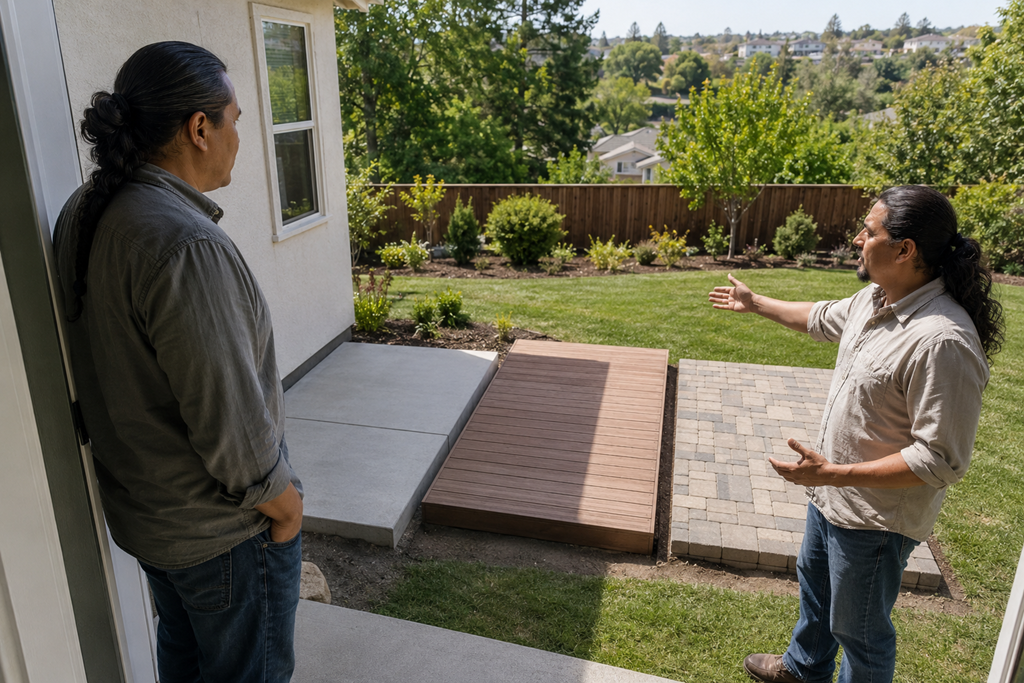
Choosing between a patio, deck, or paver surface is less about which option looks best in a photo and more about how your yard sits, how you want to use the space, and how much upkeep you are comfortable taking on. A patio usually works best at or near ground level, a deck can bridge height changes or create an elevated platform, and pavers offer a modular surface that can be repaired or adjusted in sections. The right choice is the one that fits the property, not simply the trend you like most.
This decision often becomes confusing because the three options are discussed as though they are direct substitutes. In reality, they solve somewhat different problems. Understanding those differences can help Sacramento-area homeowners have more useful conversations with outdoor living contractors and compare estimates on more than appearance alone.
Patio, Deck, And Pavers Do Not Mean The Same Thing
A patio generally describes an outdoor living area built at or near ground level. It may be made from poured concrete, natural stone, tile, brick, or concrete pavers.
A deck is usually a framed platform built above the surrounding ground. It may sit only slightly above grade or extend high enough to require steps, railings, structural supports, and a more involved connection to the home.
Pavers are individual manufactured or natural units installed together to create a surface. They can form a patio, walkway, courtyard, or other outdoor area.
That means a paver patio is still a patio. The real comparison may be between a ground-level concrete patio, a ground-level paver patio, and a raised deck rather than between three completely separate categories.
This distinction is useful because it shifts the conversation away from labels and toward the actual structure, surface, and site conditions involved.
Let The Shape Of The Yard Narrow The Choice
The existing grade of the yard is often one of the strongest clues about which option deserves closer consideration.
A relatively level yard with a back door close to the ground may be naturally suited to a ground-level patio. A property with a raised doorway, noticeable slope, or lower yard may make a deck worth discussing because a framed platform can create a more direct transition from the house.
That does not mean every flat yard needs a patio or every sloped yard needs a deck. Grading, drainage, access, nearby trees, irrigation, soil conditions, and the relationship between the project area and the home can all affect what is practical.
The important point is that the yard itself should help shape the decision. Trying to force a preferred design onto a site that does not support it may increase the amount of excavation, structural work, drainage planning, or landscaping adjustment involved.
A qualified local professional can explain which conditions are driving the recommendation and whether another option could accomplish the same goal with a different scope.
Think About What Will Actually Happen In The Space
It is easy to say that you want an outdoor living area without defining how you expect to use it.
A dining table, grill, lounge seating, fire feature, shade structure, play area, or open gathering space may each require a different layout. The number of people using the area also matters. A surface that looks generous when empty can feel cramped after furniture and walking paths are added.
A ground-level patio may work well when the goal is to create a broad connection between the house, lawn, garden, and other parts of the yard. It can support flexible shapes and may visually blend into the landscape.
A deck may be more useful when the space needs to meet a higher doorway, extend over a change in elevation, preserve a view, or create a defined outdoor room separate from the lower yard.
Pavers may appeal to homeowners who want a patterned or segmented surface, flexible design boundaries, or the possibility of replacing individual units if a localized area eventually needs attention.
Instead of beginning with “Which one looks best?” begin with “What needs to fit here, and how should people move through it?”
Sacramento Sun And Seasonal Rain Belong In The Conversation
Outdoor surfaces can look and feel different depending on their exposure.
A material placed in strong afternoon sun may retain more heat than the same material in a shaded part of the yard. Color, texture, surrounding trees, overhead coverage, and the direction the space faces can influence how comfortable it feels during warmer periods.
Seasonal rain also makes drainage and water movement important. A finished outdoor area should relate properly to the home, doors, planting areas, walkways, and surrounding grade rather than creating a low point where water repeatedly collects.
No material is automatically comfortable, cool, slip-resistant, or trouble-free in every setting. Those characteristics depend on the specific product, finish, installation plan, exposure, and maintenance.
During an estimate, ask the provider to explain how the proposed surface is expected to perform in the actual location rather than relying only on a small showroom sample.
Maintenance Preferences May Eliminate An Option
Every outdoor living surface requires some level of care, but the type of care varies.
Wood decking may need periodic cleaning and refinishing depending on the material and exposure. Composite or other manufactured decking may reduce some forms of upkeep, but it can still require cleaning and attention to ventilation, fasteners, framing, and surface condition.
Concrete patios may need cleaning, joint maintenance, sealing when appropriate, or repairs if movement or surface damage develops.
Paver surfaces may require attention to joints, weeds, edge areas, settling, or individual units that become uneven. One advantage is that a localized section may sometimes be lifted and reset rather than treated as one continuous surface.
The better question is not “Which one is maintenance-free?” None should be assumed to be. Ask what routine care is realistic, what problems commonly appear, and how localized repairs are normally handled.
A surface that matches your willingness to maintain it may provide more long-term satisfaction than one selected mainly for its initial appearance.
A Deck Is Not Automatically The Premium Choice
Another common misunderstanding is that a deck is always the more substantial option or that a patio is automatically simpler and less involved.
The scope depends on the site.
A low, uncomplicated patio may require less structural work than an elevated deck. However, a large patio that needs demolition, excavation, extensive base preparation, drainage changes, retaining elements, or difficult access may become a significant project.
A small deck close to the ground may be relatively straightforward, while a taller deck with stairs, railings, engineering considerations, and structural connections may involve much more planning.
Pavers also vary widely. The visible units are only one part of the project. Preparation beneath the surface, edge support, drainage, cuts, patterns, access, and site conditions can affect the work involved.
This is why comparing projects by square footage alone can be misleading. The unseen preparation and structural details may be just as important as the finished surface.
Avoid Choosing From Photographs Alone
Inspiration photographs are useful for identifying colors, shapes, and general styles, but they rarely show the conditions underneath the finished project.
A photograph may not reveal the slope that was corrected, the drainage that was added, the supports beneath a deck, the access available during construction, or the maintenance the surface requires.
It may also show a much larger yard, a different doorway height, another sun exposure, or landscaping that changes how the space feels.
Use photographs to communicate what you like, but allow the property conditions to determine whether the same idea makes sense in your yard.
A good provider should be able to explain which parts of the inspiration image are transferable and which parts would need to change.
Make Sure Competing Estimates Describe The Same Project
Two estimates may appear to cover the same patio, deck, or paver area while including very different amounts of preparation and finishing work.
One estimate may include demolition, hauling, drainage adjustments, steps, borders, surface finishing, or restoration around the project. Another may list only the primary installation.
Before comparing totals, look for a clear description of what will be built and what is included around it.
Useful questions include:
- Why does this yard condition favor the recommended option?
- How will the finished surface meet the back door, lawn, and existing walkways?
- What site preparation, drainage work, or removal is included?
- Are steps, railings, borders, edging, and surrounding repairs included?
- What routine maintenance should be expected?
- How are settling, movement, surface damage, or individual repairs usually handled?
- Could permits, engineering, utility locations, or association requirements affect the project?
- What is specifically excluded from the estimate?
The answers should help you understand the recommendation rather than simply pressure you to accept it.
The Best Choice Should Make The Yard Easier To Use
Your yard does not need a deck simply because the back of the house feels unfinished. It does not need a concrete patio because that seems like the standard choice. It does not need pavers only because you prefer their pattern in photographs.
It needs an outdoor surface that works with the grade, doorway height, drainage, sun exposure, intended use, maintenance preferences, and realistic project scope.
For many Sacramento-area homeowners, the most useful next step is not choosing a material immediately. It is asking qualified local professionals to explain how each reasonable option would interact with the actual property.
When the recommendation is tied to the yard rather than to a sales preference, it becomes easier to compare proposals and decide which type of outdoor living space genuinely fits.