Rainwater collection for yard and garden use makes the most sense when you begin with the plants and spaces you actually want to water, not with the size or appearance of a tank. The key question is whether seasonal rainfall, available roof runoff, storage space, and your normal watering habits can work together in a practical way for your property. A system can be useful without supplying every drop your landscape needs, but its purpose should be clear before equipment is chosen.
For many Sacramento-area homeowners, the idea begins simply: rain falls on the roof, a tank stores it, and the stored water can later be used in the yard. The concept is straightforward, but deciding whether it will be useful requires more thought than choosing a container and placing it beneath a downspout.
The more helpful starting point is to identify what you want the collected water to accomplish.
Start With the Part of the Yard You Actually Want to Water
A homeowner may say they want rainwater for “the garden,” but that can describe very different needs.
It might mean watering two raised vegetable beds, supporting a row of shrubs, caring for several container plants, supplying water to young fruit trees, or reducing the amount of treated water used in one part of the landscape. Each purpose creates a different expectation for storage, access, and convenience.
Trying to plan for the entire yard at once can make the decision unnecessarily complicated. A modest system that serves a frequently used garden area may provide more practical value than a larger system that is difficult to reach or operate.
Before comparing equipment, consider which plants or landscape areas matter most. The answer helps define where stored water needs to go and how often it may realistically be used.
A System Does Not Have to Supply the Entire Landscape
One common misunderstanding is that a rainwater collection system is only worthwhile if it can handle most or all outdoor watering.
That is not necessarily the right standard.
A system may still be useful if it supports a limited area, reduces reliance on another water source during certain periods, or keeps stored water available for occasional hand watering. The practical value depends on whether the system matches the homeowner’s intended use.
This is why broad promises about how much water a tank can hold may not answer the most important question. Capacity matters, but so do the location of the plants, the watering method, the distance from the tank, and the homeowner’s willingness to use the system regularly.
The most successful expectation is often specific: use collected rainwater for these plants, in this part of the yard, under these conditions.
Rainfall and Watering Demand May Not Happen at the Same Time
Rainwater collection has a natural timing challenge. Water enters the system when it rains, while the yard may need the most attention during extended dry periods.
That does not make collection impractical, but it does affect how the system should be evaluated.
A tank can fill during a rainy period and then be gradually drawn down. Once the stored supply is used, the system will not refill until more runoff reaches it. The usefulness of the system therefore depends on both storage capacity and how quickly the homeowner expects to use the water.
This is an important point when comparing proposals. A larger tank may hold more water, but size alone does not guarantee that it will meet ongoing landscape demand. A qualified rainwater collection professional should be able to discuss the relationship between collection opportunities, storage, intended use, and seasonal watering habits without presenting the tank as an unlimited supply.
The Roof and Gutters Affect What Can Be Collected
A storage tank is only one part of the system. The water must first reach it from a suitable collection surface through gutters, downspouts, and related components.
Roof area, roof shape, downspout locations, gutter condition, and existing drainage patterns can all affect the amount of runoff that reaches a proposed collection point. A convenient tank location may not be connected to the roof section that produces the most useful flow.
Existing roof and gutter conditions also deserve attention before installation. Sagging gutters, leaking seams, debris buildup, damaged downspouts, or drainage problems may need to be discussed before runoff is directed into storage.
Homeowners considering water for edible gardens may also want to ask how roofing materials, debris management, filtration choices, and intended water use affect the proposed design. A qualified professional can explain the system’s appropriate uses and any limitations that should be understood.
Tank Placement Can Determine Whether the Water Gets Used
A tank may fit physically without fitting comfortably into everyday life.
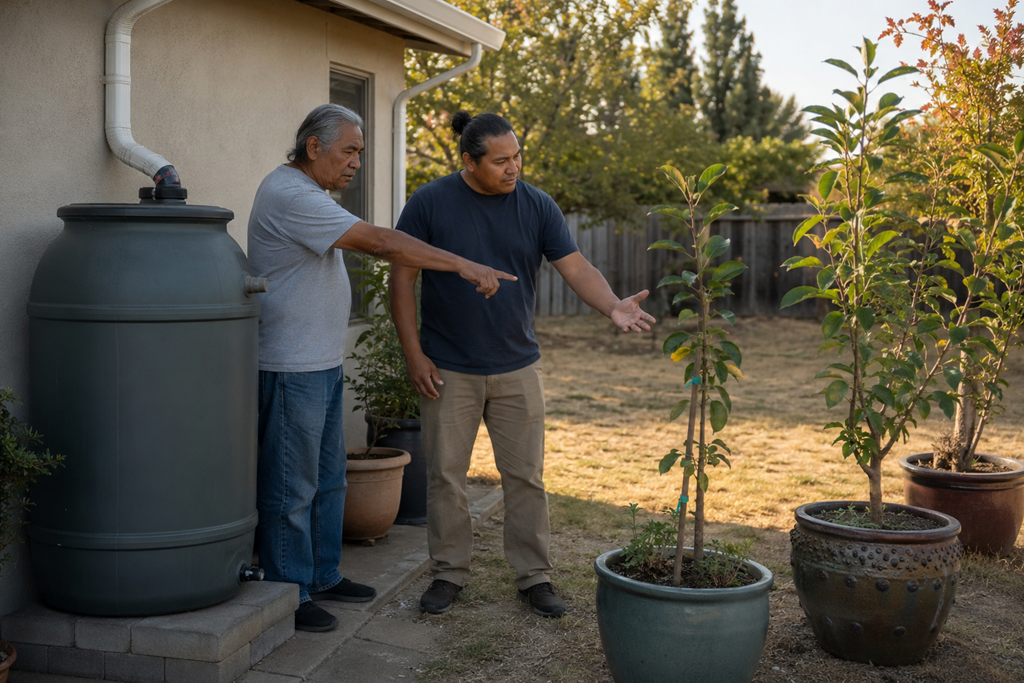
Side yards often contain gates, utility equipment, trash-bin routes, hose storage, walkways, drainage paths, and access points that still need to function after installation. A tank that narrows a walkway or interferes with a gate may become frustrating even if it performs as expected.
The distance between the tank and the intended watering area also matters. Water that is inconvenient to reach may be used less often than the homeowner originally imagined.
When reviewing a proposed location, it helps to picture ordinary activities rather than only the installation day. Consider how people will pass the tank, how the stored water will reach the plants, how the area will be maintained, and whether service access will remain available.
A well-placed system should support the yard rather than create a new obstacle.
Overflow Deserves as Much Attention as Storage
Once a tank is full, additional runoff needs somewhere to go.
Overflow may be easy to overlook because the homeowner’s attention is usually on capturing water. However, redirecting roof runoff can change where water moves around the property.
A responsible proposal should account for what happens during continued rainfall after storage capacity has been reached. Water should not simply be allowed to collect beside the foundation, flow toward a neighboring property, create erosion, or repeatedly saturate an unsuitable area.
This does not mean every property needs a complicated overflow arrangement. It means the overflow path should be intentional and explained clearly before the system is installed.
Garden Use Involves More Than Tank Capacity
Two homeowners with identical tanks may have very different experiences.
One may use a watering can for several containers located beside the tank. Another may expect water to travel across the yard to several raised beds. A third may want the system to support drip irrigation or another distribution method.
These uses can involve different questions about water movement, pressure, elevation, connections, access, and maintenance. Homeowners do not need to design these details themselves, but they should describe how they expect to use the water.
It is also useful to discuss what routine care the system may require. Screens, inlets, filters, gutters, outlets, and surrounding areas may need periodic attention. A system that looks simple from the outside can still depend on regular observation and maintenance.
Clear expectations make it easier to compare systems based on everyday usability rather than tank size alone.
Questions That Can Improve a Consultation
A few focused questions can help a Sacramento-area homeowner understand whether a proposal matches the yard:
- Which roof sections would supply this tank?
- What part of the yard is the proposed system intended to support?
- How would the stored water reach those plants?
- What happens when the tank becomes full?
- Will the location interfere with gates, walkways, utilities, or maintenance access?
- What routine care would the homeowner be responsible for?
- Are there limitations on how the collected water should be used?
The strongest answers should connect the proposed equipment to the homeowner’s property and intended use. Vague claims about saving water or collecting large volumes are less useful when they do not explain how the system will function in that particular yard.
A Clear Purpose Makes the Equipment Decision Easier
Rainwater collection for yard and garden use does not need to solve every outdoor watering need to be worthwhile. It needs to perform a clearly understood job that fits the property, the available runoff, and the homeowner’s normal routine.
Before comparing tank sizes or installation options, identify the plants you want to support, where the water will be collected, how it will be used, and where overflow will go. Those details give a qualified professional a better foundation for discussing whether a system is practical and what type of setup may fit.
The goal is not simply to store rain. It is to create a system that the homeowner can realistically use without disrupting the rest of the property.