A good gutter guard company should do more than show you a product and give you a price. Before hiring one, look at how thoroughly the company evaluates your home, explains what the system can and cannot do, identifies what is included in the work, and answers questions about future maintenance. The goal is to understand whether the recommendation fits your actual gutters and roofline, not just whether the guard itself sounds appealing.
That distinction can be easy to miss. Gutter guard estimates often involve a product that looks fairly straightforward, which can make the decision feel like a simple comparison of materials and prices. But what matters just as much is how carefully the company considers the property where the system would actually be installed.
For Sacramento-area homeowners, taking a little time to evaluate that process can make it easier to compare companies without getting distracted by polished demonstrations, broad promises, or differences that are not clearly explained.
Start With How They Evaluate Your Home
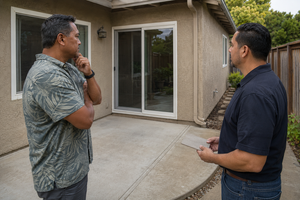
One of the most useful things to notice is what happens before a gutter guard company recommends a particular system.
Does the company appear interested in the condition and layout of the existing gutters? Does the evaluation consider the roofline, downspouts, corners, transitions, nearby trees, and other property features that may affect the project? Or does the conversation move quickly from arrival to a product presentation?
You do not need to know how to inspect a gutter system yourself. In fact, homeowners should avoid climbing onto roofs or using ladders simply to double-check a prospective contractor's evaluation.
Instead, pay attention to whether the company can explain what it observed and how those observations influenced its recommendation.
A provider that has actually considered your property should generally be able to explain why the proposed approach fits your home in understandable terms.
The Product Should Not Be the Entire Conversation
It is natural to ask about the gutter guard itself. Materials, design, appearance, and expected performance are all reasonable topics.
But a product demonstration alone does not tell you whether a company has evaluated your particular situation carefully.
Two homes can have different rooflines, gutter configurations, access conditions, nearby vegetation, and maintenance concerns. A homeowner may also have questions about existing gutters or areas where debris tends to collect.
The useful question is not simply, "Is this a good gutter guard?"
It is closer to, "Why does this company believe this gutter guard and installation approach make sense for this house?"
That small change in perspective can make provider comparisons much easier.
Make Sure You Understand the Actual Scope of the Work
A quote is more useful when you understand what the company intends to do.
Before comparing prices, make sure you know which gutter areas are included, whether any existing conditions need to be addressed first, and what the company considers part of the installation.
If something about the scope is unclear, ask for clarification before making a decision.
This is especially important when comparing multiple estimates. One proposal may initially appear less expensive simply because it covers something different from another proposal.
You do not need every technical detail. You do need enough information to understand what you are agreeing to purchase.
Clear scope also gives you a better basis for asking follow-up questions if the project changes.
Ask What the Company Expects After Installation
Gutter guards are often discussed in terms of reducing the amount of debris that enters the gutter system. That can sometimes lead homeowners to assume the gutters will no longer need any attention.
A more useful conversation is about realistic maintenance expectations.
Ask the company what homeowners should expect after installation and whether periodic inspection or cleaning may still be appropriate. You can also ask whether certain parts of the system tend to require more attention than others.
The important part is not receiving a promise that nothing will ever need maintenance again.
It is receiving an explanation that helps you understand what ownership of the system may actually look like.
Pay Attention to How Limitations Are Explained
A company does not have to make a gutter guard sound perfect to make a strong impression.
In fact, clear explanations of limitations can be useful.
If nearby trees, roof features, heavy debris, or other conditions may affect how the system performs or how often it should be checked, a homeowner should be able to discuss those considerations without the conversation becoming vague or dismissive.
Be cautious when broad claims replace specific explanations.
Statements such as "you'll never have to think about your gutters again" may sound reassuring, but they do not tell you much about how the recommendation fits your property.
A more informative discussion explains what the system is intended to accomplish, what it cannot guarantee, and what the homeowner should realistically expect.
The Estimate Should Be Easy Enough to Understand
You should not have to become a gutter expert to understand an estimate.
A useful proposal should make it reasonably clear what areas of the home are being addressed and what work is included.
If you cannot tell what you are buying, ask questions.
It is also reasonable to ask how unexpected conditions would be handled if something different is discovered once the project begins.
The purpose is not to anticipate every possible scenario. It is simply to understand the agreement well enough that you are not relying entirely on assumptions.
A Few Questions Can Reveal a Lot
You do not need a long contractor interview. A few focused questions can help you understand how thoughtfully the company has approached your home:
- What did you notice about my existing gutter system that affected your recommendation?
- Why are you recommending this particular gutter guard for this property?
- Which gutter areas are included in the estimate?
- Is there anything that needs to be addressed before installation?
- What maintenance should I realistically expect afterward?
- What happens if the scope changes once the project begins?
- Who should I contact if I have questions after the installation?
The value of these questions is not just in the answers themselves.
Notice whether the explanations are specific to your home, understandable, and consistent with what you were shown during the evaluation.
Compare Explanations, Not Just Prices
Price naturally matters, but it is only one part of comparing gutter guard companies.
Suppose one estimate gives you a number with very little explanation while another helps you understand the areas being covered, why the system was recommended, what preparation may be involved, and what to expect later.
Those are not necessarily equivalent proposals, even if both are described simply as "gutter guard installation."
Comparing the underlying scope can help you understand what any price difference actually represents.
This does not mean the highest estimate is automatically better, or that the lowest estimate should automatically be avoided.
It means price becomes more useful when you know what is behind it.
Notice Whether You Feel Pressured to Decide
A gutter guard estimate should give you information you can consider.
If the conversation depends heavily on immediate discounts, disappearing offers, or pressure to sign before you have had time to understand the proposal, it can become harder to evaluate the decision on its merits.
A homeowner should be able to pause, review the recommendation, compare providers if desired, and ask additional questions.
That pause can be especially useful when several companies use different terminology or emphasize different product features.
You are not trying to identify the company with the most impressive presentation.
You are trying to understand which proposal actually addresses your home and gives you enough information to make an informed decision.
Look Beyond the Sample and Back at the House
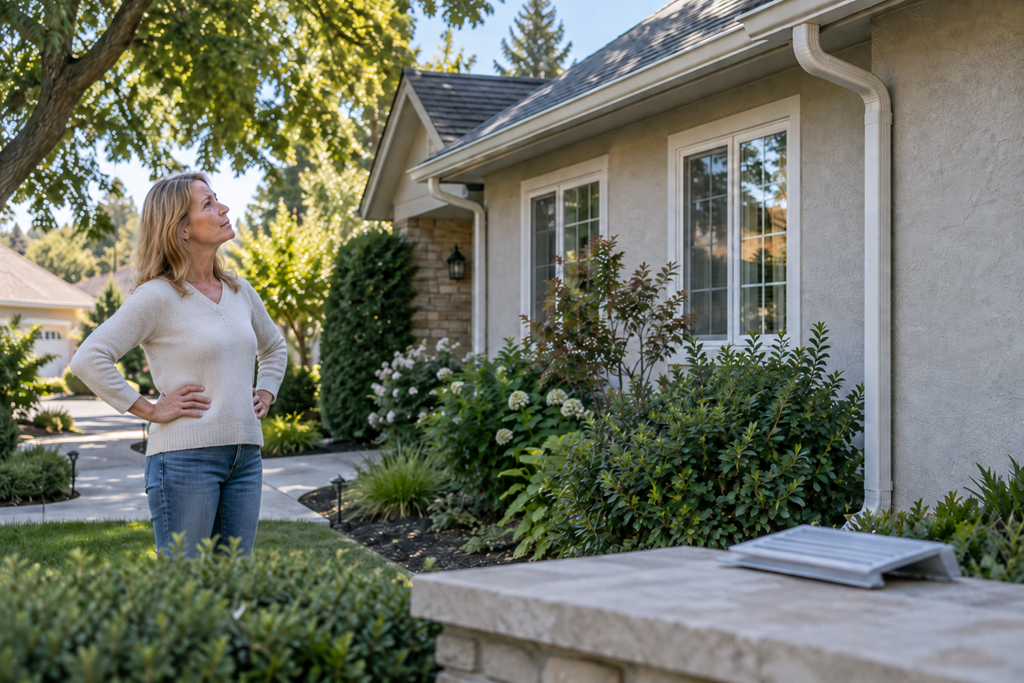
One of the simplest ways to think about a gutter guard estimate is to mentally shift your attention away from the product sample and back toward your property.
Consider the complete roof edge, gutter runs, downspouts, nearby trees, access areas, and the places where different sections of the home connect.
Then ask yourself whether the company's explanation seemed connected to what you can actually see around the house.
That does not mean you need to determine the correct technical solution yourself.
It means the recommendation should feel like it came from evaluating your property rather than fitting your property into a predetermined sales pitch.
A Better Hiring Decision Starts With Understanding the Recommendation
Evaluating a gutter guard company is less about becoming an expert on gutter guards and more about understanding how the company reached its recommendation.
Look for a thoughtful property evaluation, a clearly explained scope, realistic expectations, understandable answers, and enough breathing room to compare your options.
When you can connect the proposed system to the actual needs of your Sacramento-area home, it becomes much easier to decide whether a company deserves further consideration before you hire.