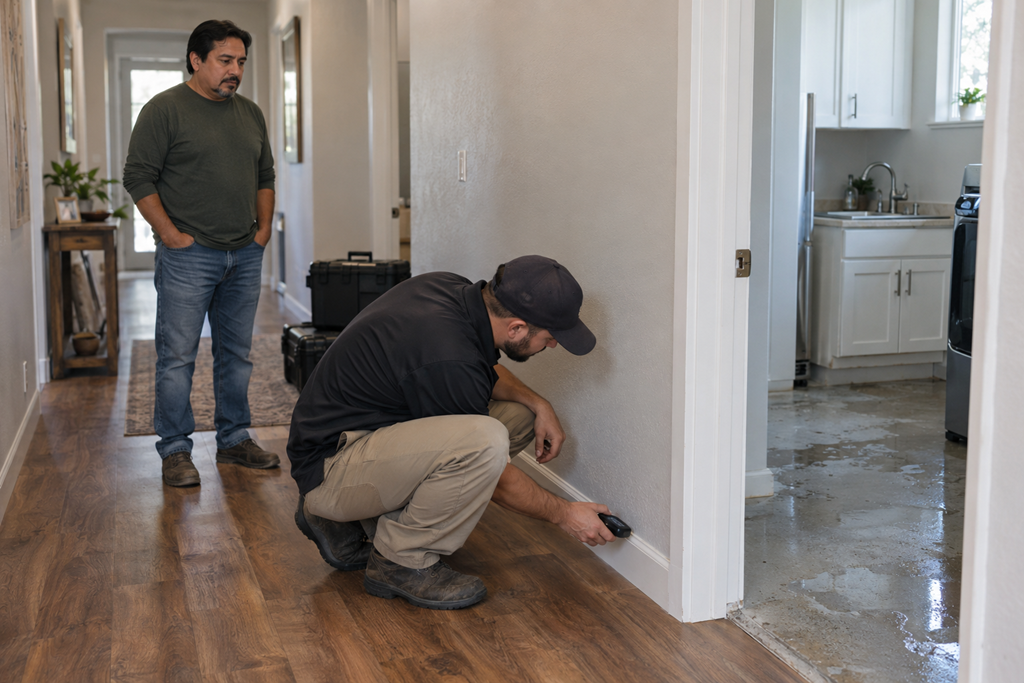
Evaluating a restoration company before hiring one is less about finding the fastest promise and more about understanding how carefully the company defines the damage, explains the proposed scope, communicates what is and is not included, and prepares you for decisions that may change as more of the affected area becomes visible. A good early conversation should help you understand what the company knows, what still needs to be confirmed, and how those unknowns will be handled before you commit.
Property damage can make almost any hiring decision feel more urgent than usual. When part of a home or business has been disrupted, it is natural to focus on getting things moving again. That pressure can make it harder to slow down long enough to evaluate the company itself.
For Sacramento-area property owners, a useful question is not simply, “How soon can you start?” It is also, “How clearly can you explain what you believe needs to be done and what I should expect next?”
A Good Evaluation Starts With the Scope
Before hiring a restoration company, pay attention to how the company determines what the project may involve.
A useful initial evaluation should feel connected to the actual property rather than like a standard response given to every customer. The company should be able to explain which areas appear relevant, what it is basing its proposed work on, and whether anything remains uncertain.
You do not need a technical education in restoration to evaluate this part of the conversation. You are looking for understandable answers.
If the company discusses several rooms, surfaces, belongings, access points, or phases of work, you should be able to follow why those areas matter. If the proposed scope is limited to one visible area, it is reasonable to ask how the company determined that boundary.
The goal is not to challenge every recommendation. It is to understand how the recommendation connects to what the company actually observed.
Look Beyond the Promise to Start Quickly
A fast response can sound reassuring when you are dealing with property damage, but speed alone tells you very little about whether a company is a good fit.
Listen to what happens before the company starts talking about scheduling.
Does the representative ask questions about what happened, what areas may be affected, what has already been done, and what parts of the property may need to be evaluated? Does the company explain what it can determine now and what may require a closer look?
Those details can tell you more about the company's approach than a broad promise to take care of everything.
A company that takes time to understand the situation is giving you information you can use to evaluate the proposed scope instead of asking you to rely only on reassurance.
Pay Attention to How the Company Handles Unknowns
Restoration work may involve conditions that are not completely visible during the first conversation or initial property evaluation.
That does not automatically mean something is wrong with an estimate.
What matters is how the company talks about those unknowns.
Clear communication might include explaining which parts of the proposed work are based on current observations, which areas still need to be evaluated, and what would happen if the scope later needs to change.
Be cautious about treating absolute certainty as the standard you are looking for. In some situations, a more useful answer is a clear explanation of what is known, what is not yet known, and how additional findings would be communicated.
That distinction can make later changes much easier to understand.
Make Sure the Estimate Matches the Conversation
When you receive an estimate or proposed scope, compare it with what you were told during the evaluation.
You should not have to become a restoration expert to recognize major gaps between the conversation and the paperwork.
If the representative discussed several affected areas but the estimate appears to address only one, ask about the difference. If certain services were described as part of the project, confirm whether they are actually included. If something may be handled separately, find out who would be responsible for it.
Some restoration situations can involve more than one phase of work or more than one service provider. Avoid assuming that the company you first contact will necessarily handle every part from beginning to end.
Understanding those boundaries before hiring can prevent a vague proposal from turning into a vague project.
Communication Before Hiring Often Predicts What the Process Will Feel Like
You are not only evaluating the proposed restoration work. You are also evaluating the working relationship.
Notice whether you can get direct answers to reasonable questions.
Pay attention to whether explanations stay consistent from one conversation to the next. Find out who would normally be your contact once work begins and how changes, scheduling issues, or additional decisions would be discussed.
Good communication does not mean you will always receive an immediate answer to every question. It means the company can explain what happens next and does not leave important parts of the process unnecessarily unclear.
If you already feel unsure about whom to contact or how decisions will be communicated before signing anything, that is worth resolving before the project begins.
Ask Questions That Reveal How the Company Works
You do not need a long interview or technical checklist. A few practical questions can reveal a great deal about how carefully the company has evaluated the situation:
- What areas are included in the proposed scope, and what led you to include them?
- Is anything still uncertain or waiting for further evaluation?
- Which parts of the restoration process are included in your proposal?
- Are there services or later phases that may be handled separately?
- How would you explain and document a change in scope?
- Who would be my main contact during the project?
- What should I expect regarding scheduling, property access, and progress updates?
The value of these questions is not simply the answers themselves. Listen to whether the answers help you understand the project more clearly.
Watch for Pressure That Replaces Explanation
Property damage can already create enough pressure on its own. A hiring conversation should not make the decision harder by replacing useful information with urgency.
Be careful when important questions receive vague answers, when the scope remains difficult to understand, or when you feel pushed to commit before you know what you are agreeing to.
Similarly, broad assurances such as “we handle everything” are only useful if the company can explain what “everything” actually includes in your situation.
Another pattern to notice is constant redirection. If you ask about the scope but receive only a scheduling answer, or ask what may change but receive only another reassurance, you may still be missing the information you need.
You are not looking for a perfect script. You are looking for enough specificity to make an informed hiring decision.
Compare Companies on More Than the Bottom-Line Number
When comparing restoration companies, price is naturally part of the decision, but estimates are difficult to compare when the underlying scopes are different.
One proposal may appear lower because it addresses fewer areas, includes fewer services, or leaves more decisions open for later. Another may look higher because the company has described a broader scope upfront.
That does not automatically make either proposal better.
Before comparing totals, try to understand what each company believes the project involves. A clearer comparison comes from looking at scope, exclusions, communication, responsibilities, and expectations alongside the price.
The more clearly you understand those differences, the less likely you are to compare two proposals that are not actually offering the same thing.
The Best Pre-Hire Conversation Should Leave You Better Oriented
You do not need to know exactly how every stage of restoration will unfold before choosing a company. You do need enough information to understand what the company has evaluated, what it proposes to do, where uncertainties remain, and how those uncertainties will be handled.
That is the practical difference between simply receiving an estimate and actually evaluating a restoration provider.
Before hiring a Sacramento-area restoration company, give yourself enough room to look beyond availability and broad promises. A company that can connect its recommendations to the actual property, explain the boundaries of its scope, and communicate clearly about what happens next gives you more useful information for deciding whether the fit is right.