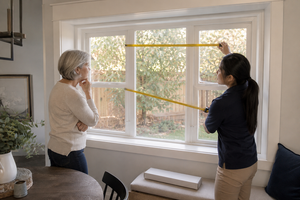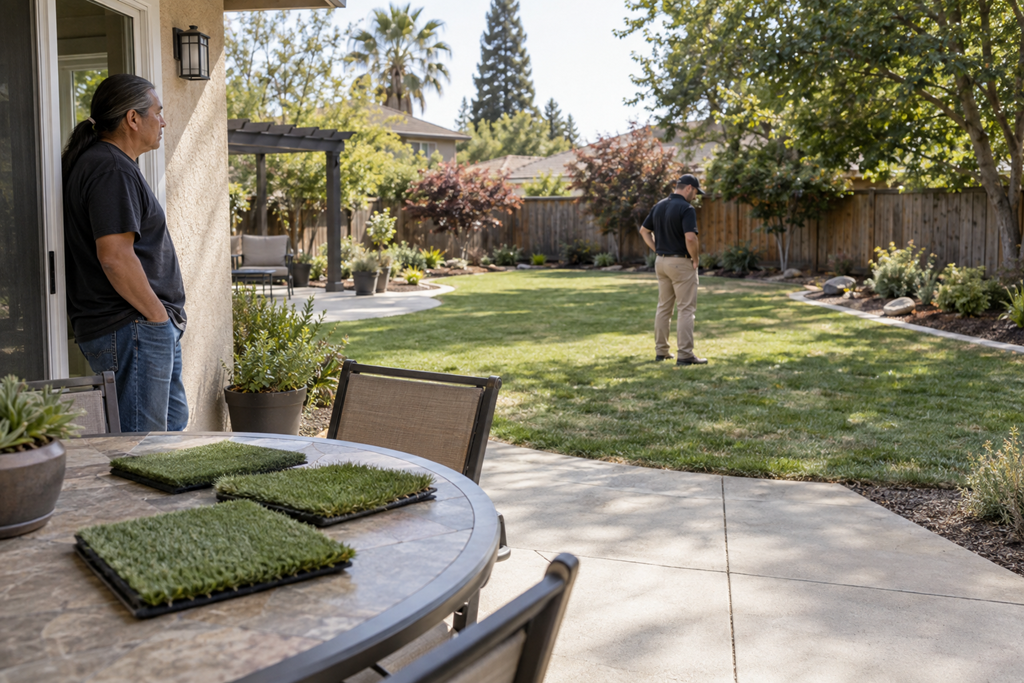
A good artificial turf company should do more than show you samples and quote a price. Before hiring, look at how carefully the company evaluates your actual property, explains what the project includes, and connects its recommendations to how you plan to use the space. The strongest conversations usually make the scope easier to understand rather than pushing you toward a quick decision.
Artificial turf can appear fairly straightforward when you are looking at a small sample. The real project, however, involves the relationship between the turf, the existing yard, surrounding hardscape, edges, access points, drainage considerations, sun exposure, and the way your household expects to use the finished area.
That makes the company’s evaluation process an important part of what you are comparing.
Pay Attention to What the Company Studies Before Recommending Anything
One useful sign is how much attention a prospective company gives the property before discussing a specific product or installation approach.
For a Sacramento-area homeowner, the planned turf area might connect to a patio, walkway, planting bed, pool deck, side yard, fence line, or other part of the property. Some sections may receive much more direct sun than others. Access to the work area may also be different from one property to another.
A thoughtful evaluation should reflect the actual setting rather than treating every yard as interchangeable.
Notice whether the representative seems interested in questions such as:
- Where will the turf be installed?
- How is the area currently used?
- Will pets regularly use it?
- Is it primarily decorative or intended for frequent activity?
- What surfaces or landscaping will border it?
- How will workers and materials access the project area?
- Are there existing property features that need to be considered?
You do not need to know the technical answers yourself. What matters is whether the company appears to be evaluating the project that actually exists instead of quickly fitting your yard into a standard sales presentation.
Turf Samples Should Support the Conversation, Not Replace It
Seeing turf samples can be helpful. They let you compare appearance, texture, density, and other characteristics that may matter to you.
But a sample alone does not explain whether a company has understood your project.
A provider who immediately focuses on product choices without first learning how you plan to use the area may leave important questions unanswered. Conversely, a company that asks about the property and your priorities before narrowing the options can give you more context for understanding why a particular product is being discussed.
This is an important distinction when comparing artificial turf companies: you are not only choosing turf. You are choosing the company responsible for evaluating how that turf will fit into a specific property.
The Estimate Should Help You Understand What You Are Actually Buying
Two artificial turf quotes can appear to describe the same project while including different assumptions or different amounts of work.
That is why comparing only the final price can be misleading.
Before hiring, look for enough detail to understand the proposed scope. Depending on the project, that discussion may include existing surface removal, site preparation, materials, borders or transitions, installation areas, cleanup, access considerations, and other elements specific to the property.
You do not need an estimate filled with technical language. In fact, excessive terminology can make comparison harder if the company cannot explain it plainly.
What you want is an estimate that lets you answer a basic question:
What is this company proposing to do for this property?
If you cannot tell, ask for clarification before comparing the price with another proposal.
Notice Whether Recommendations Match the Way You Will Use the Yard
A company should have some understanding of what you expect from the finished area before recommending a solution.
A homeowner creating a low-use decorative side yard may have different priorities from a household planning a frequently used backyard area. Pet use, regular foot traffic, children’s activities, appearance preferences, direct sun exposure, surrounding landscaping, and maintenance expectations can all shape the conversation.
This does not mean you need to become an artificial turf expert.
It means the provider should be able to connect its recommendation to something you have actually told them about the property or your priorities.
Be cautious when recommendations seem disconnected from your needs or when every question leads back to the same product without a clear explanation.
Sacramento Sun Exposure Is Worth Including in the Conversation
For Sacramento-area properties, sun exposure and seasonal heat can be relevant when discussing an outdoor surface.
A yard with substantial direct sun may create different comfort considerations than an area that receives significant shade. Rather than assuming all artificial turf will feel or perform the same in every location, ask how the company considers sun exposure when discussing available options and realistic expectations.
The useful part of that conversation is not receiving a perfect promise.
It is seeing whether the company acknowledges the conditions of your particular space and explains what those conditions may mean in understandable terms.
Look Beyond the Sales Conversation to the Actual Installation Plan
The person providing the estimate may or may not be the person who performs or supervises the installation.
Before hiring, it is reasonable to understand who will actually be involved once the project begins.
Ask whether the installation is completed by the company’s own crew, another crew working for the company, or another arrangement. You can also ask who will be your point of contact if questions come up during the project.
This is less about finding one universally correct business model and more about avoiding surprises.
You should have a basic picture of what happens after you say yes.
Clear Answers Matter More Than Perfect-Sounding Answers
Artificial turf projects can involve questions homeowners have never needed to ask before. It is normal not to know which details matter when you first start comparing companies.
That makes communication especially useful.
Pay attention to whether the representative can explain unfamiliar terms without making you feel rushed. If you ask why something is included in the proposal, the answer should help you understand the reasoning.
Be wary of answers that stay vague even after you ask for clarification, especially around project scope, materials, responsibilities, changes, warranties, or what is and is not included.
A provider does not need to guarantee that nothing unexpected will ever happen. A more useful sign is whether the company explains how questions or changes would be handled if they arise.
Ask What the Warranty Actually Covers
The word “warranty” can refer to more than one thing.
There may be distinctions between coverage associated with the turf product and coverage associated with installation work. Instead of relying on a broad statement that the project is “covered,” ask the company to explain what applies to the project being proposed.
Useful questions include who provides the coverage, what part of the project it relates to, how long it applies, and whom you would contact if you had a concern later.
The goal is not to assume that the longest-sounding warranty is automatically better. It is to understand what the company is actually promising.
A Few Questions Can Reveal a Lot About the Company’s Approach
You do not need a long interview checklist. A small number of practical questions can make comparing providers much easier:
- What did you notice about my property that affects your recommendation?
- Why are you recommending this turf for the way we plan to use the area?
- What work is included in this estimate?
- What is not included?
- Who will perform or supervise the installation?
- How would changes to the agreed scope be handled?
- What warranties apply to the product and the installation?
- What should I realistically expect from the finished area?
The answers matter, but so does the way the company handles the questions.
A provider that can answer clearly, explain uncertainty when necessary, and connect recommendations to your property gives you more useful information for making a decision.
Watch for Pressure That Makes Comparison Harder
A rushed hiring decision can make it difficult to notice differences between companies.
Be cautious if the conversation becomes heavily focused on getting an immediate commitment before you have had a reasonable opportunity to understand the proposal. The same applies when important questions are brushed aside in favor of discounts, upgrades, or repeated assurances that everything will be taken care of.
You do not need every detail solved before requesting an estimate.
But before hiring, you should understand enough about the proposed project to know what you are agreeing to and why the company is recommending it.
The Company Should Help You Understand the Project Before You Commit
Evaluating an artificial turf company is not simply a matter of choosing the nicest-looking sample or the lowest quote.
Look at how the company approaches your property, how well its recommendations connect to your intended use, how clearly the scope is explained, and how comfortably you can get straightforward answers to reasonable questions.
For Sacramento-area homeowners, that may also mean discussing sun exposure, surrounding landscaping, property access, and how the new turf will relate to the rest of the yard.
The goal is not to predict exactly how every part of the project will unfold. It is to have enough understandable information to compare companies thoughtfully before deciding who should work on your property.