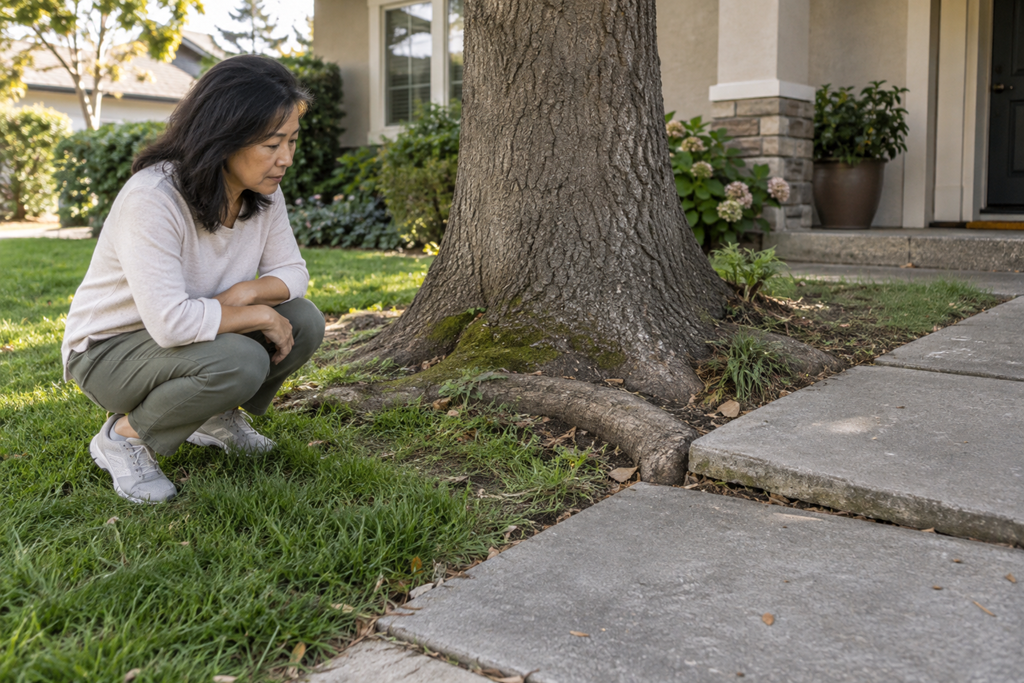
Tree roots that lift a walkway, push against edging, or seem to be affecting a nearby structure should be evaluated before anyone starts cutting roots, grinding them down, or replacing the surrounding surface. The goal is to understand what is actually causing the movement, how important those roots may be to the tree, and which repair options can address the property problem without creating a new one.
For a homeowner, the situation can be frustrating because the visible problem often looks simple. One slab is higher than the next. A row of pavers is no longer level. A fence, patio edge, retaining feature, or other nearby structure appears to be shifting close to a mature tree. It is natural to focus on the root you can see and assume removing it will solve everything.
The better approach is to think about the tree, the affected surface, and the surrounding property as parts of the same decision.
The Visible Root May Be Only Part Of The Story
A root next to a damaged walkway is an important clue, but proximity alone does not always explain everything that is happening.
Surfaces can move for different reasons, and more than one condition may be contributing. The important question is not simply, “Is there a tree root here?” It is whether the root system, surrounding surface, installation conditions, drainage, settling, or other property factors are contributing to the problem and what that means for the available options.
That distinction matters because a repair aimed at the wrong cause may not provide the result the homeowner expects.
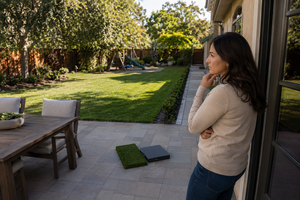
For Sacramento-area homeowners, this can become especially relevant where established landscaping shares limited space with walkways, patios, driveways, fences, or building edges. The closer several property features are to one another, the more important it becomes to understand how they interact before choosing a solution.
Cutting The Root Is Not Automatically The Simplest Fix
When a root is visibly lifting concrete or pushing against another surface, removing the offending portion can seem like the most direct response.
But roots are part of the tree's support and living system. Cutting, grinding, or removing significant roots without understanding their role can potentially affect the tree. That is why root work should not be treated as an ordinary obstacle-removal project.
The key decision is usually broader than whether a particular root can physically be cut.
A qualified tree professional can help evaluate the tree and the root situation before major root disturbance is considered. Depending on what is being affected, the property may also need to be evaluated from the walkway, hardscape, drainage, or structural side of the problem.
That may mean the eventual answer involves more than one type of service rather than expecting one contractor to solve every part of the issue.
Sometimes The Surface Is More Flexible Than The Tree
One useful way to reframe the problem is to ask which part of the situation has the greatest flexibility.
Homeowners sometimes begin with the assumption that the tree must change so the existing walkway, patio, or other feature can remain exactly as it is. In some situations, however, it may be worth discussing whether the surrounding surface can be modified, rerouted, rebuilt, adjusted, or otherwise handled differently while reducing unnecessary disturbance around important roots.
That does not mean preserving every root is always practical or that every hardscape problem can be solved by redesigning the surface.
It simply means there may be more than one possible approach.
Understanding those alternatives before committing to tree work or concrete work can help prevent a situation where one problem is repaired only to create another concern.
Look At The Whole Affected Area, Not Just The Worst Spot
The highest slab, largest crack, or most visible root naturally attracts attention. But focusing only on that spot can make the scope of the problem harder to understand.
It is helpful for an evaluation to consider how far the unevenness or movement extends, where the trunk and major visible roots are located, what other surfaces or structures are nearby, and whether there are additional areas beginning to show similar changes.
This broader view can also make estimates easier to compare.
One provider may be discussing only the damaged walkway. Another may be considering the tree. A third may be looking at a larger property feature. Those proposals may sound very different because they are addressing different portions of the problem.
Before comparing prices, make sure you understand what each provider believes is happening and exactly what their proposed work is intended to address.
Be Careful With Simple Cause-And-Effect Explanations
Statements such as “that root caused all of this” or “we can just cut the root and fix the concrete” may sound reassuring because they make the problem seem straightforward.
A clear explanation should go further.
The provider should be able to explain what they observed, what part of the problem falls within their expertise, what assumptions they are making, and whether anything else should be evaluated before work begins.
You do not need a highly technical explanation. You do need one that makes sense.
Be cautious when a complicated situation involving a mature tree and nearby property features is reduced to a quick recommendation without much discussion of the relationship between them.
Questions That Can Make An Evaluation More Useful
A few focused questions can help you understand what a tree service or other local professional is actually recommending:
- What makes you think the roots are contributing to this particular area of movement?
- Would the proposed work disturb roots that may be important to the tree?
- Are there alternatives that involve changing the walkway or surrounding surface instead?
- Is there another part of the property that should be evaluated before deciding?
- What portion of the problem does your proposed work address?
- Could additional work by another type of professional be needed?
- What should I expect the affected area to look and function like after the work is finished?
The goal is not to turn the consultation into an interrogation. It is to make sure the recommendation connects clearly to the problem you are trying to solve.
The Right Decision May Involve More Than One Priority
Root-related property problems can involve competing goals.
You may want to keep an established tree. You may also need a walkway that is usable and reasonably even. You may be concerned about a patio, fence, driveway, wall, or another nearby feature. Cost, disruption, appearance, and long-term maintenance may also influence the decision.
Those priorities do not always point toward one obvious solution.
That is why it can be useful to separate the decision into two questions: what is happening, and what are the reasonable ways to respond?
Once you have a clearer understanding of the first question, comparing the second becomes much easier.
Avoid Treating A Temporary Surface Fix As The Whole Answer
Another common source of confusion is repairing only what can be seen above ground without understanding what is happening below or around it.
A surface can sometimes be repaired or replaced while the underlying relationship between the tree and surrounding space remains unchanged. That does not automatically mean the repair is inappropriate, but homeowners should understand what the proposed work is expected to accomplish.
Ask whether the recommendation addresses the suspected cause, improves only the affected surface, or does both.
That distinction helps set realistic expectations before money is committed.
A Better Decision Starts With Understanding The Relationship
When tree roots appear to be affecting a walkway or nearby structure, the most useful first step is not deciding what to cut or remove. It is understanding the relationship between the tree, the roots, the affected surface, and the surrounding property.
A qualified evaluation can help clarify whether the visible roots are contributing to the problem, what tradeoffs different options may involve, and whether more than one professional perspective would be useful.
That gives Sacramento-area homeowners a stronger basis for comparing recommendations and choosing an approach without making a rushed decision around an established tree or an important property feature.