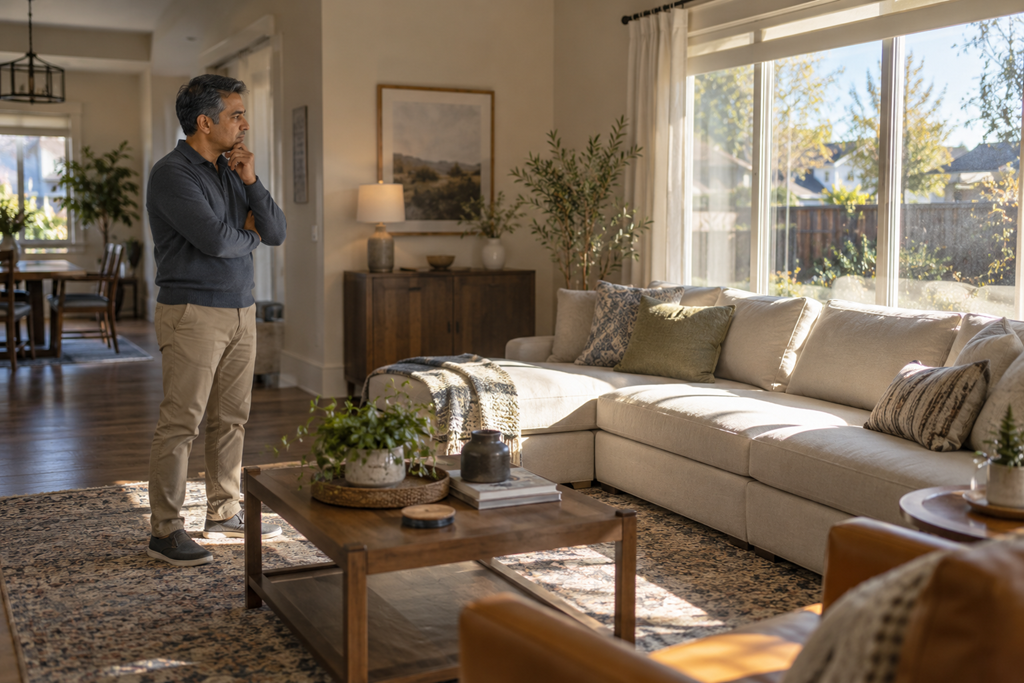
A sunny room can feel too hot, bright, or uncomfortable even when the windows themselves are still in good condition. Before assuming the windows need to be replaced, it can help to separate the problem into three parts: how much direct sun enters the room, where glare lands during the day, and how much heat builds up around the glass. Those details can point toward simpler comfort improvements, including shading, solar screens, interior window treatments, or other ways to manage sunlight more effectively.
For Sacramento-area homeowners, this distinction can be especially useful when a room becomes noticeably less comfortable during periods of strong sun exposure. A west-facing family room may feel fine in the morning but difficult to use later in the day. A home office may become uncomfortable because sunlight falls directly across a desk or computer screen. A bedroom may stay brighter or warmer than the rest of the house.
The window may be part of the situation, but replacing it is not automatically the only way to improve the room.
Start With What Is Actually Making the Room Uncomfortable
“Too sunny” can describe several different problems.
One room may have harsh glare but otherwise feel comfortable. Another may become noticeably warmer during the afternoon. A third may have direct sunlight landing on the exact place where someone normally sits, works, watches television, or sleeps.
Those problems can call for different responses.
Before comparing products or talking with a local provider, pay attention to when the problem occurs and what you actually want to change. The useful question is not simply, “How do I block the sun?”
It is more specific:
What part of the sunlight is making this room harder to use?
That distinction can keep a relatively focused comfort problem from turning too quickly into a much larger window project.
The Existing Window May Not Be the Main Problem
It is easy to associate an uncomfortable sunny room with inadequate windows. Sometimes the condition of the window does deserve attention, particularly when there are separate concerns about operation, deterioration, air leakage, damaged components, or other window-related problems.
But sunlight itself can make an otherwise usable window area uncomfortable.
If strong sun is reaching the glass for hours at a time, the decision may be more about solar exposure and shading than about replacing the entire window.
That is an important reframe because window replacement and sunlight management are different decisions.
A homeowner who mainly wants to reduce glare or limit direct afternoon sun may have options that leave the existing windows in place.
Exterior Solar Screens Address Sunlight Before It Fully Reaches the Room
Solar screens are one option worth discussing when direct sun exposure is the main concern.
Unlike an interior shade that manages sunlight after it has passed through the glass, an exterior solar screen is positioned outside the window. Its purpose is to reduce some of the sunlight reaching the glass while still allowing outward visibility and airflow characteristics that depend on the particular screen and installation.
This can make solar screens particularly relevant for windows that receive sustained direct sun.
The tradeoff is that reducing incoming sunlight also changes the amount of natural light and the view through the window. A denser-looking screen may provide more shading but may also make the window feel darker from inside.
That is why choosing a solar screen is not simply about finding the option that blocks the most sunlight. It is about balancing comfort, daylight, appearance, visibility, and the way the room is actually used.
Interior Window Treatments Solve a Different Part of the Problem
Interior shades, blinds, curtains, and similar treatments can also make sunny rooms easier to use.
They can be especially helpful when the primary concern is glare, privacy, or controlling where sunlight lands inside the room.
For example, someone working near a window may not need the entire room darkened. They may simply need enough light control to keep direct sun off a computer screen during a certain part of the day.
The same idea applies to living rooms and bedrooms. The most useful solution may be the one that controls sunlight during the hours when the room is occupied without making the space unnecessarily dark at other times.
Interior treatments and exterior solar screens therefore should not automatically be viewed as interchangeable. They affect the sunlight at different points and can create different experiences inside the room.
Look at the Room, Not Just the Window
One of the easiest mistakes is evaluating the window by itself.
The better question is how sunlight interacts with the entire room.
Notice where the strongest light falls during the uncomfortable part of the day. It may be hitting a sofa, dining area, bed, television, desk, or frequently used walkway. Two identical windows can create very different comfort problems simply because of their orientation and the way the rooms are arranged.
This is also why every window in the house may not need the same treatment.
A Sacramento-area homeowner may discover that only one or two highly exposed windows are creating the problem. Another room may need glare control rather than substantial shading.
Understanding that difference can make conversations with local service providers more focused.
More Shade Is Not Automatically Better
When a room feels too warm or bright, completely blocking the sunlight can sound like the obvious answer.
But there can be a point where solving one problem creates another.
A room that becomes significantly darker may require more artificial lighting during hours when natural daylight would otherwise be useful. A screen or treatment that limits the view more than expected may also change how the room feels.
The goal is usually not maximum darkness.
It is enough sunlight control to make the room more comfortable while preserving the daylight, visibility, and atmosphere you still want.
That balance is worth thinking through before choosing a screen material, shade, or other window treatment.
The Time of Day Can Tell You a Lot
A sunny room may not be uncomfortable all day.
Morning light can be welcome in one space while late-afternoon sunlight becomes difficult in another. Some rooms may experience only a short period of intense glare, while others receive strong exposure for much longer.
Paying attention to this pattern before requesting an estimate gives you something specific to describe.
Instead of telling a provider, “This room gets really hot,” you can explain that the room becomes uncomfortable during a particular part of the day and identify which windows receive the strongest direct sun.
That can lead to a more useful discussion about what type of sunlight control is appropriate.
You May Not Need the Same Solution on Every Window
Uniformity can be appealing, especially from the exterior of a home, but comfort problems are often uneven.
One side of a house may receive substantially more direct sun than another. A window serving a rarely used room may not need the same treatment as one beside a frequently occupied seating area.
That does not mean exterior appearance should be ignored. It means the comfort problem and the visual result should both be part of the conversation.
If solar screens are being considered, ask how different screen options will look from both inside and outside the home and whether treating selected windows will create an exterior appearance you are comfortable with.
Questions to Ask Before Choosing a Sun-Control Option
A short conversation with a provider can be more productive when the questions are tied to the room rather than just the product.
Consider asking:
- How will this option affect direct sunlight, glare, natural light, and outward visibility?
- Would you recommend treating every window in this room or only the most exposed ones?
- How noticeable will the screen or treatment be from inside and outside?
- What differences should I expect between lighter and darker shading options?
- Can the proposed solution be removed, adjusted, or changed later if my needs change?
- What should I expect for cleaning, maintenance, and normal use?
The answers should help you understand the tradeoffs rather than simply push you toward the most aggressive sun-blocking option.
When a Broader Window Evaluation May Still Make Sense
Sun-control products can address sunlight, but they are not a substitute for evaluating other window problems.
If your concern includes damaged frames, difficult operation, noticeable deterioration, moisture issues, drafts, or other conditions unrelated to direct sunlight, those concerns may deserve a separate discussion with an appropriate professional.
Keeping the issues separate can make the decision easier.
You can ask one question about the physical condition of the window and another about how to make the room more comfortable during strong sun exposure.
That helps prevent a sunlight problem from being treated automatically as a replacement-window problem.
Improving Comfort Can Be a More Focused Decision
A room that becomes uncomfortable in strong sunlight does not automatically need new windows. The first step is understanding whether the real problem is direct sun, glare, heat buildup near the glass, privacy, or where sunlight falls during the hours the room is used.
Once that is clear, options such as exterior solar screens, interior shades, or other forms of shading become easier to compare.
For Sacramento-area homeowners, that can turn a vague concern about an uncomfortable room into a much more focused local service decision: what needs to change, which windows matter most, and how much sunlight you actually want to keep.