A Sacramento lawn usually stays healthier in hot weather when the goal is to reduce stress rather than force nonstop green growth. That means paying attention to how evenly water reaches the soil, avoiding overly short mowing, limiting heavy traffic during extreme heat, and noticing whether brown areas come from irrigation gaps, compacted soil, or another problem—not simply assuming the lawn needs more water.
Hot-weather lawn problems can be frustrating because several different issues may look almost identical from a distance. A dry-looking patch might be receiving less water than the surrounding grass, but it could also be growing over compacted soil, sitting near reflective pavement, or recovering from being cut too short.
Understanding those differences can help Sacramento-area homeowners make better maintenance decisions and have more useful conversations with landscaping professionals.
A Hot Lawn Does Not Always Need More Water
When grass begins losing color during a hot stretch, increasing the irrigation time may seem like the obvious response. Sometimes additional water is appropriate, but longer watering does not correct every problem.
If sprinkler coverage is uneven, running the system longer may soak one part of the lawn while another area remains dry. Water can also run away from compacted or sloped areas before it reaches the root zone. In those situations, the issue may be distribution or absorption rather than the total amount of water being used.
Overwatering can create its own problems. Constantly saturated soil may weaken roots, encourage unwanted growth, or leave the lawn less prepared to handle heat between watering periods.
The more useful question is not simply, “Does the lawn need more water?” It is, “Is the water reaching the right places and moving into the soil effectively?”
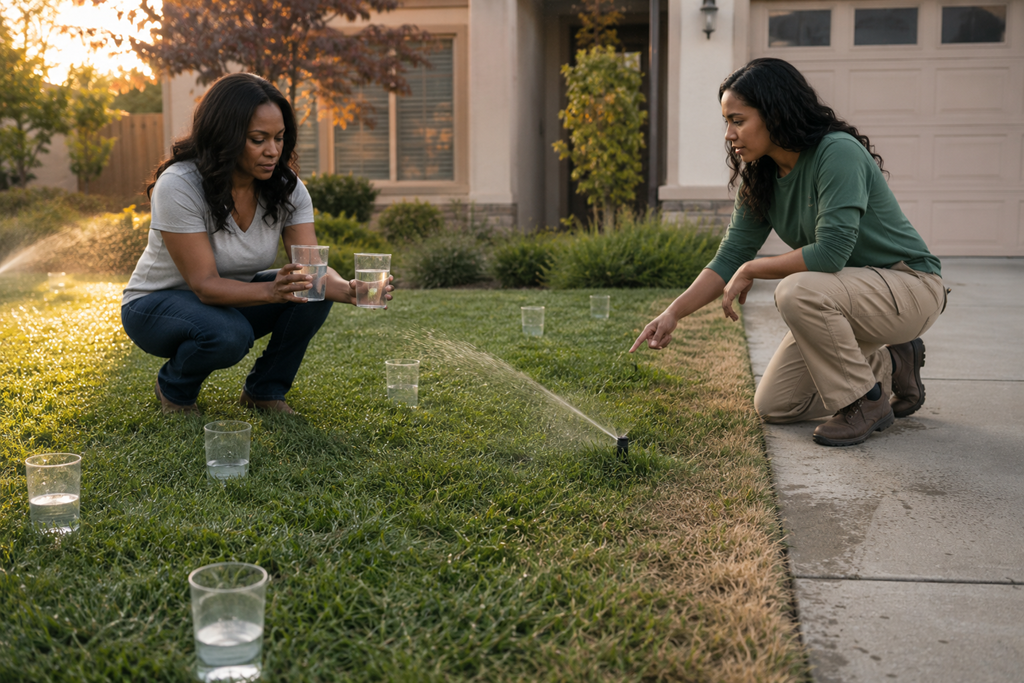
Even Coverage Matters More Than Longer Run Times
A lawn can receive plenty of water overall and still develop dry sections.
Sprinkler heads may be blocked by taller grass, shifted out of position, damaged, or unable to reach the edges of the lawn. Changes in water pressure can also affect how evenly a system performs. Areas beside driveways, sidewalks, walls, or fences may experience additional heat and may dry differently from the center of the yard.
Watch for patterns rather than isolated blades of grass. A narrow dry strip along one edge, a circular brown area near a sprinkler head, or repeated dryness in the same corner may point toward a coverage issue.
Runoff is another useful clue. Water moving onto pavement or collecting in a low area does not necessarily mean the lawn has received what it needs. It may indicate that the soil is not absorbing water efficiently or that the irrigation pattern needs to be evaluated.
A qualified landscaping or irrigation professional can inspect how the system distributes water and help determine whether the problem involves coverage, soil conditions, equipment, or a combination of factors.
Mowing Can Either Protect or Expose the Lawn
Grass that is cut very short may look neat immediately after mowing, but short blades provide less shade for the soil. During hot weather, that can increase moisture loss and expose the lawn to additional stress.
Removing too much growth at one time can also leave the grass looking pale or uneven. The lawn may then need to use limited energy to recover while it is already dealing with heat.
Allowing the grass to maintain an appropriate height can help shade the soil and support deeper root development. The appropriate height depends partly on the type of grass, so there is no single setting that works for every Sacramento-area lawn.
Mower condition matters as well. A dull blade tears the grass instead of cutting it cleanly. Torn tips may turn brown and make an otherwise healthy lawn appear dry or damaged.
Before assuming the irrigation system is failing, consider whether the lawn’s appearance changed shortly after mowing or whether certain sections were cut more closely than others.
Heat Changes What the Lawn Can Handle
A lawn that normally tolerates regular use may become more vulnerable during prolonged heat.
Repeated foot traffic, pets, lawn furniture, children’s play areas, delivery routes, and maintenance equipment can compress the soil or wear down grass that is already under stress. The most-used sections may begin thinning even when the rest of the lawn remains relatively healthy.
Moving activities away from visibly stressed areas can give the grass time to recover. It may also reveal whether the problem is connected to traffic rather than watering alone.
Heavy feeding is another area where expectations matter. Trying to push rapid growth during severe heat can place additional demand on the lawn. Products and treatment schedules should be selected for the specific grass type, soil condition, and season rather than applied simply because the lawn has lost color.
A professional should be able to explain what the lawn can realistically support during hot conditions instead of promising that every section will remain perfectly green regardless of exposure or water use.
Some Color Change Can Be a Stress Response
Not every lawn responds to hot weather by maintaining the same color and growth rate.
Depending on the turf variety and property conditions, grass may slow its growth or temporarily lose some color as it conserves resources. That does not automatically mean the entire lawn is dying.
The important distinction is whether the grass is experiencing manageable seasonal stress or whether there is an underlying problem causing continued decline.
Signs such as footprints remaining visible, blades folding inward, or a dull blue-gray appearance may suggest that the grass is under moisture stress. However, persistent bare areas, loose turf, unusual spots, or damage that continues spreading may deserve a closer evaluation.
This is one reason visual diagnosis from a single photograph can be unreliable. A landscaper may need to consider the grass type, irrigation pattern, soil moisture, sun exposure, mowing habits, drainage, and recent changes before recommending a solution.
Brown Patches Need a Cause, Not a Guess
Brown areas are often treated as if they all have the same cause. In reality, similar-looking patches can develop for very different reasons.
Possible contributing factors include:
- Uneven sprinkler coverage
- Compacted soil
- Excessive foot or pet traffic
- Very short mowing
- Heat reflected from pavement or walls
- Poor drainage or excessive moisture
- Grass varieties responding differently to heat
- Insect activity or lawn disease
- Irrigation equipment that is damaged or obstructed
Applying more water, fertilizer, or treatment without understanding the cause can waste resources and may make the original problem harder to identify.
A useful landscaping evaluation should connect the visible pattern to a likely cause. The provider should also explain what evidence supports that conclusion and whether a smaller correction can be tried before a larger lawn renovation is considered.
Soil Conditions Influence How Water Performs
The surface of a lawn does not always reveal what is happening underneath it.
Compacted soil can prevent water from moving downward effectively. A layer of built-up organic material may also affect how moisture reaches the root zone. In other areas, fast-draining soil may lose moisture sooner than expected.
Two lawns with similar irrigation schedules can therefore respond very differently during Sacramento heat.
A landscaping professional may look at how quickly water enters the soil, whether roots appear shallow, and whether the same areas repeatedly develop runoff or dryness. This can help separate an irrigation-timing problem from a soil-related problem.
The goal is not necessarily to add more products or services. It is to understand which condition is limiting the lawn so the response can be more focused.
What To Ask A Landscaping Professional
When heat-related lawn problems continue despite routine care, a professional evaluation may help. The conversation should go beyond asking how much additional water the lawn needs.
Useful questions include:
- Does the irrigation system cover the lawn evenly?
- Are certain areas experiencing runoff, compaction, or poor absorption?
- Is the mowing height appropriate for this type of grass?
- Could pavement, walls, shade, or foot traffic be affecting specific sections?
- Does the lawn appear seasonally stressed, or is there evidence of another problem?
- What improvement is realistic during the hottest conditions?
- Can the problem be addressed in one area, or is broader work being recommended?
A provider should be willing to explain what was observed and how the recommendation connects to the visible problem.
Be cautious when a recommendation immediately jumps to extensive replacement, frequent treatments, or major irrigation changes without first examining coverage patterns, soil conditions, mowing practices, and the affected areas.
A Healthier Lawn Starts With Less Guessing
Keeping a lawn healthier during hot Sacramento weather is usually less about forcing constant growth and more about reducing avoidable stress.
Even irrigation coverage, appropriate mowing, realistic expectations, reduced traffic, and attention to soil conditions can all influence how well the grass handles heat. Most importantly, brown or thinning areas should be evaluated by pattern and likely cause rather than treated automatically with more water.
Before hiring a landscaping professional, look for someone who can explain what is happening, identify the factors affecting different parts of the lawn, and recommend a response that fits the property instead of offering the same solution for every yard.