Painting a room can quickly become messier than expected when furniture, floors, fixtures, and everyday belongings are left exposed. Even a small interior painting project can involve accidental drips, paint splatters, dust, and repeated movement around the room. Preparing the space before opening a paint container helps contain the work, protect surfaces that are not being painted, and make cleanup more manageable without turning the entire home into a project area.
The goal is not necessarily to empty the room completely. It is to create enough working space, protect what remains, and establish a clear area where painting supplies can be handled without putting nearby belongings at unnecessary risk.
Clear the room based on what actually needs protection
A room does not have to be completely empty before painting begins. However, furniture and belongings can become obstacles when they are too close to walls, doorways, or other surfaces being painted.
Start by looking at the room from the perspective of someone moving around it with painting supplies.
Consider which objects could be bumped, splashed, stepped around, or accidentally knocked over.
Lightweight furniture, decorative items, floor lamps, plants, and small household belongings can often be moved into another room. Removing these items creates more space and reduces the number of surfaces that require individual coverings.
Pay particular attention to:
- Wall decorations, framed pictures, and removable artwork
- Curtains and other window coverings near painted surfaces
- Small tables, chairs, and portable furniture
- Electronics, charging cables, and fragile belongings
- Rugs, baskets, pet supplies, and objects resting near baseboards
If large furniture cannot reasonably be moved out, consider whether it can be repositioned away from the painting area without blocking access.
Avoid attempting to move unusually heavy furniture alone. If an item cannot be relocated without excessive effort or risk of damage, protecting it where it stands may be more reasonable.
The important distinction is between objects that need to leave the room and objects that can remain without interfering with the work.
Protect the floor before moving painting supplies into place
Floors are particularly vulnerable during interior painting because they sit directly beneath the work area.
Paint can drip from brushes, rollers, containers, or other materials. Foot traffic can also spread paint or debris beyond the immediate work zone if surfaces are left unprotected.
Before beginning, identify the flooring material and choose a covering appropriate for that surface.
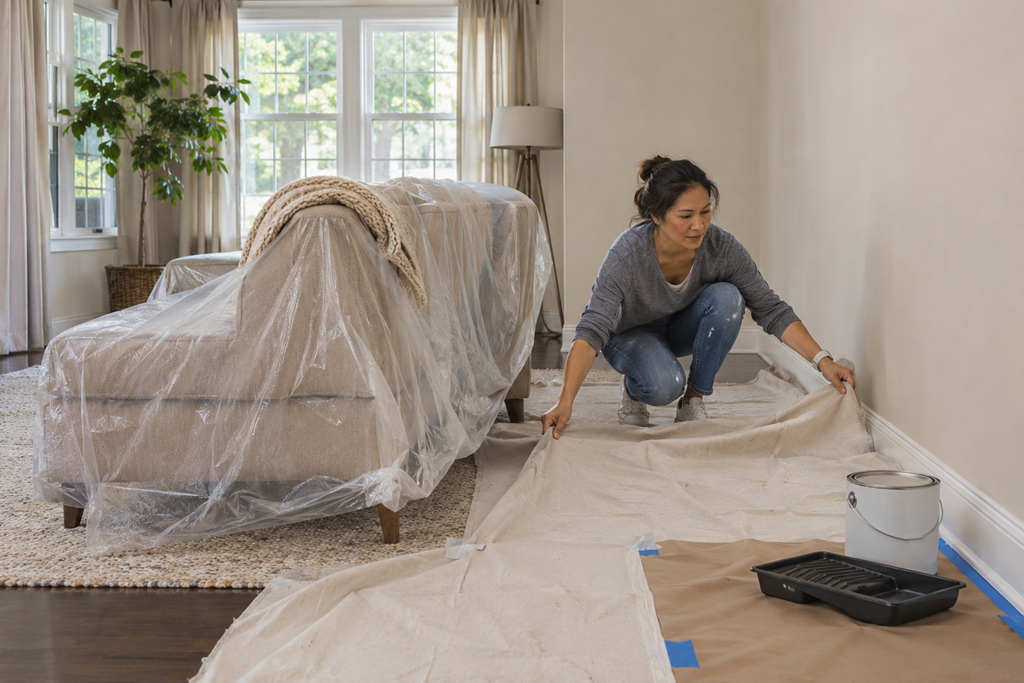
Canvas drop cloths, suitable protective floor coverings, and other temporary surface-protection materials can help separate the painting activity from finished flooring.
However, not every covering behaves the same way.
Thin plastic sheeting may allow spilled paint to remain on its surface, creating a slipping or tracking concern. Some coverings can shift underfoot, while others may be unsuitable for particular floor finishes.
For hardwood, laminate, vinyl, tile, and carpet, follow relevant flooring and protection-material guidance rather than assuming one covering is appropriate everywhere.
A few preparation details deserve attention:
- Cover the floor beneath the surfaces being painted, including areas where supplies will be handled.
- Extend protection into nearby traffic areas when people will repeatedly enter or leave the room.
- Keep coverings reasonably flat and secure so they do not create unnecessary tripping hazards.
- Avoid applying adhesive directly to delicate flooring finishes unless the product is specifically suitable for that surface.
- Check that floor protection does not block doors or create unstable walking surfaces.
Protecting only a narrow strip along the wall may leave other parts of the room exposed when supplies are carried or repositioned.
The coverage should reflect how the room will actually be used during painting.
Cover furniture that cannot be removed
Furniture remaining in the room needs a different type of preparation from furniture that can be moved elsewhere.
A sofa, bed frame, dresser, or large cabinet may be easier to protect in place, provided it does not prevent access to the painting area.
Move suitable furniture away from the walls, leaving enough working room without crowding the center of the space.
Then cover exposed surfaces with appropriately sized protective materials.
Lightweight plastic furniture coverings can help shield belongings from incidental splatters and dust. Other protective fabrics may be suitable depending on the furniture and project conditions.
Choose coverings that can remain positioned over the items without constant adjustment.
Avoid placing paint containers or heavy equipment on top of covered furniture. A protective covering is intended to reduce exposure, not turn the furniture into a project workbench.
It is also worth considering where belongings will be placed after they leave the room.
Moving furniture into a hallway where it blocks normal movement simply transfers the problem elsewhere.
A nearby unused room or another suitable temporary storage area may be more manageable.
Give trim, fixtures, and nearby surfaces their own attention
Not every surface in the room is supposed to receive paint.
Door hardware, window frames, baseboards, built-in cabinets, and nearby fixtures may need protection depending on the painting scope.
Before applying protective materials, identify which surfaces will be painted and which need to remain untouched.
Painter's tape can help define boundaries around certain trim and adjacent surfaces when the tape is compatible with the finish and used according to its instructions.
However, tape is not a guarantee against paint bleeding or surface damage.
Some finishes may be sensitive to adhesives, particularly if they are delicate, deteriorating, or recently painted.
Check compatibility and follow the manufacturer's application and removal guidance.
Removable items such as decorative wall hangings and freestanding accessories are generally easier to protect by relocating them.
Electrical outlets, switches, permanently attached fixtures, and other built-in features deserve additional care.
Do not treat electrical disassembly as routine room preparation. Avoid inserting paint or liquids into electrical components, and do not remove switches, outlets, or wiring.
When an attached fixture requires technical removal or modification, leave that work to someone qualified.
A prepared room should have clear painting boundaries without creating a separate repair or electrical project.
Remove ordinary dust and loose debris before painting
A room can be protected from paint spills and still become messy if dust and loose debris remain throughout the work area.
Dust resting on baseboards, window ledges, furniture, and flooring can be disturbed when coverings are placed or people move around the room.
Before installing protective coverings, take care of ordinary household cleaning.
Remove loose debris, vacuum accessible floors, and wipe appropriate surfaces with materials suitable for their finishes.
Allow cleaned surfaces to dry as needed before applying paint or adhesive masking materials.
This preparation also makes it easier to see whether surfaces have ordinary dirt or conditions that may require closer attention.
For example, visible moisture damage, extensive peeling, or suspicious deteriorating materials should not automatically be treated as routine dust.
In older homes, disturbing existing paint through sanding, scraping, or demolition can involve additional hazards, including possible lead exposure. Homes built before 1978 deserve particular caution because lead-based paint may be present.
If the project requires disturbing potentially hazardous coatings or materials, seek appropriate professional guidance rather than treating that work as ordinary cleaning.
For a straightforward room-painting project, basic cleaning and protection are usually separate from invasive surface preparation.
Establish one place for painting supplies
One overlooked cause of painting messes is the movement of open containers and supplies from one part of the room to another.
When brushes, rollers, trays, wipes, and containers are scattered around the floor, it becomes harder to avoid accidental contact with paint.
A designated supply area can help keep the project contained.
Choose a stable location that remains accessible without blocking the doorway or the normal working path.
Place painting materials on an appropriate protective covering and keep containers upright.
A paint tray or container should rest on a stable surface rather than on furniture, loose plastic, or an uneven pile of materials.
Keep clean cloths or other appropriate cleanup materials nearby so minor drips can be addressed promptly according to the paint manufacturer's instructions.
It is also useful to keep unnecessary household items out of this supply area.
For example, phones, drinking glasses, personal belongings, and children's items do not need to share the same surface as painting materials.
The purpose is not to create a complicated organization system. It is to reduce unnecessary movement and prevent ordinary household objects from becoming part of the painting activity.
Keep the mess inside the painting area
Room preparation does not end at the walls.
Paint can travel beyond the immediate work area on shoes, coverings, tools, or objects being carried through a doorway.
Consider how people will enter and leave the room.
An unobstructed path makes it easier to move supplies without brushing against furniture or stepping over loose objects.
Protect nearby flooring when necessary, particularly if painting activity requires repeated trips through a hallway or adjoining space.
Keep children and pets away from the active painting area. Their normal movement can make containment more difficult and may expose them to wet paint, equipment, or household materials that should not be handled casually.
Ventilation also needs attention.
Follow the paint manufacturer's ventilation and handling instructions, and avoid assuming that an open doorway alone provides adequate airflow.
Do not block required exits or ventilation openings with temporary coverings.
When the room is not being actively used, keep painting supplies secured and unnecessary foot traffic out.
A defined work boundary helps the rest of the household remain separate from the project.
Check the room before opening the paint
The most useful preparation test happens before painting begins.
Stand in the doorway and look across the room.
Can the surfaces being painted be reached without repeatedly moving furniture? Are floor coverings positioned where drips and foot traffic are likely? Are nearby belongings protected? Is there a stable place for supplies?
Look for details that are easy to overlook, such as a curtain hanging beside a window, a rug partly exposed beneath furniture, or a charging cord crossing the working area.
Also consider whether the room can remain reasonably protected as the work progresses.
Coverings that shift every time someone walks across them may need to be repositioned or replaced with a more suitable option.
If a painting project will take several sessions, maintaining the protected area between sessions may be more useful than repeatedly dismantling and rebuilding it.
Keep containers closed when not in use, follow appropriate storage instructions, and check the area before allowing normal household activity to resume.
A cleaner painting project starts with manageable preparation
Preparing a room for painting is largely about controlling where the work happens.
Removing smaller belongings, protecting exposed surfaces, keeping supplies in one location, and maintaining clear walking paths can reduce avoidable mess without requiring the entire room to be emptied.
The preparation should match the size of the project, the room's contents, and the surfaces that need protection.
If you're gathering materials for an upcoming painting project, the Home Project Preparation And Protection category at Sacramento Local Pros Store offers a place to explore household protection and project-preparation products. These materials can support room preparation, but purchasing additional supplies is not necessary when suitable materials are already available.
Disclosure: Sacramento Local Pros may earn a commission from qualifying purchases made through links on the Sacramento Local Pros Store.
The best starting point is a room where the painting area is accessible, surrounding belongings are protected, and ordinary household activity is kept separate from the work.