Preparing a timeline before an immigration consultation means writing down the major dates, events, notices, filings, travel history, family changes, work changes, and immigration-related moments that may help an attorney understand your situation faster.
It does not mean trying to argue your case, interpret the law, or decide what matters legally on your own. The goal is simpler: to help the consultation start with a clear sequence instead of a scattered pile of memories, documents, and questions.
For many Sacramento families and residents, immigration issues do not happen in a straight line. A person may have moved, changed jobs, received mail from an agency, helped a family member, renewed a document, missed a deadline, traveled, married, divorced, or dealt with a past application. By the time they contact an immigration lawyer, the story may feel tangled.
A basic timeline gives that story a starting shape.
A Timeline Helps Turn Scattered Details Into A Clear Conversation
Immigration consultations often involve more than one document or one question. Even when the main concern feels simple, the background may matter.
A timeline helps organize details such as:
- when something happened
- what document or notice was received
- who was involved
- whether a response was sent
- whether travel, work, school, marriage, or family changes happened around the same time
- what the reader is unsure about
This can make the consultation more focused. Instead of spending the first part of the meeting trying to remember what happened first, the reader can give the lawyer a clearer overview and let the attorney ask better follow-up questions.
The timeline does not need to be perfect. It just needs to be honest, organized, and easy to understand.
The Point Is Preparation, Not Legal Interpretation
One common mistake is thinking the timeline has to explain what every event means legally. That is not the reader’s job.
A person preparing for an immigration consultation should avoid guessing at legal conclusions, especially if they are unsure. Instead of writing something like “this caused the problem,” it is usually more useful to write what happened in plain language.
For example, a timeline might say:
- received a notice
- submitted a form
- moved to a new address
- changed employers
- traveled outside the country
- missed a document request
- spoke with a prior representative
- received a decision
- became unsure about next steps
The immigration lawyer can then review the facts and explain what may or may not matter based on the person’s specific situation. That distinction matters because immigration situations can depend on details that are not obvious to the person experiencing them.
Start With The Events You Can Remember Clearly
A useful timeline can begin with the clearest events first. That might be a date on a notice, a travel date, a filing date, a marriage date, a move, a work change, or the day the person realized something needed professional attention.
From there, the timeline can be filled in around those anchor points.
The reader does not need to remember every detail before scheduling a consultation. If some dates are uncertain, they can write “around this time” or “not sure” next to the item. That is often more helpful than leaving the event out entirely.
The important thing is to separate known facts from uncertain memories.
Documents And Dates Should Work Together
A timeline becomes more useful when it connects events to documents without overexplaining them.
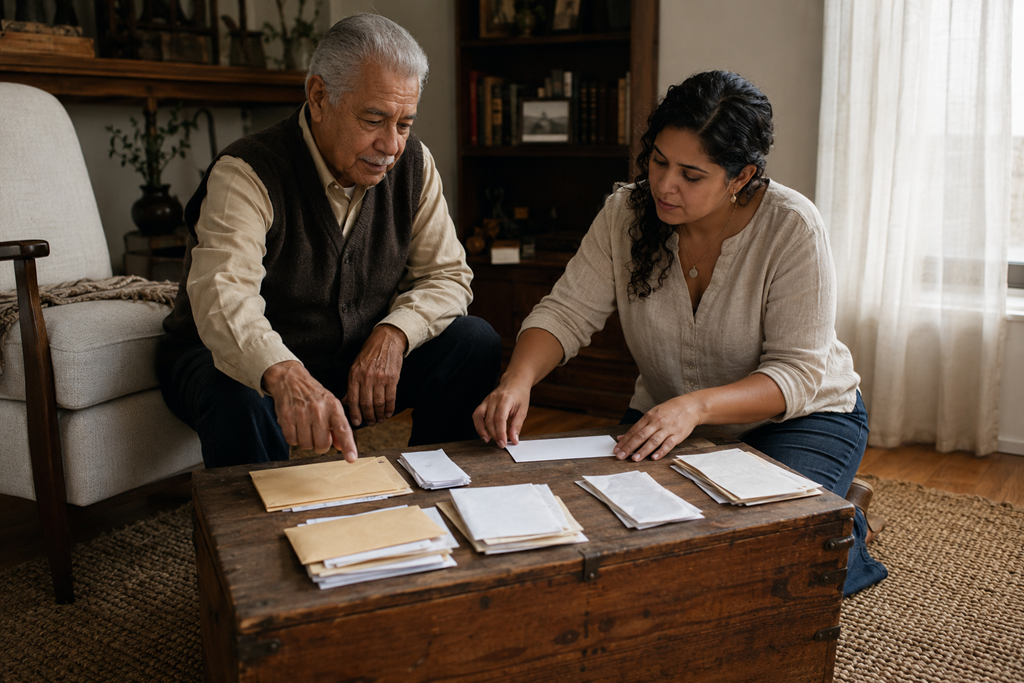
For example, if a person has several envelopes, notices, applications, receipts, or copies of forms, they can place them in rough date order and note which event each document seems connected to.
This does not require legal analysis. It is simply a way to help the consultation move more efficiently.
Instead of handing over a folder full of unrelated papers and trying to explain everything from memory, the reader can say, “These are in the order I think they happened, and these are the parts I’m unsure about.”
That kind of preparation can help an immigration attorney identify which documents need closer review.
A Timeline Can Reveal Missing Pieces
Preparing a timeline often helps people notice gaps before the consultation.
They may realize they are missing a copy of a notice, do not remember when a form was filed, cannot find proof of a past address, or need to ask a family member about a date. Those gaps are not a reason to panic. They are simply useful to identify.
A timeline can also show where the story becomes unclear.
For example, the reader may remember receiving a letter but not remember what happened after that. Or they may know a family member submitted something but not have a copy. Writing down the uncertainty gives the lawyer a clearer place to begin asking questions.
In that way, the timeline is not only a record of what happened. It is also a map of what still needs clarification.
Keep The Timeline Plain And Chronological
The most helpful timeline is usually simple.
A reader can organize it by date or approximate time, then add a short description of what happened. The description should be brief and factual. Long explanations, emotional details, and legal guesses can make the timeline harder to review.
A simple format might include:
- date or approximate date
- what happened
- related document, if any
- question or uncertainty
This keeps the information organized without turning it into a legal argument.
For Sacramento-area residents preparing to speak with an immigration lawyer, this can make the first consultation feel less scattered. It gives the professional a clearer starting point while still leaving room for questions, review, and advice.
What Not To Leave Out Just Because It Feels Small
Some people leave out details because they assume they are not important. Others include everything because they are afraid of missing something. Both reactions are understandable.
A better approach is to include major events and clearly mark anything uncertain.
Details worth noting may include immigration filings, notices, interviews, travel, address changes, marriage or divorce, birth of children, work authorization issues, name changes, criminal or court-related concerns, prior legal help, missed appointments, returned mail, or any moment when the person was told something was approved, denied, delayed, expired, or incomplete.
This does not mean every detail will matter legally. It means the attorney has a better chance of spotting what is relevant.
Questions To Bring With The Timeline
A timeline is most useful when it helps the reader ask better questions.
Helpful consultation questions may include:
- Are there events on this timeline that you need more information about?
- Which documents should I try to locate before a follow-up meeting?
- Are any dates especially important for you to review?
- Is there anything I should avoid guessing about?
- What information would help you understand the situation more clearly?
These questions keep the consultation focused on preparation and understanding. They also help the reader avoid trying to solve the legal issue alone before getting professional guidance.
A Clear Timeline Can Make The Consultation More Productive
Preparing a timeline before an immigration consultation is not about having everything figured out. It is about making the conversation easier to follow.
A clear timeline can help the reader organize what happened, connect documents to events, identify missing information, and explain uncertainty without guessing. It gives an immigration lawyer a better starting point for asking questions and reviewing the situation.
For Sacramento residents preparing to speak with a qualified immigration attorney, that kind of organization can make the first conversation feel less confusing and more focused.
The takeaway is simple: bring the story in order, mark what you do not know, and let the legal professional help you understand what matters.