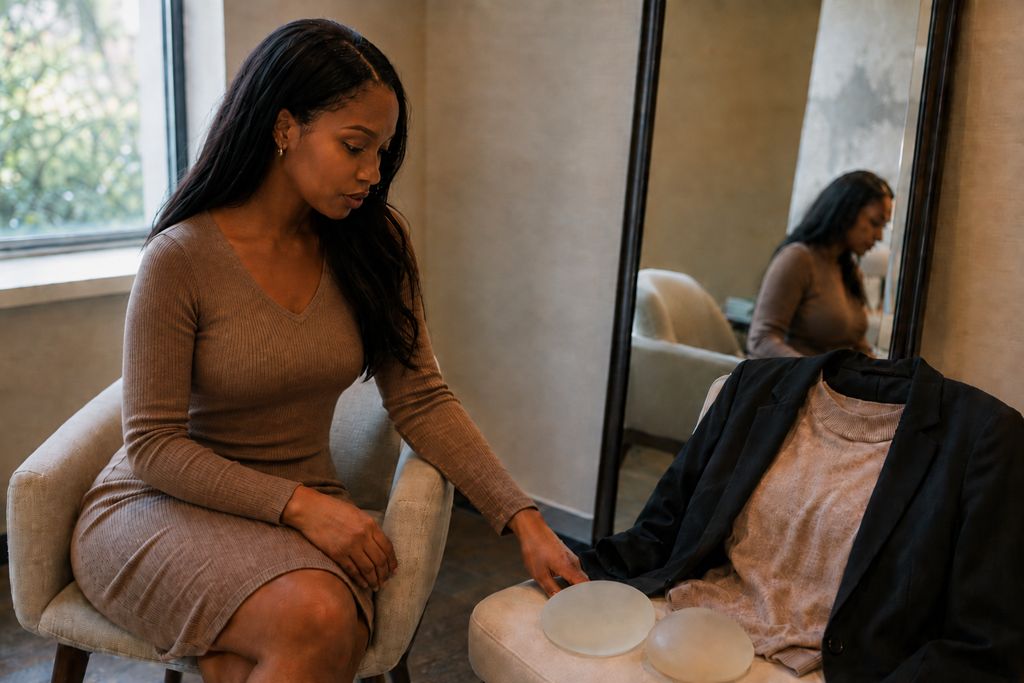
A breast implant consultation should include clear expectations because the decision is not only about choosing a larger size. It is also about understanding proportion, personal goals, implant options, surgical limits, recovery, risks, and what results may realistically look like on your body.
For Sacramento-area patients considering breast implant surgery, this conversation can make the difference between feeling rushed by a cosmetic idea and feeling better prepared to discuss a personal medical decision with a qualified provider. A good consultation should help you ask better questions, understand tradeoffs, and avoid assuming that one photo, one cup size, or one preference tells the whole story.
This article is educational only and is not medical advice. Personal concerns, candidacy, risks, recovery, and expected outcomes should always be discussed with a qualified medical provider.
Expectations Shape The Entire Conversation
Many people arrive at a breast implant consultation with a general idea of how they want to look. That may include wanting more volume, restoring fullness after pregnancy or weight changes, improving balance, or feeling more comfortable in certain clothing.
Those goals matter, but they are only the starting point.
Clear expectations help turn a vague goal into a more useful discussion. Instead of simply saying, “I want to be bigger,” the consultation can explore what kind of change the patient is actually imagining. Is the goal subtle? Noticeable? More balanced? More rounded? More proportional in fitted clothing? More like a previous body shape?
That distinction matters because breast implant surgery involves anatomy, tissue characteristics, implant dimensions, placement decisions, healing, and long-term considerations. The consultation should not reduce the entire decision to size alone.
The Goal Is Not Just A Number
One common misunderstanding is thinking that breast implant planning is mostly about choosing a cup size. In real life, cup size is not a precise medical measurement. It can vary by bra brand, body shape, chest width, clothing style, and personal preference.
That is why expectation-setting often needs more context than a single number.
A patient may think they want a specific size, but what they are really responding to may be upper fullness, overall balance, side profile, clothing fit, or a natural-looking proportion. Another patient may want a noticeable change but still want results that feel compatible with an active lifestyle.
A consultation that includes clear expectations gives the provider more useful information. It also helps the patient understand that the final recommendation may involve more than matching a requested size.
Photos Can Help, But They Can Also Mislead
Reference photos are often helpful because they give a visual starting point. They can show the type of shape, fullness, or overall look a patient has in mind. But photos can also create confusion when they are treated as a guarantee.
A result seen on another person may not translate directly to a different body. Chest shape, existing breast tissue, skin quality, implant type, implant dimensions, and healing response can all affect how results appear.
That does not mean photos are useless. It means they should be used as conversation tools, not exact promises.
A more helpful approach is to discuss what stands out in the photo. Is it the proportion? The neckline? The amount of upper fullness? The natural slope? The symmetry? The way clothing fits? Those details can help make the consultation more specific without turning someone else’s result into an unrealistic target.
Everyday Life Should Be Part Of The Discussion
Clear expectations should include more than how results may look in a mirror. They should also include how the decision may fit into daily life.
A person considering breast implants may want to think about work responsibilities, exercise habits, caregiving demands, clothing preferences, sleep position, recovery support, and long-term comfort. These are not minor details. They can affect how prepared someone feels before and after surgery.
For example, someone with a physically demanding job may need a different recovery conversation than someone who works from a desk. Someone who exercises often may care about implant placement, comfort, and movement. Someone who prefers understated clothing may describe their ideal outcome differently than someone who wants a more dramatic change.
These are exactly the kinds of details that should be discussed openly with a qualified provider.
A Strong Consultation Leaves Room For Limits
A helpful breast implant consultation should not only confirm what a patient wants. It should also explain what may or may not be realistic.
That can include whether the desired size fits the patient’s anatomy, whether certain expectations may create tradeoffs, how recovery may feel, and what risks or long-term considerations should be understood before making a decision.
This is where clear expectations protect the patient from oversimplified thinking. A provider who only focuses on the desired look without discussing limitations may leave important questions unanswered. On the other hand, a provider who explains options, tradeoffs, and realistic outcomes gives the patient more useful information.
Clear expectations do not remove uncertainty. They help make the uncertainty easier to understand.
Questions That Can Make The Consultation More Useful
A breast implant consultation does not need to feel like an interrogation. But bringing a few thoughtful questions can help the conversation stay focused.
Useful questions may include:
- What factors affect whether my goal is realistic for my body?
- How do implant size, shape, and placement influence the final look?
- What should I understand about recovery before deciding?
- What risks or long-term considerations should I discuss?
- How should I think about photos or examples I bring in?
- What signs would suggest that my expectations need to be adjusted?
These questions do not replace medical advice. They simply help the patient have a more complete conversation instead of focusing only on appearance.
Clear Expectations Can Reduce Pressure
Cosmetic surgery decisions can feel emotionally complicated. A person may be excited, unsure, private about the decision, or influenced by photos, clothing frustration, aging, body changes, or comments from others.
That is why expectation-setting is not just a technical step. It can help slow the decision down enough for the patient to think clearly.
A strong consultation should give the patient space to explain their goals without feeling pushed toward a specific choice. It should also help them understand whether the decision fits their body, lifestyle, and comfort level.
If the conversation feels rushed, vague, overly sales-focused, or dismissive of questions, that may be a reason to pause and seek more information before committing.
The Most Helpful Outcome Is Better Understanding
A breast implant consultation should leave the patient with a clearer sense of what they want, what may be realistic, what tradeoffs exist, and what still needs to be discussed. It should not leave them feeling like the decision was reduced to a quick size choice.
For Sacramento-area patients comparing providers or preparing for a consultation, clear expectations can make the conversation more useful from the beginning. The more specific and realistic the discussion becomes, the easier it is to make a thoughtful decision with a qualified professional.
The best consultation is not one that promises a perfect result. It is one that helps the patient understand the decision more fully before moving forward.